Repairs · Brantford
Garage Door Perimeter Weatherstrip
The vinyl strip around the door used to be soft and white.
In plain words
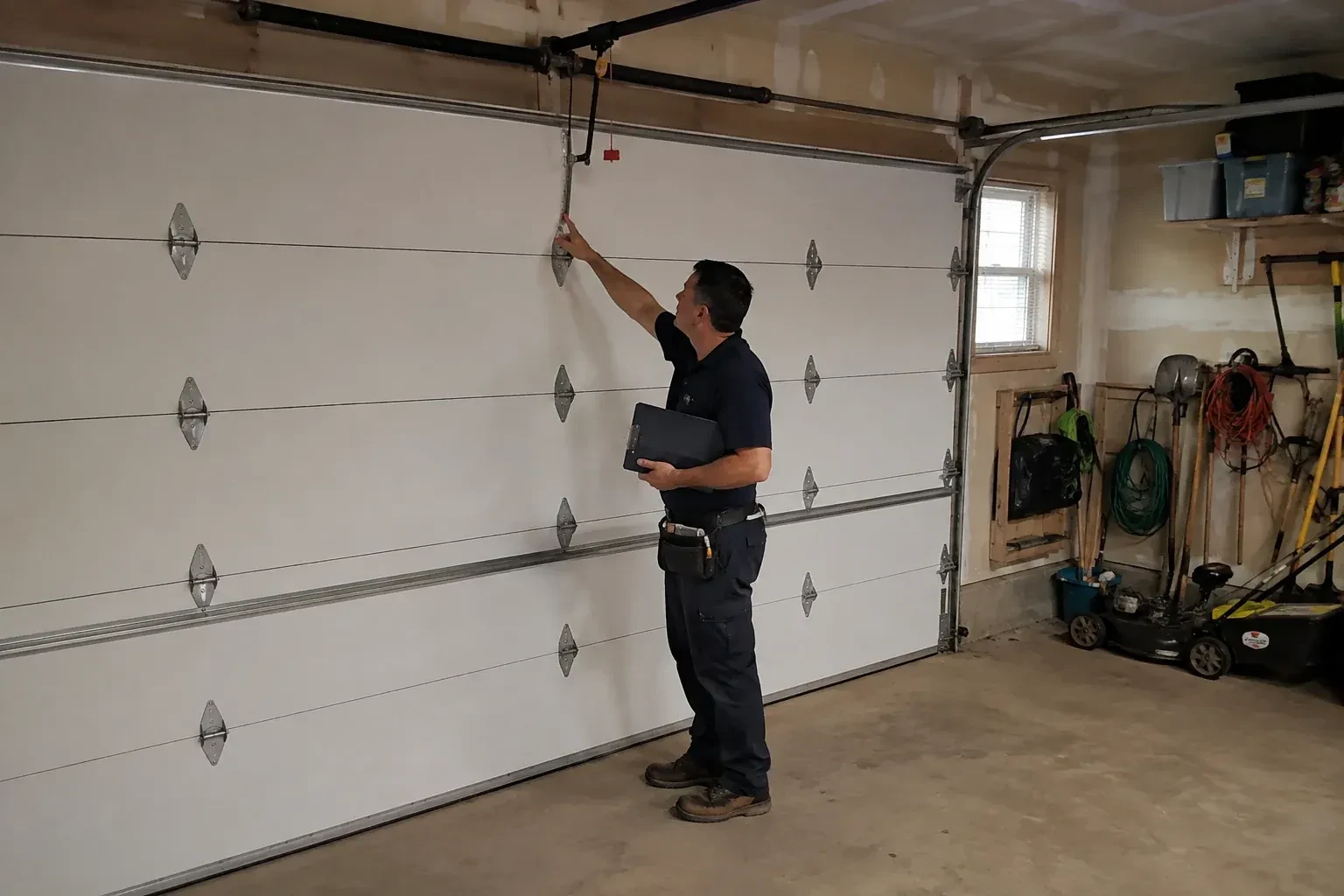
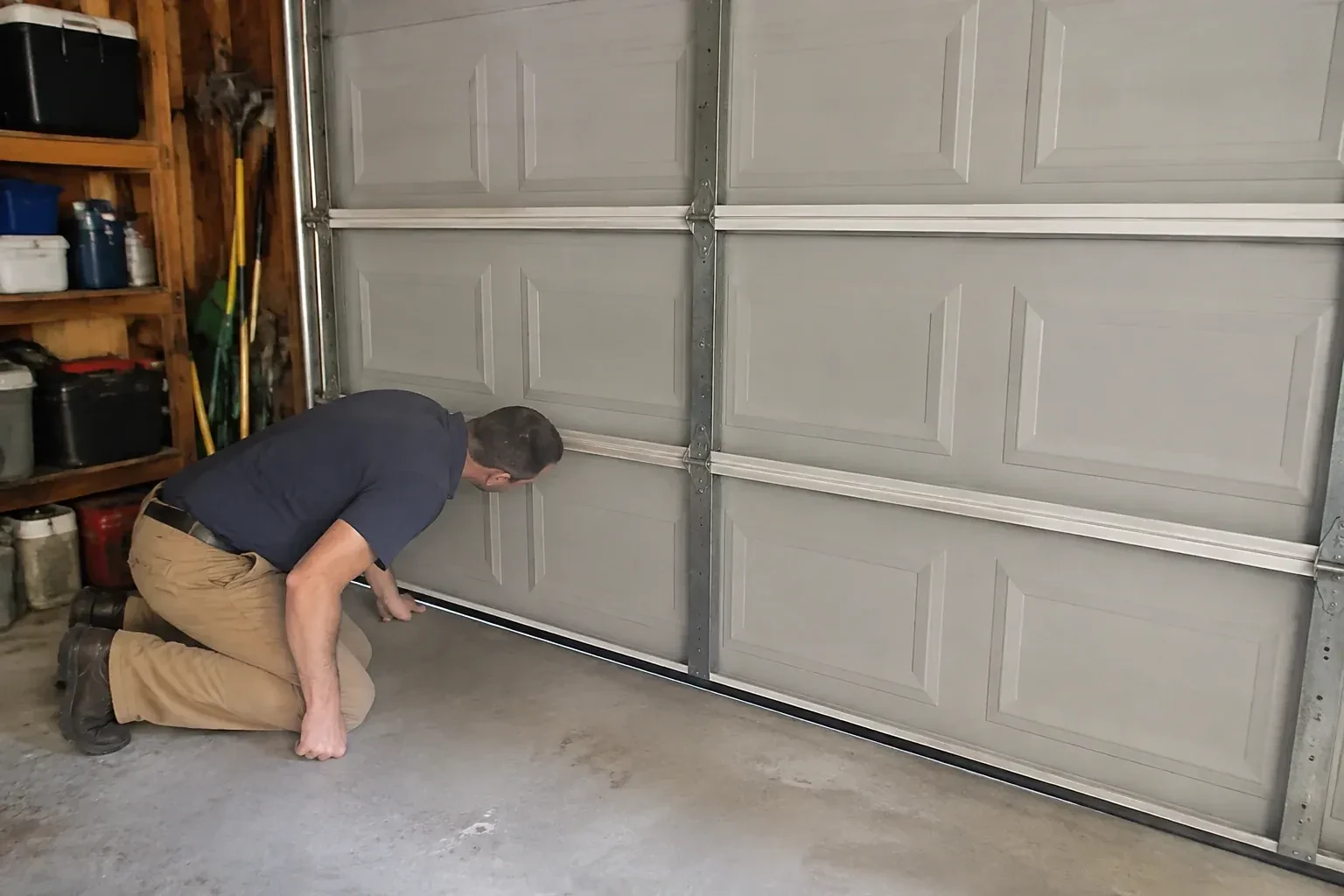
The job follows a steady order. First the door is closed and the gaps are found from inside, by daylight and by feel. Then the door itself is checked for how it sits in the opening, since a seal only works against a door that is square to the frame. The jambs and header are inspected for rot and for how the old strip is fixed. The old material comes off, the surface is cleaned and repaired where needed, the header piece is fitted first and the sides after it, and the door is cycled several times to confirm nothing catches. You are shown the result with the lights off.
How the visit goesThe bedroom over the garage is always the cold room, and standing in the garage you can feel why: a steady draft along the door edges that moves the cobwebs on the wall. The seal around the opening has flattened to nothing.
Garage Door Perimeter Weatherstrip
How the visit goes
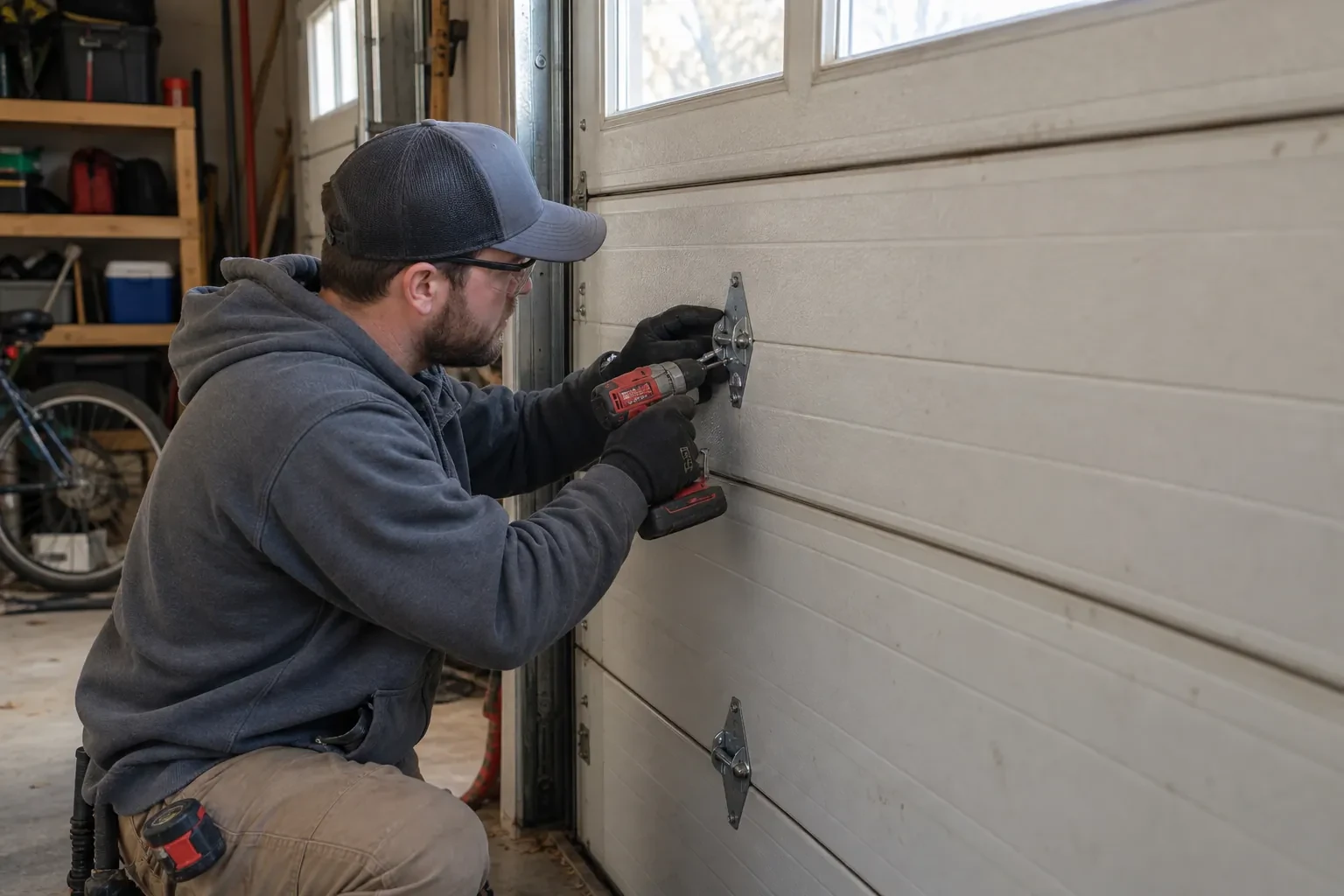
How the door sits in the opening
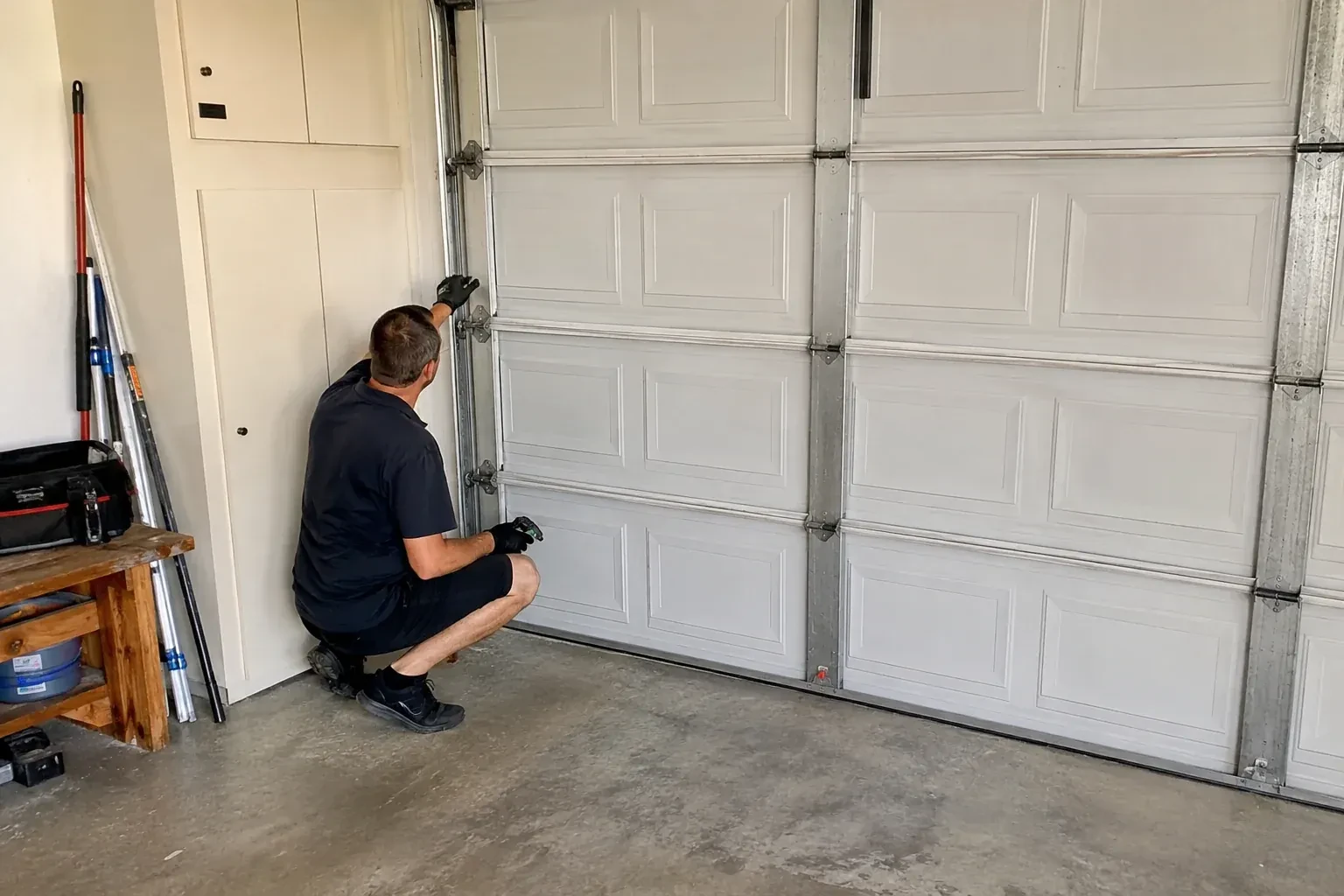
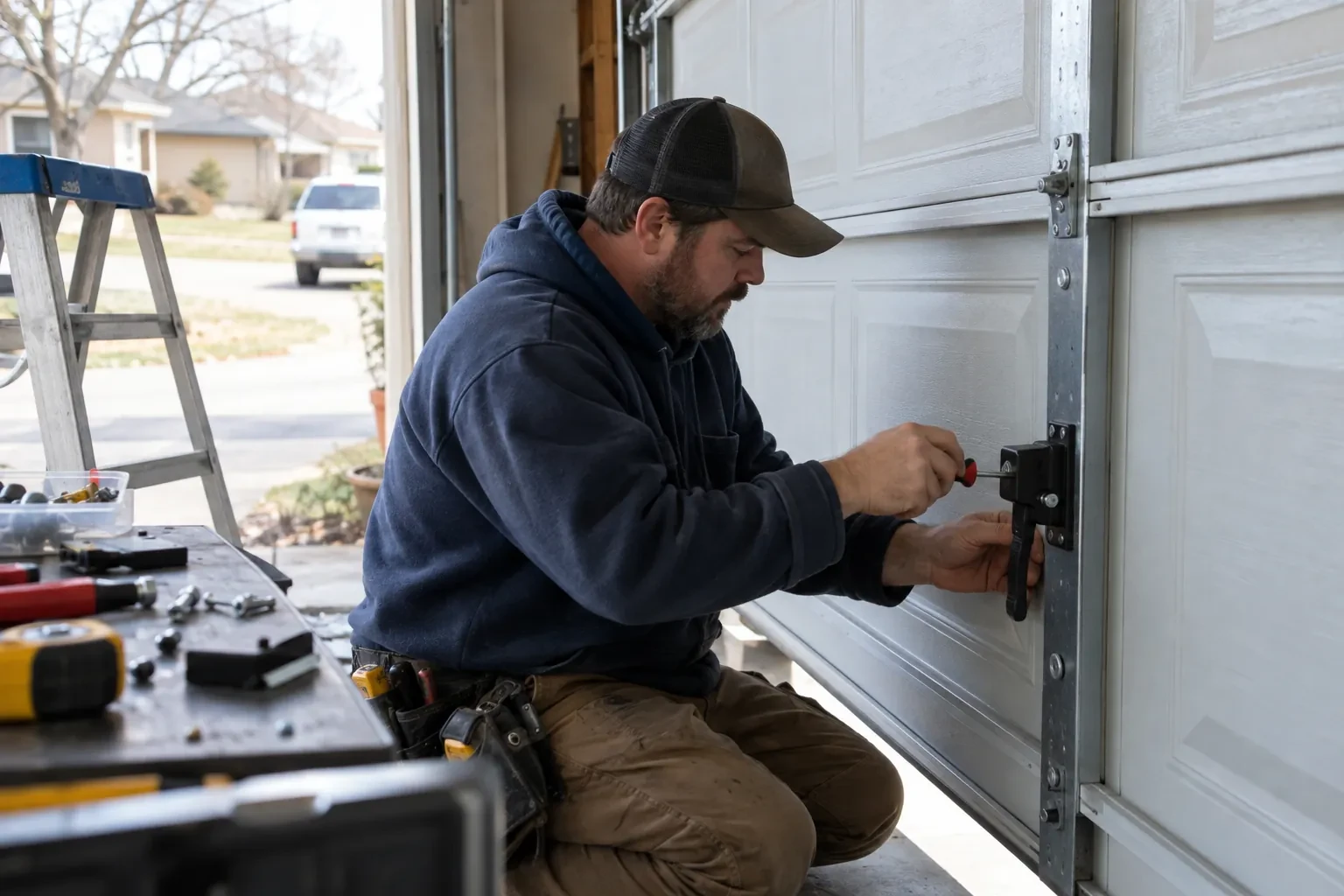
A perimeter seal can only follow a door that sits where the frame expects it, so the door is checked before any strip is ordered or cut. Each edge is checked for plumb, the gap to both jambs is compared, and the top section is watched as it meets the header to see whether it bows away or leans in. Rollers, hinges and the spacing of the vertical tracks are looked at because any of them can shift the door face toward one jamb and away from the other. Small corrections, such as re-setting a track bracket, are noted so the new seal is fitted to a door that closes square and stays that way.
Fastening that lasts through the seasons
Fasteners are chosen for the weather they will live in: galvanized or stainless trim nails, exterior screws where the stop is heavy or the wood is hard, and weatherproof staples only for a light fin on sound wood. They are spaced evenly so the strip stays straight between them, and a nail set is used so the heads sit flush without crushing the vinyl. In cold weather the lengths are kept warm in the van until the moment they are fitted, because cold vinyl is brittle and splits at the ends. Fasteners near the end of each piece go in a little further back for the same reason.
Corners that stay closed to pests
With the header and side fins overlapped, the small square holes that mice and wasps used are gone. Keep them that way by checking the four corners each autumn, when animals are looking for warmth, and pressing any lifted corner back into place. The point where the side seal meets the bottom seal on the door is worth a look too, since the bottom seal wears on its own schedule. A clear threshold, with leaves swept away from the door, removes the shelter pests use to work at a corner. Sealing the perimeter is one of the simpler parts of keeping a garage pest-free.
Garage Door Perimeter Weatherstrip
In the van
Jamb repair lumber or PVC trim
Exterior caulking and gun
Flexible vinyl fin seal
Flat bar, hammer and nail set
Epoxy consolidant and exterior primer
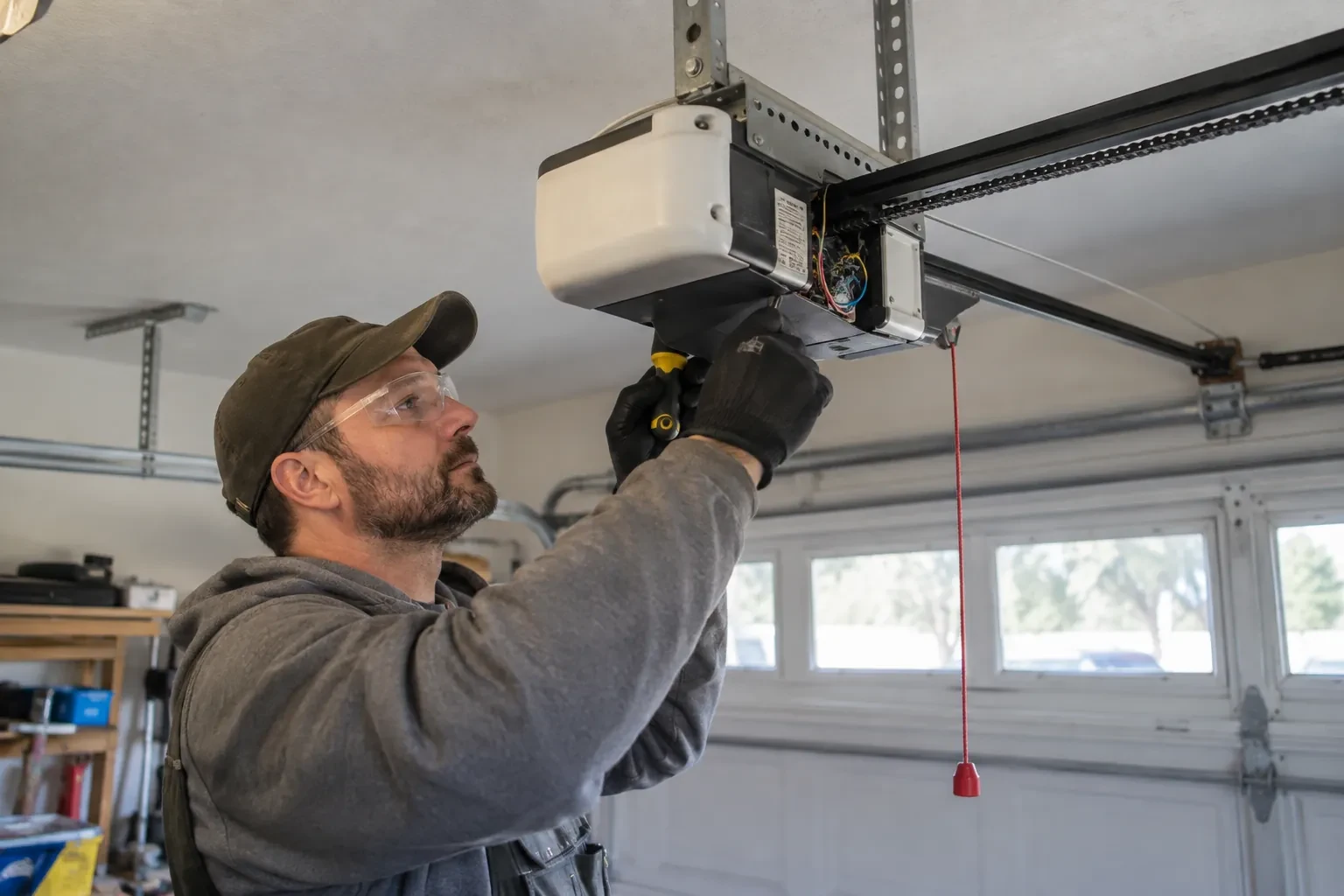
Garage Door Perimeter Weatherstrip
What affects the quote
Size of the door
A double door has a longer header and the same two sides as a single, so more material and a two-person lift for the top piece; taller openings take longer side lengths.
Colour and profile
Standard colours and fin widths are carried on the truck. A less common colour, an extra-wide fin or a commercial retainer with insert may be a special order, with the difference noted.
Alignment work on the door
Where the door sits out of square and a track bracket or the door itself needs small correction before the seal can meet it evenly, that adjustment is named separately.
What to have ready
- Is the existing seal a flexible strip on a wood stop, or a one-piece vinyl moulding?
- Is the bottom seal on the door also worn?
- Is the wood around the opening soft or rotten near the floor?
Garage Door Perimeter Weatherstrip: questions
QuestionsDo you adjust the door as part of the seal work?
Small corrections, yes. If a track bracket needs re-setting or the door needs to come plumb so the fin can meet it evenly, that is done so the new seal is fitted to a door that sits properly. Larger work, such as replacing rollers or a bowed section, is explained and offered as its own job so you can decide on it separately.
My door was replaced last year. Does the perimeter seal need doing too?
Often, yes. A new door is sometimes fitted against the original wood stop and its old fin, and the new door may sit slightly differently in the opening, so the old seal no longer meets it. If daylight shows at the edges or the fin is hard and cracked, a new seal set against the new door completes the installation and matches the fresh look of the door.
How should I look after the new seal?
Four times a year, check for daylight from inside with the lights off and press the fin to feel that it is still soft. Wipe the seal with a damp cloth to clear grit and salt, keep paint off the fin, apply a silicone wipe before winter, and keep slush and bins away from the bottom of the jambs. Press any lifted corner back and call if a length has come loose.