Openers · Brantford
Emergency Release Repair
The power went out in the middle of an ice storm, the car is inside, and when you reach up for the red handle there is nothing there.
In plain words
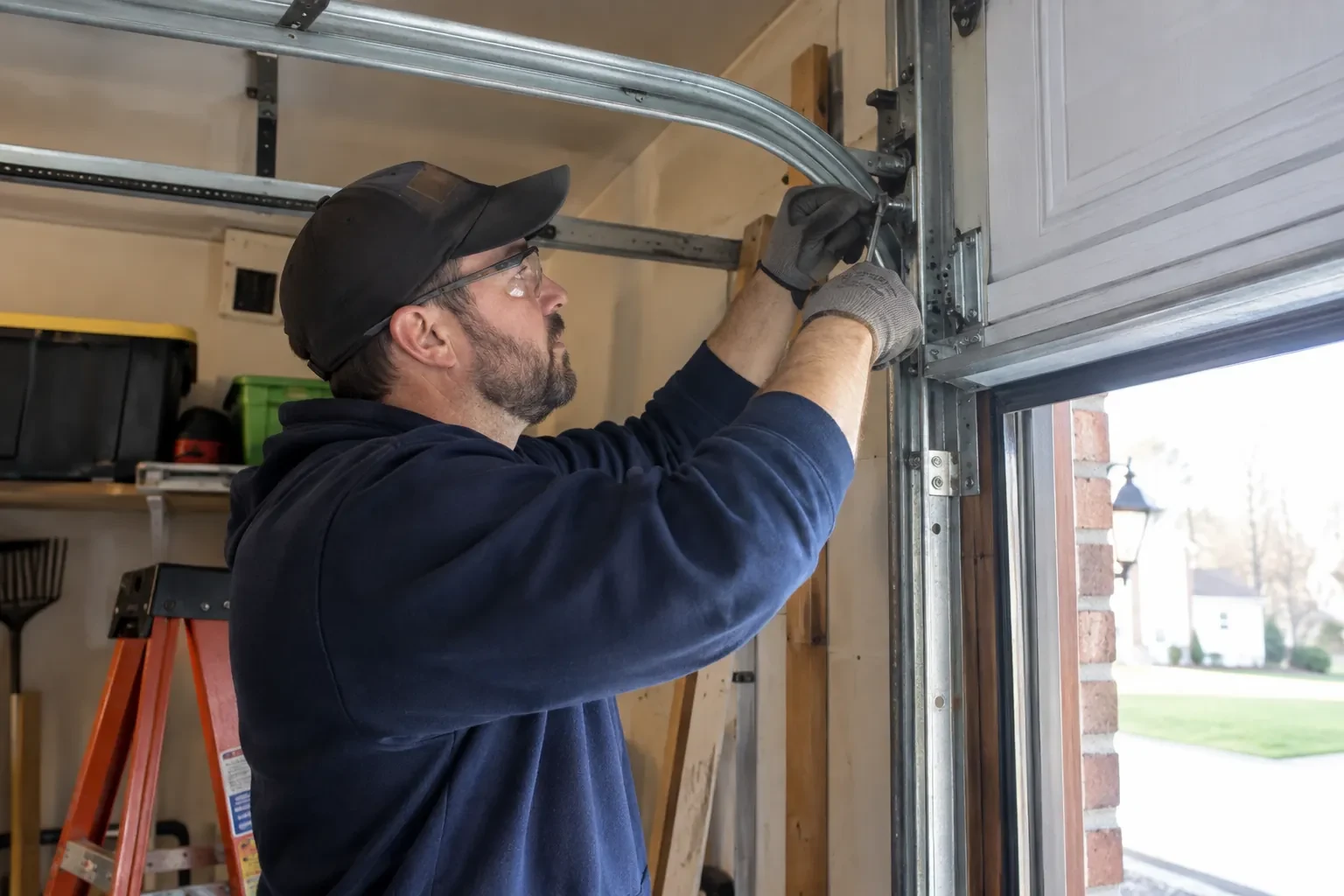
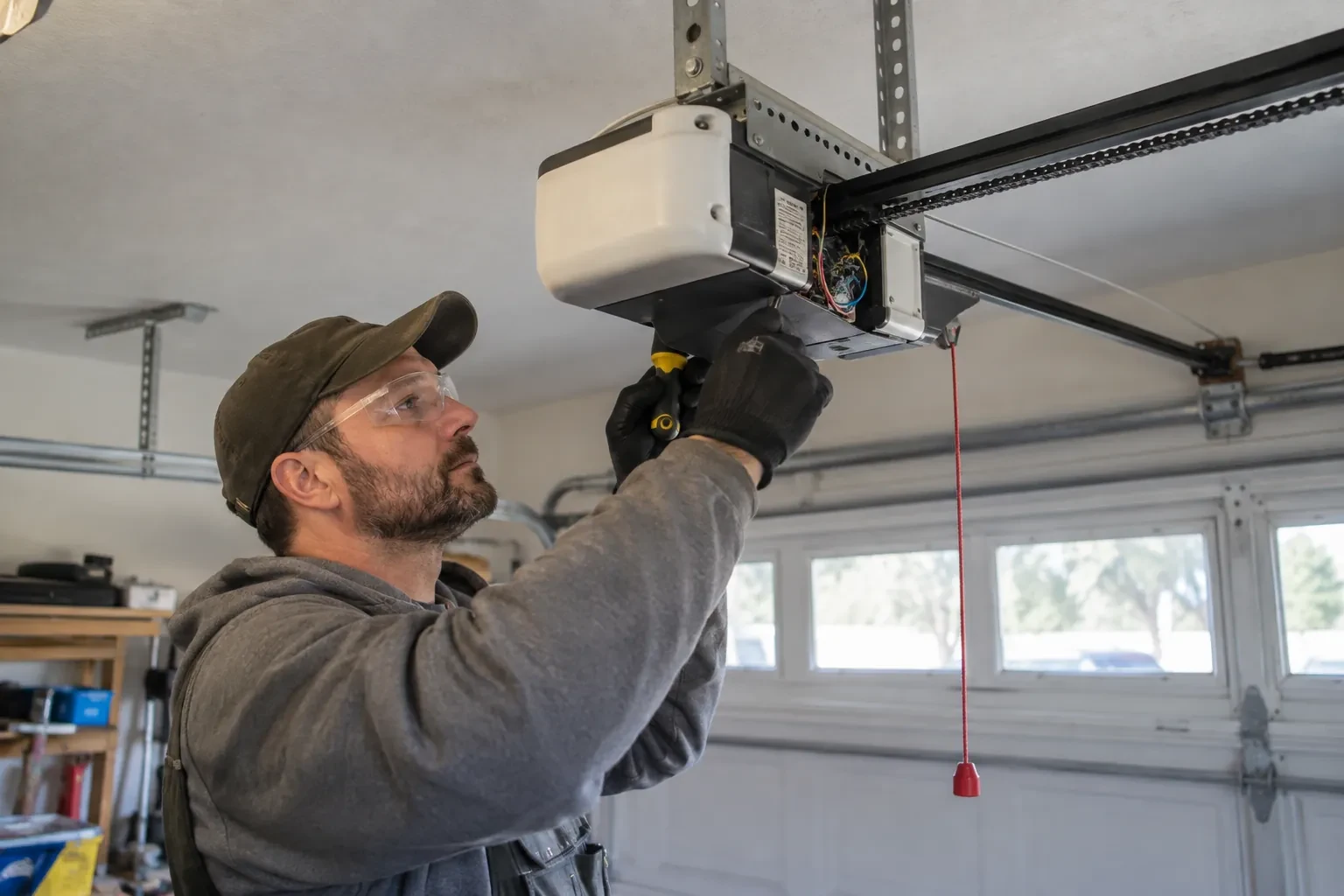
Beyond the repair, this service leaves every adult in the house able to use the release confidently. You see the handle pulled straight down with the door shut, the door lifted by its handle or a gripping point away from the panel joints, and the trolley clicked back together by pulling the cord toward the opener or running one cycle. You learn where the handle should hang, why it is red, and what to do if the door ever feels heavy when free. If there is an outside key release, its key gets a home outside the garage. The repair fixes a part; the walkthrough fixes the next outage.
How the visit goesSince the new door went in, the red handle has hung just below the ceiling, a stepladder's height above anyone in the household. During last week's blackout your daughter stood under it with a broom, unable to hook it down.
Emergency Release Repair
How the visit goes
Why the trolley will not latch
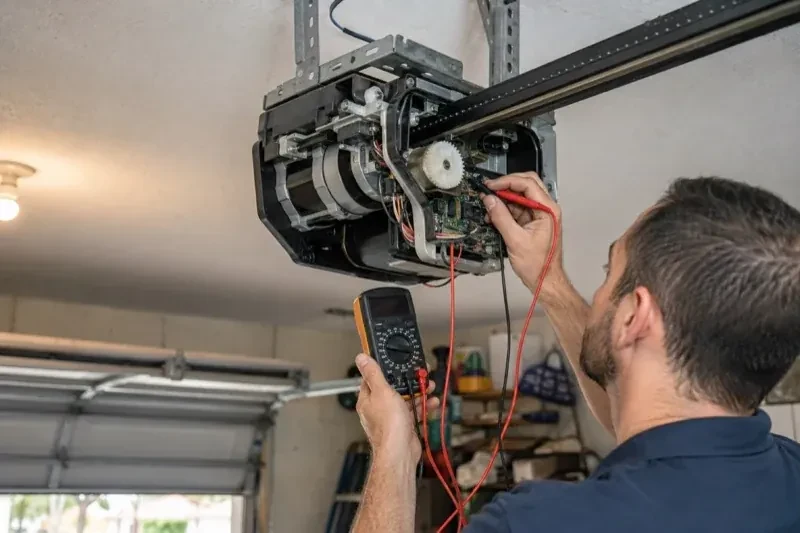
When the complaint is a trolley that runs but never reconnects, the technician looks for the usual reasons. The cord may have been pulled back toward the opener, which on many rails deliberately holds the lever out for repeated manual use, and simply never returned. The trolley may have been driven into the stop bolt or stop tab at the end of the rail after the travel limits drifted, so it sits jammed with the motor humming. The latch teeth may be worn, or the release arm bent so it can no longer drop into place. Each of these has a different fix, and telling them apart takes a minute with the cover off.
Door work first when the balance test fails
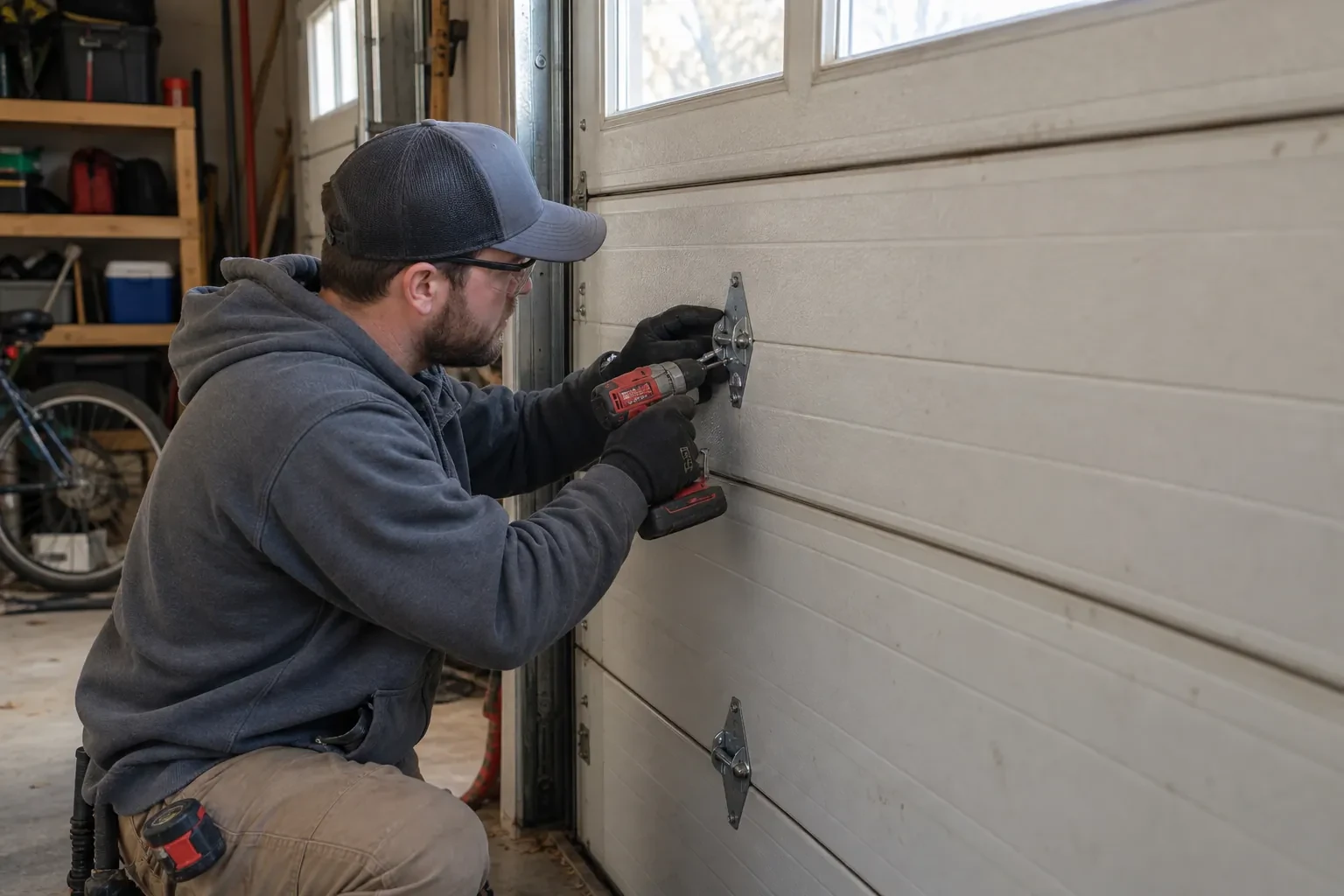
When the disconnected door proves heavy, drifts or binds, the technician changes the order of the visit. The opener stays disconnected, and the door side is put right first: springs re-tensioned or replaced with winding bars by a technician trained for tensioned hardware, frayed cables replaced, dry rollers and hinges lubricated, a bent track straightened. Only when the door lifts and holds by hand is the release work finished and the trolley reconnected. This keeps the release honest: it is meant to hand you a door you can move, and it can only do that once the springs are carrying the weight.
Through the winter
A release serviced in autumn is set up for the season the household is most likely to need it. The cord is rope that stays supple in the cold, the outside cylinder has been cleaned and lubricated, and the door has been proven to lift by hand with the bottom seal freed rather than frozen. Keep snow and ice cleared from the threshold so a manual lift is not working against a seal stuck to the slab, and keep the slide bolt or manual lock handy for nights when the door is in manual mode. A door that moves by hand is a door that gets you out.
Emergency Release Repair
In the van
Outside key release kit (lock, cable, keys)
Garage door lubricant
Release cable and clips
Track clamps to hold the door
Chain or belt tension hardware
Emergency Release Repair
What affects the quote
Damage from a door that dropped
A release pulled on an unbalanced open door can bend the arm, the carriage, a bracket or a panel. Anything that took the impact is listed on its own once it has been seen.
Door material for the outside release
Cutting a cylinder hole through a thin steel section is routine; an insulated door, a wood door or a glass-panel top section takes more care and sometimes a reinforcing plate.
Demonstration and labelling
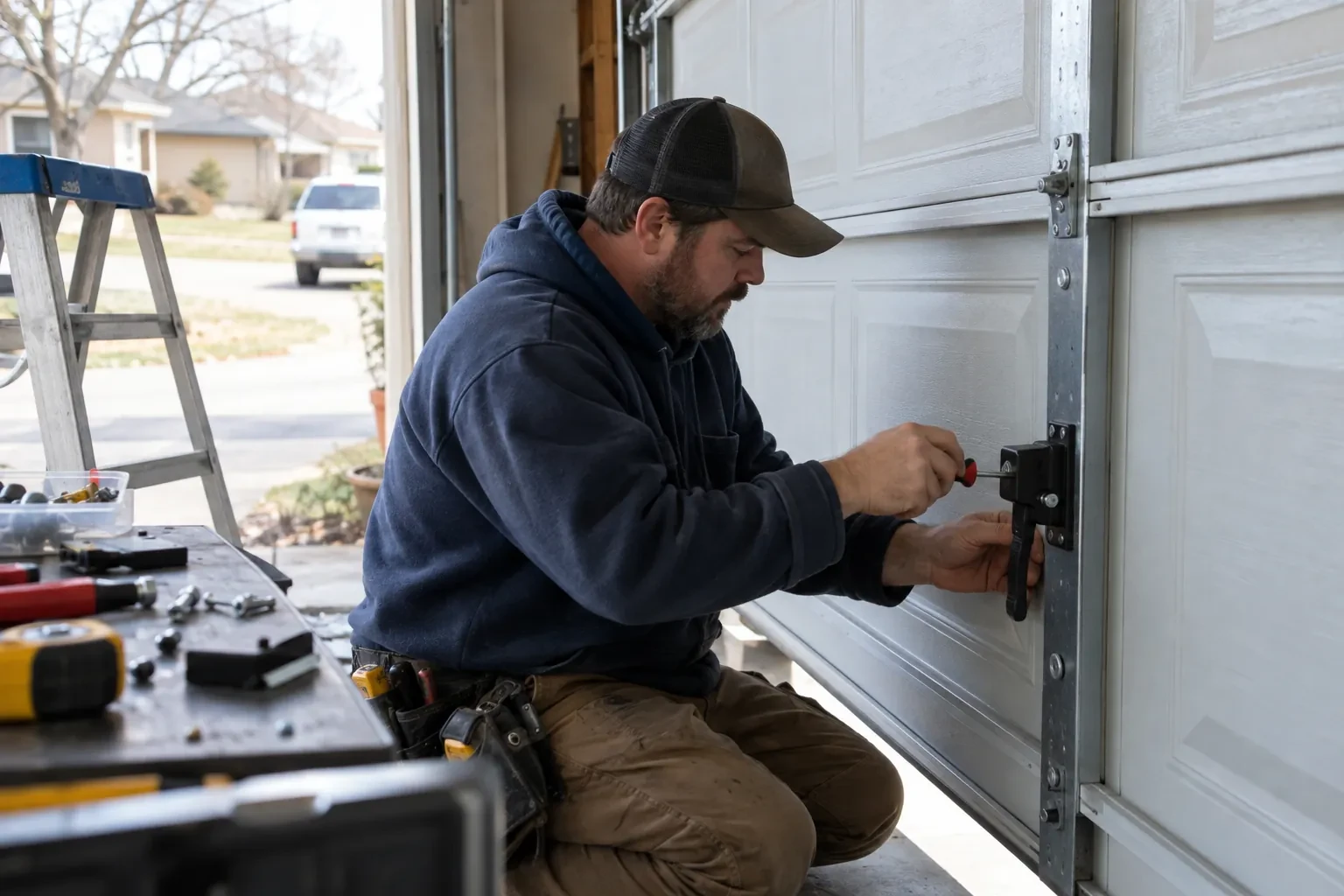
Walking the household through the release, fitting a fresh warning and instruction label near the wall control, and adding handles or gripping points to the door are small tasks that are itemized when they are part of the visit.
What to have ready
- Is your opener a chain, belt or screw unit on a rail, or mounted on the wall beside the door?
- Does the opener run along the rail on its own without moving the door?
- Is anything stored under the rail or tied around the cord?
Emergency Release Repair: questions
QuestionsI lost the key to the outside release. What now?
The cylinder can be replaced with a new one and two fresh keys, which is the usual answer since a lost key may be in someone else's hands. On some units the cylinder can be rekeyed instead. Either way the cable and lever are checked while the lock is out, and the technician suggests keeping the spare key outside the garage, with a neighbour or in a lockbox, rather than inside behind the door it opens.
Where should I grip the door when lifting it by hand?
Use the door's own handles or the gripping points built into the panel face, on the inside and outside of the door. Sectional doors are meant to have them near the bottom section and again on the second or third section. Never take hold at the joint between two sections, which closes as the door bends around the track. If your door has no handles or they have been removed, the technician can fit a pair during the visit.
I pulled the release and the door was very heavy. Is the release broken?
The release did its job; the weight is the door telling you its springs are no longer carrying it. A balanced door lifts with modest effort and holds still at about a metre. A heavy one needs the counterbalance looked at, which is work with winding bars for a technician trained for tensioned hardware. During the visit the door side is corrected first, then the release is put back into use on a door that lifts as it should.
Related services
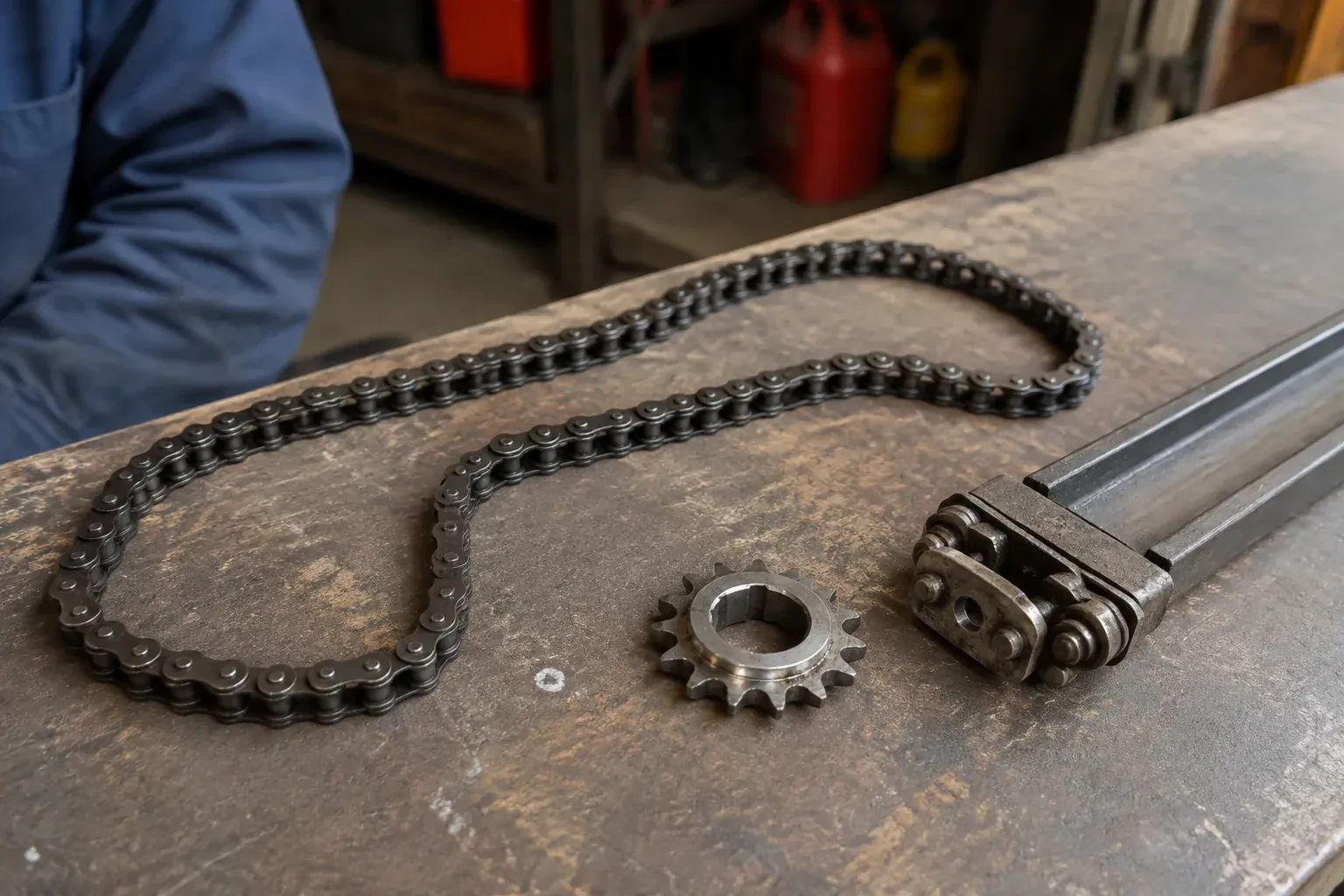
- Chain-Drive Opener RepairThe chain in the detached garage went orange with rust over the winter, the links are stiff, and the opener strains and groans to pull the door up.
- Belt-Drive Opener RepairIt is minus twenty in the detached garage and the door climbs in jerks, the belt stiff as a board.
- Garage Door Opener ReplacementThe bedroom above the garage shakes every morning at six when the chain drive fires up.