Garage Doors in Brantford, OntarioRepair or replace?An honest answer.
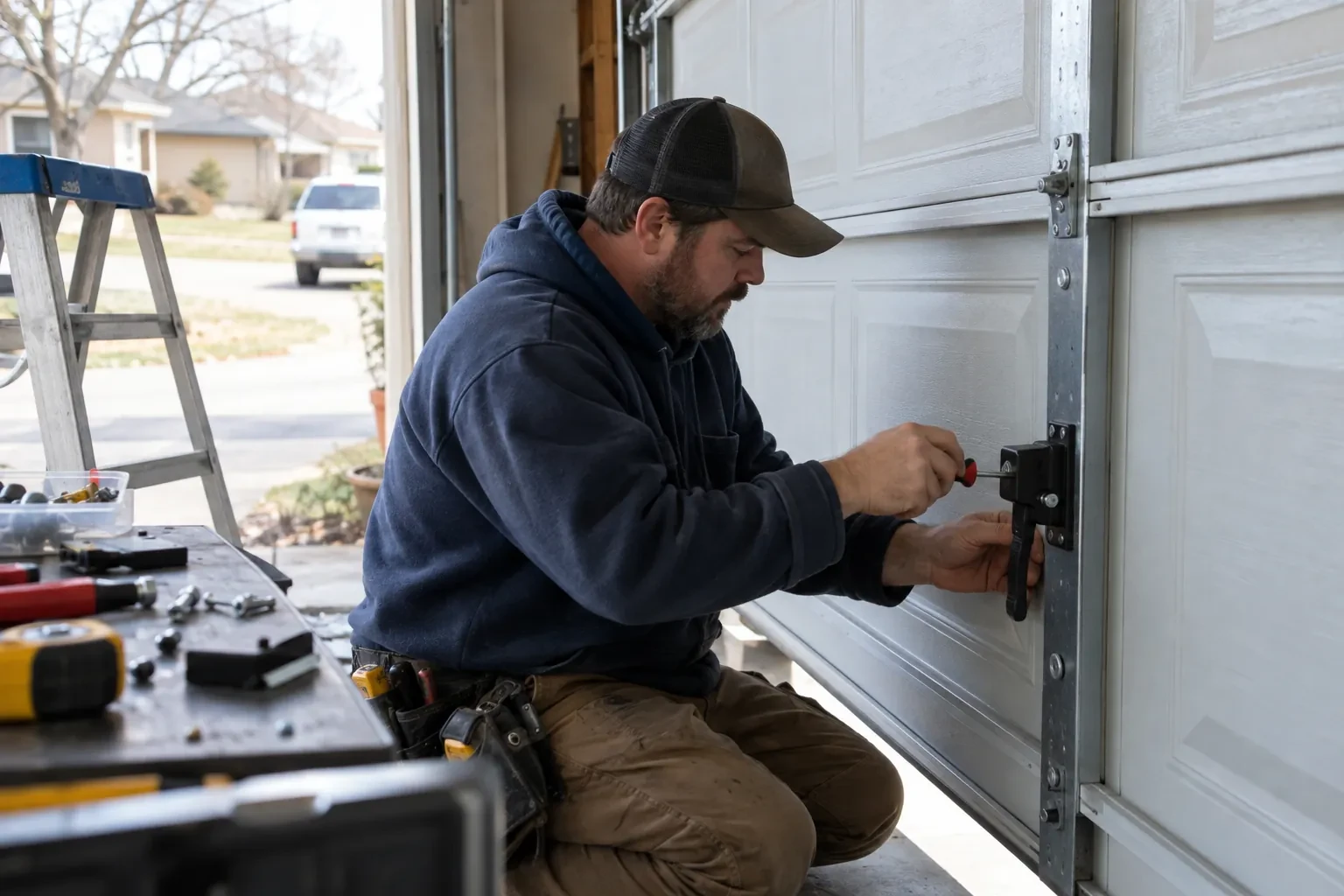
Homeowners in Brantford often ask whether their door has years left or is close to done. We tell you plainly. A door with sound panels and a good frame deserves a repair; a rusted, twisted or badly patched one is money better spent on a new door, and we explain which is which.
Homeowners in Brantford often ask whether their door has years left or is close to done. We tell you plainly. A door with sound panels and a good frame deserves a repair; a rusted, twisted or badly patched one is money better spent on a new door, and we explain which is which.
Honest advice, steady hands.
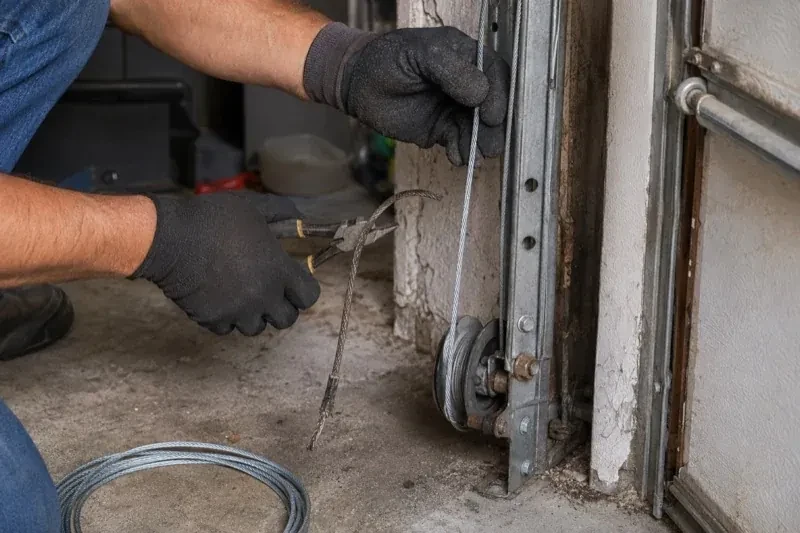
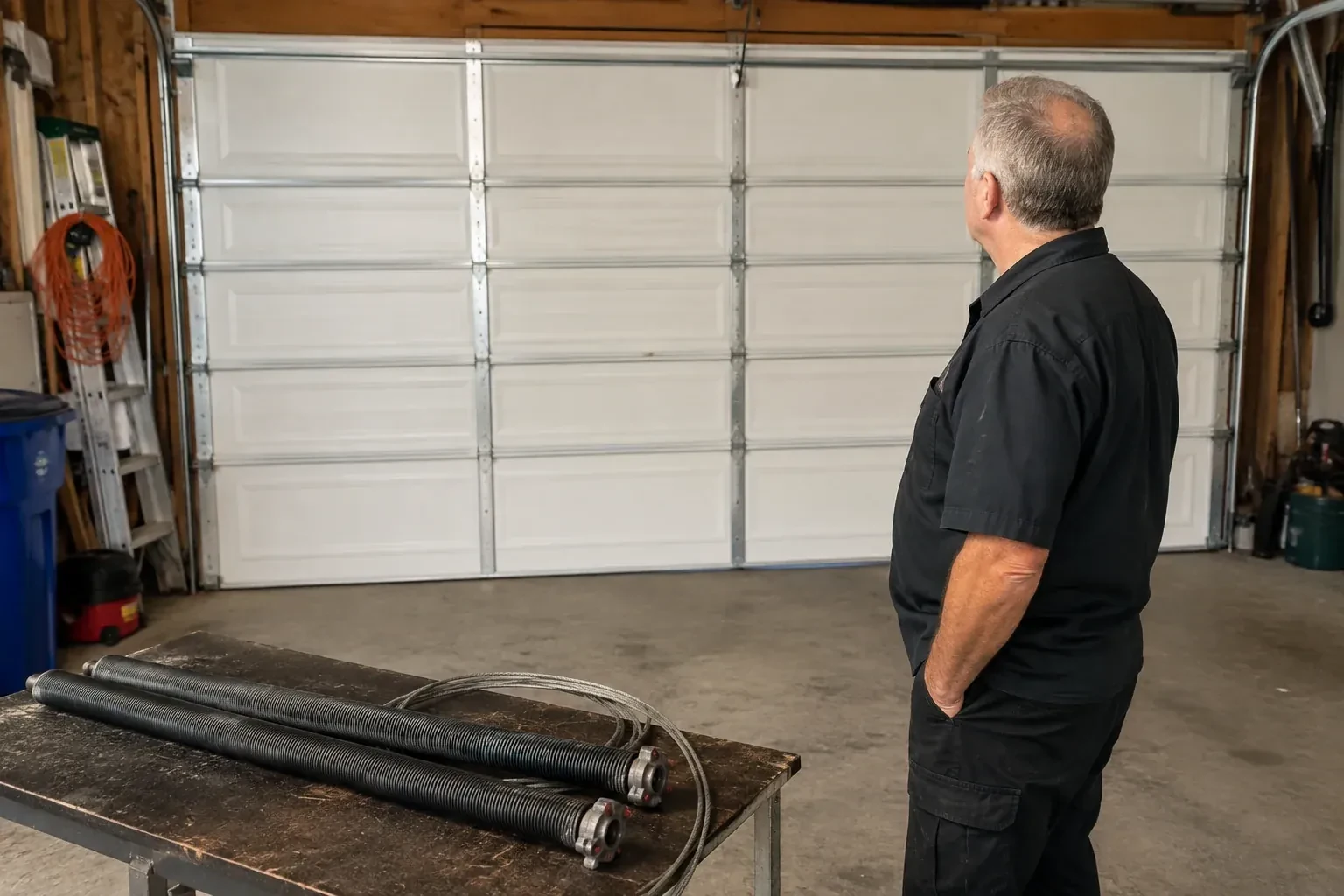
For an older door in Brantford we look for ways to keep it. Original wood doors and extension-spring setups can run for many more years with safety cables, fresh pulleys and a properly set opener. When a door truly is finished, we say so and explain what a replacement would involve, without pushing.
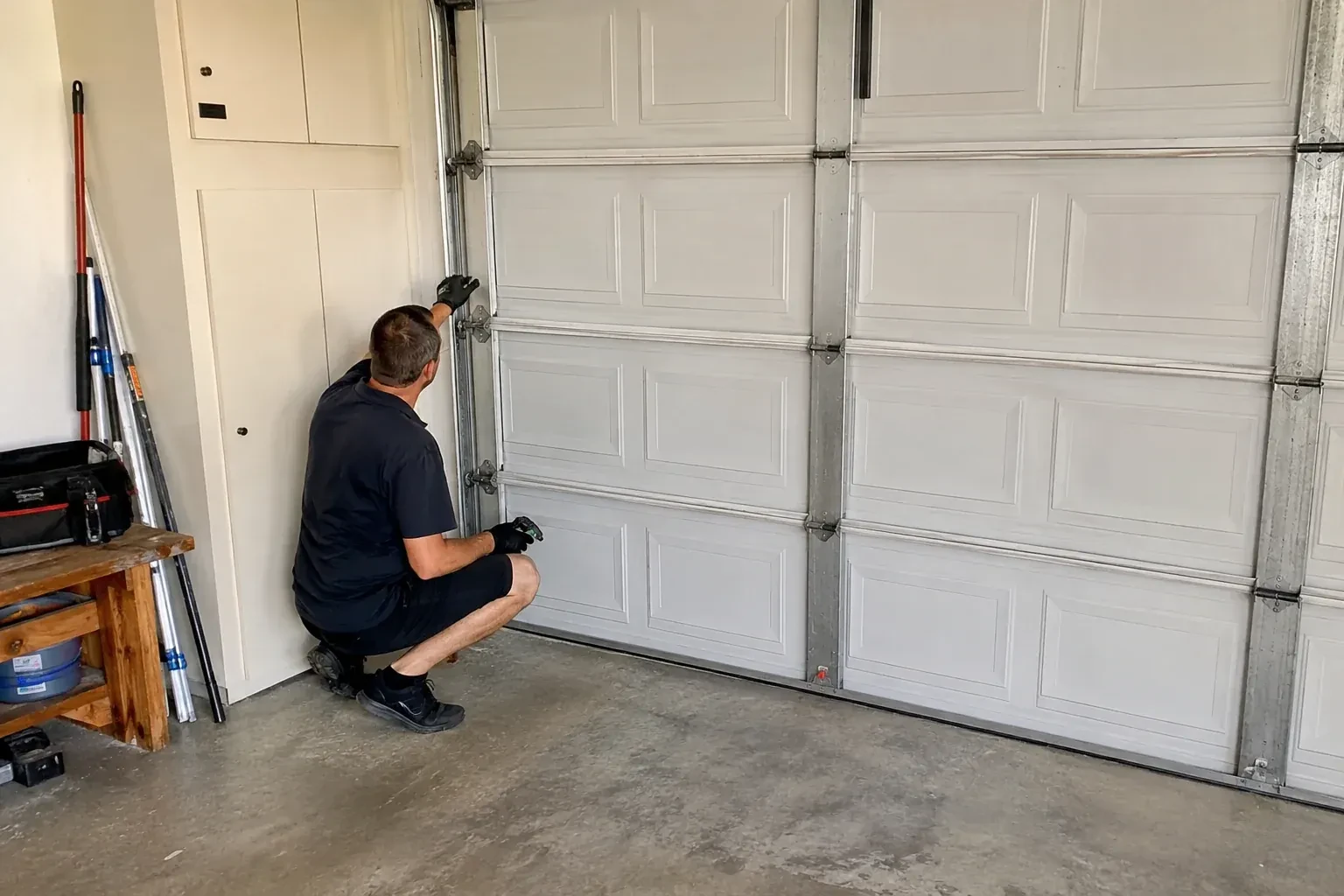
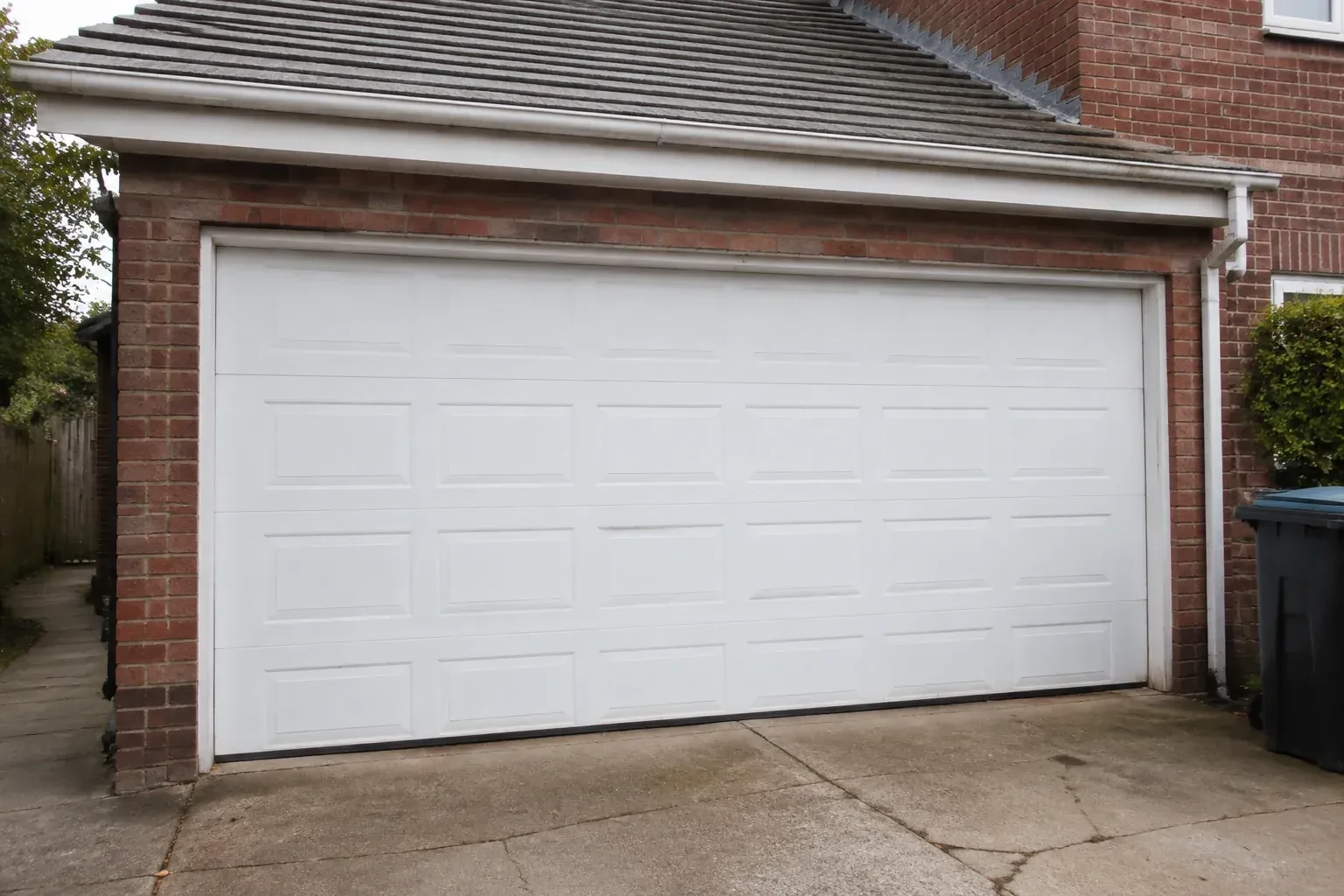
Choosing a new garage door in Brantford is a decision about the front of your house as much as about the garage, and we treat it that way. A technician measures the opening, checks the headroom and framing, and brings real samples of insulated steel, carriage-house and glass designs. The door is installed carefully, balanced properly and demonstrated fully before we leave.
13years in business
24/7open every day
Explained on the spot. As each part is checked, the technician tells you what it shows and what it means for the door as a whole.
Tidiness as standard. Old springs, cables and packaging leave with us, and the workspace is swept. A clean finish is part of every visit.
Options at your pace. Hear the choices, ask your questions, take the time you need. The work starts when you say so and not before.
Households in Brantford mostly need three things from us over the life of a door: a tune-up now and then, a spring or cable when one lets go, and a new opener or door when the old one is finished. Every one of those, plus the smaller jobs between, is covered below.
About 63% of homes in Brantford were built in 1980 or earlier, according to the 2021 Census.
Older homes
Wood door frames in an older house settle and swell over the decades, which can leave a door rubbing on one side. Rather than forcing the opener, the technician trues the tracks, adjusts the jamb seals and sets the door so it travels freely again.
Single-detached houses make up about 61% of homes in Brantford (2021 Census).
Mostly houses
A detached house with its own garage is a natural fit for upgrades that need space: a jackshaft opener to free the ceiling, a high-lift door for a car hoist, or a wider door when a bigger vehicle arrives. The technician measures the opening and headroom and says what fits.
A tenant mentioned the door is louder than it used to be. From the driveway it looks fine, but on closer inspection the hinges near the floor are streaked orange and one roller wobbles as it turns.
Every morning the door announces itself to the whole street: a long metallic squeal as it climbs, a rattle at the top, and a groan on the way back down. It still opens and closes, but it never used to sound like this.
The door came down fine but with a scraping noise, and now the vertical track on one side is bowed away from the wall. Two screws have pulled out of the wood and the roller nearest the floor has no rail around it.
There are mouse droppings along the wall behind the recycling bins, and at one bottom corner of the door the vinyl has a neat chewed notch the width of a thumb. Something has found its way in for the winter.
After a cold night the bottom seal had frozen to the slab. The opener strained, something gave, and now one of the upper hinges sits with its leaf bent outward and the panel below it flexes when the door moves.
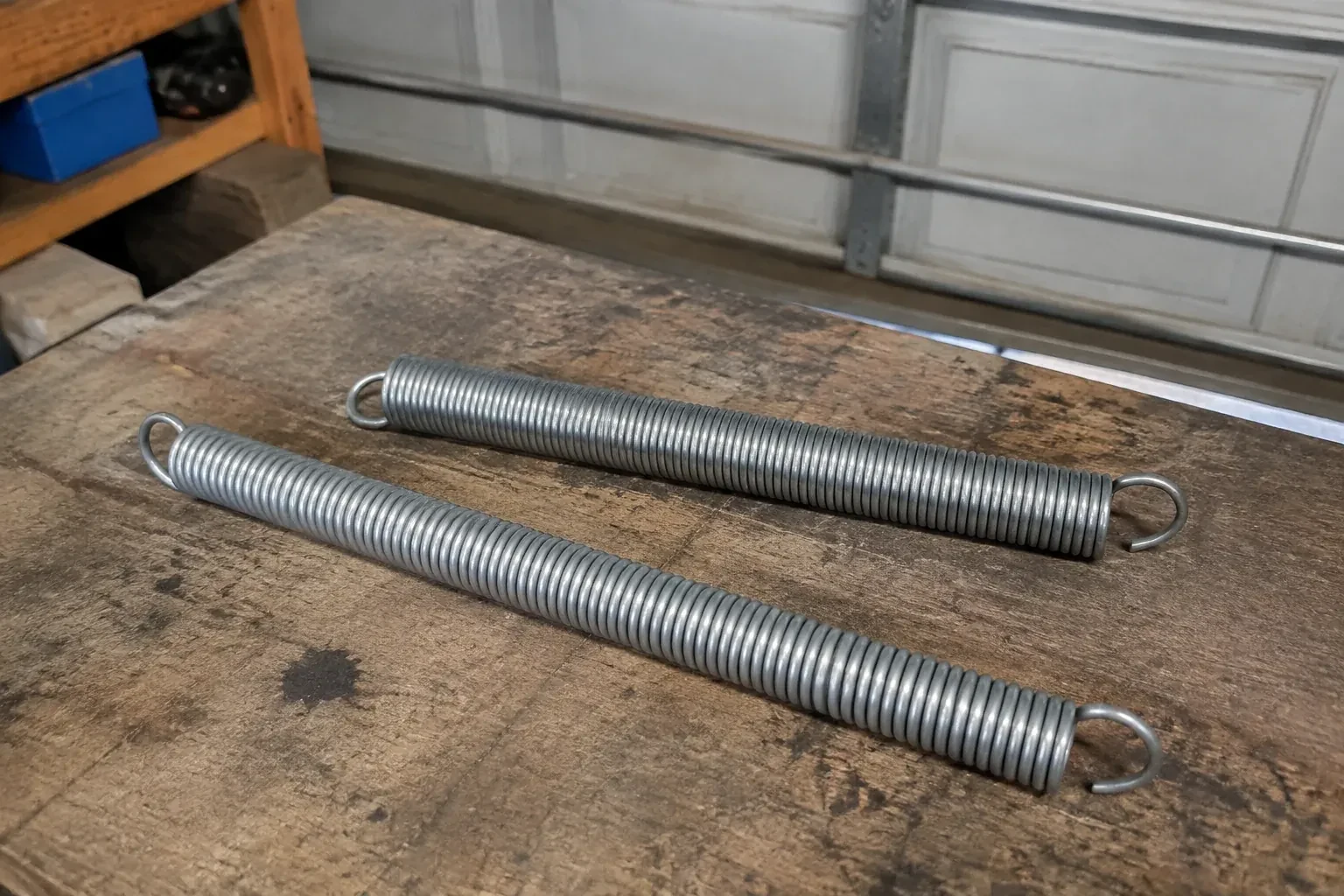
It is the first hard frost of the year and the door on the old detached garage has stopped halfway, squealing at one pulley. The springs are the ones that came with the door decades ago, orange with rust where they hang near the back wall.
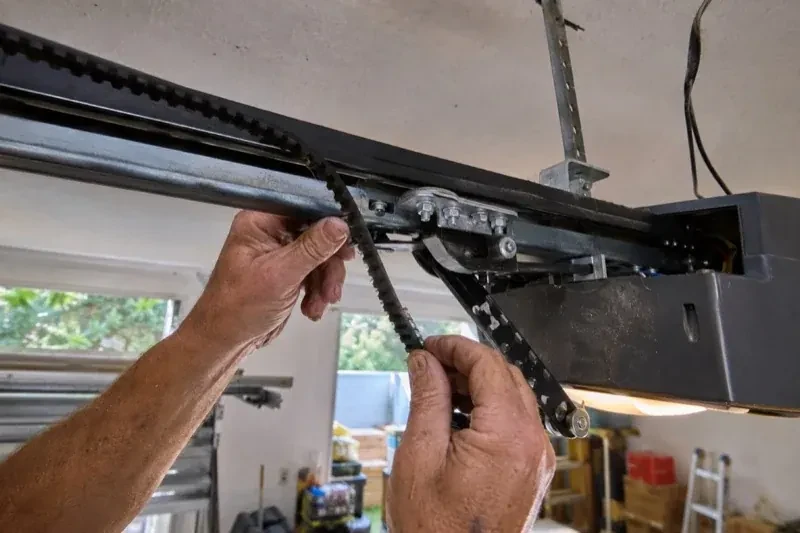
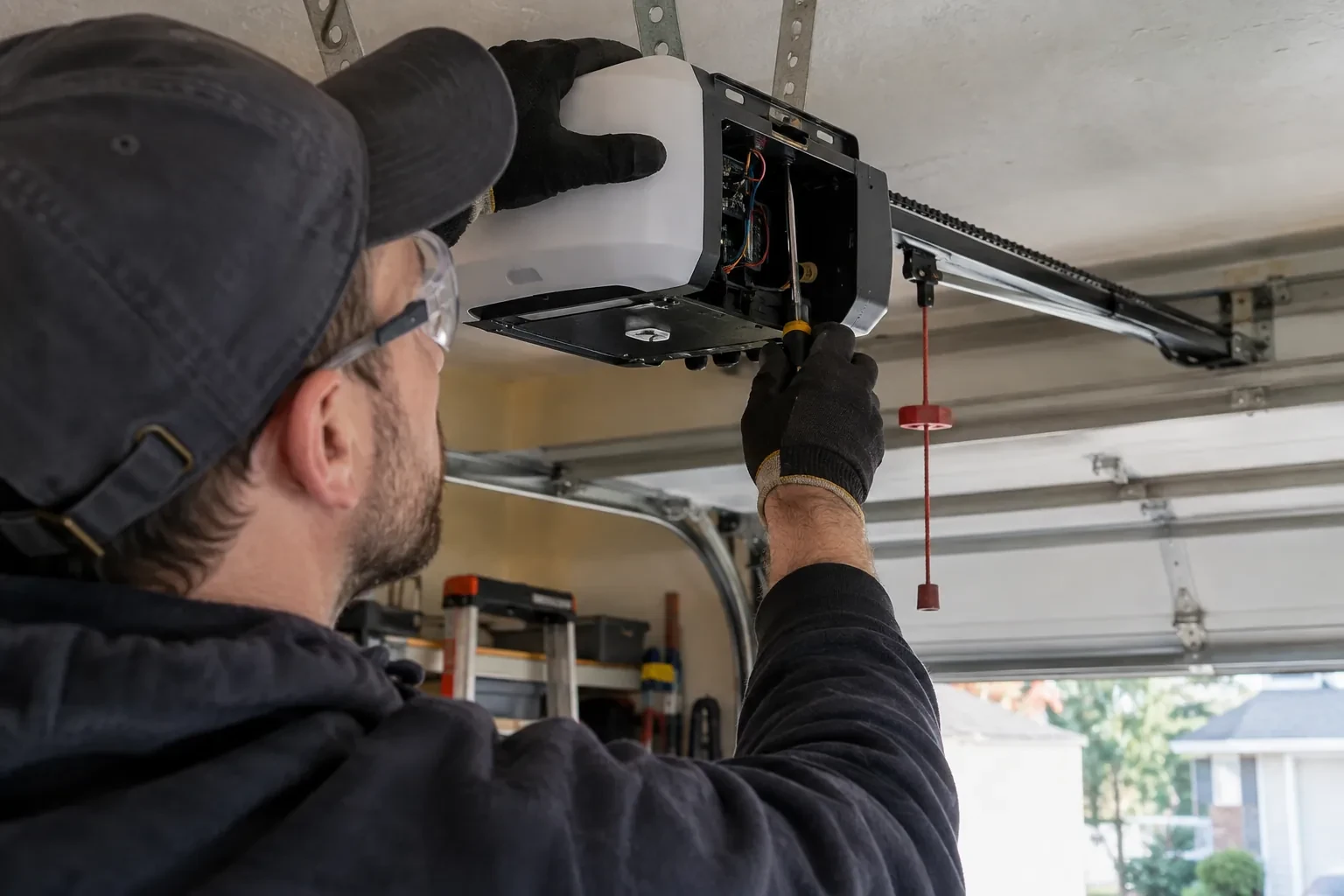
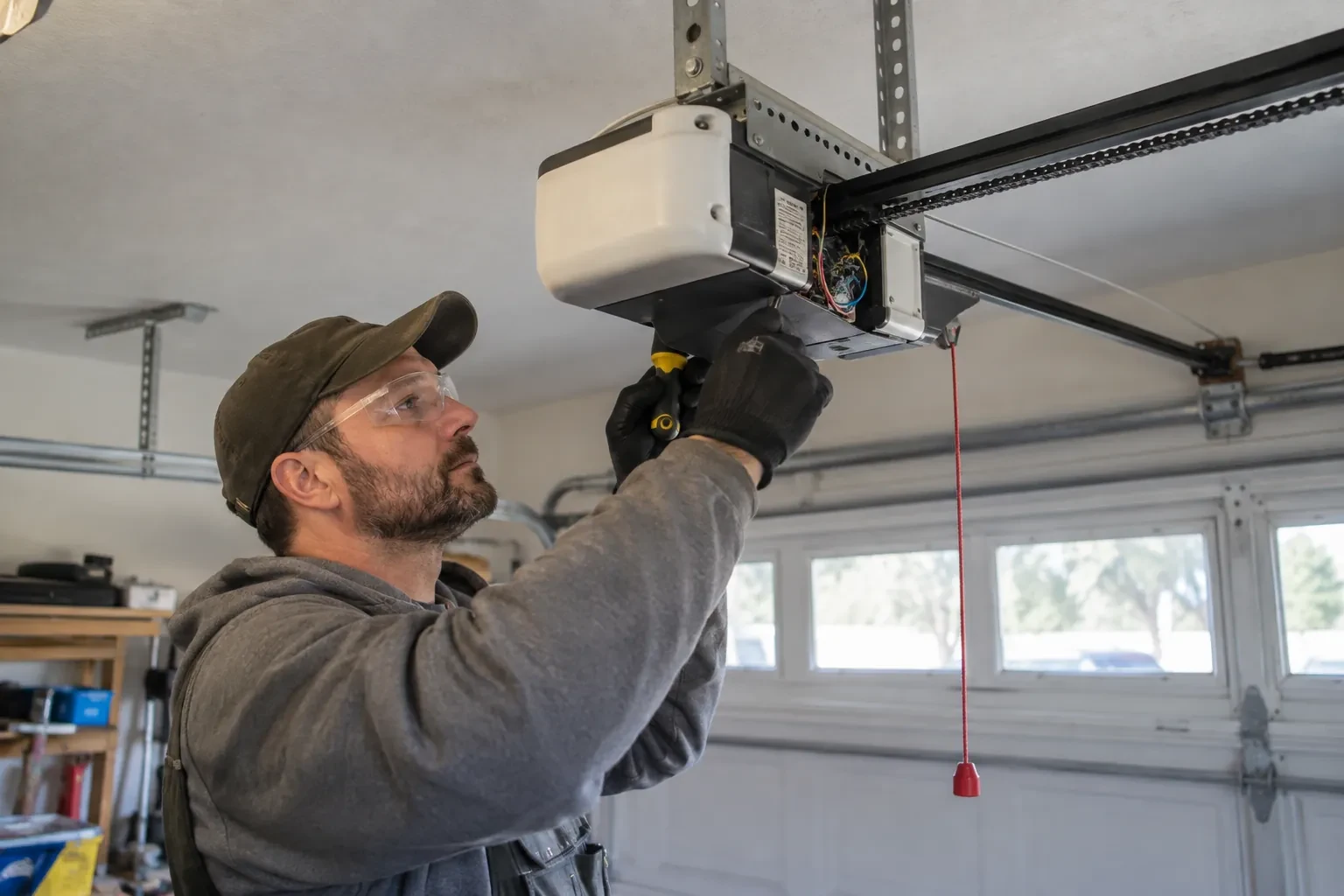
The door used to glide up with a soft hum. Now there is a sharp clack every second or so, and if you stand underneath you can see the belt sagging below the rail and slapping it on the way up.
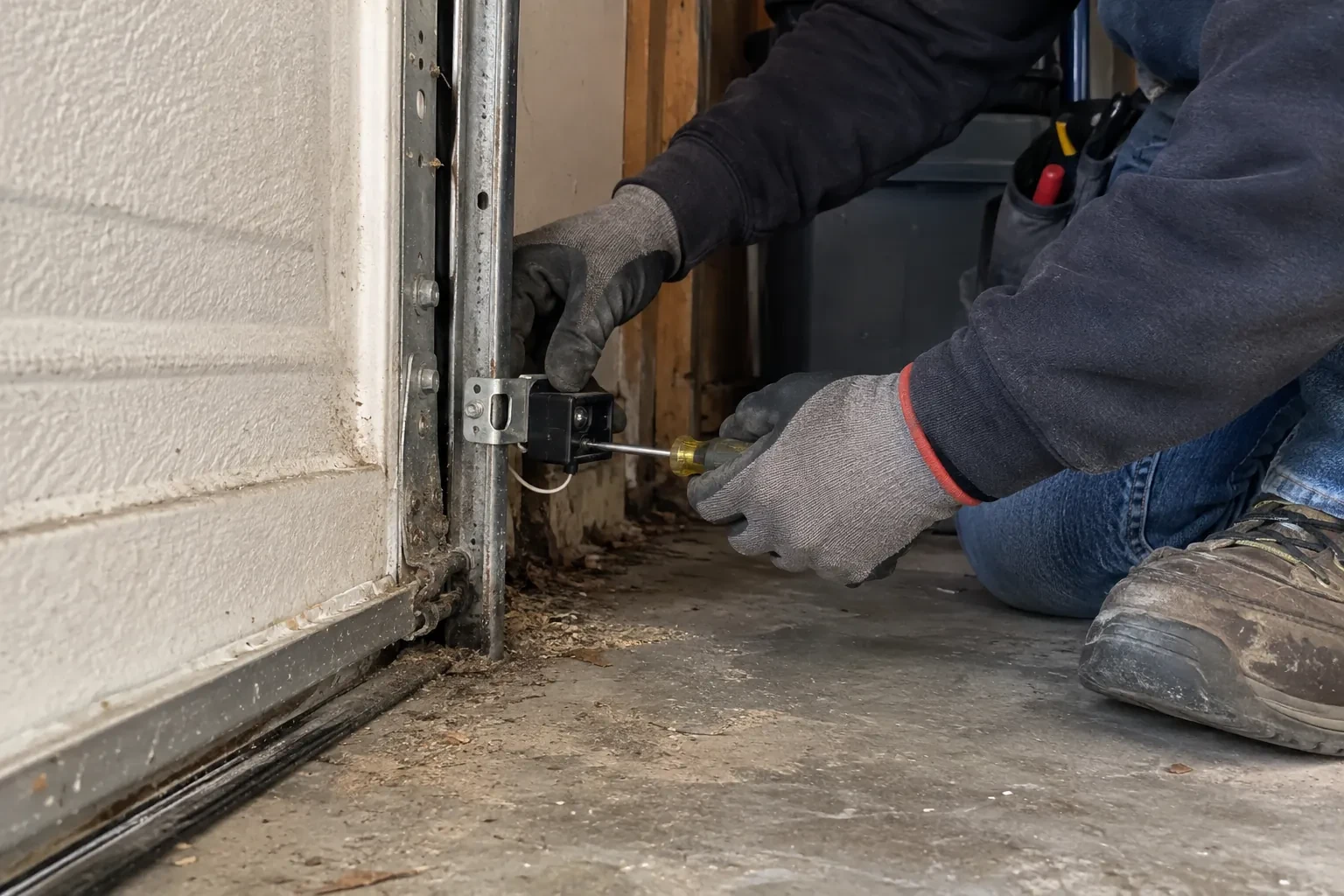
Someone backed the car in a little too far, a bin or a bicycle brushed the track, and since then the door starts to close and comes back up. One sensor now sits at a slightly different angle from the other.
The property faces open fields, leaving the garage frontage more exposed than neighbouring homes sheltered by trees and buildings. You want the large opening assessed as part of choosing a sturdier replacement assembly.
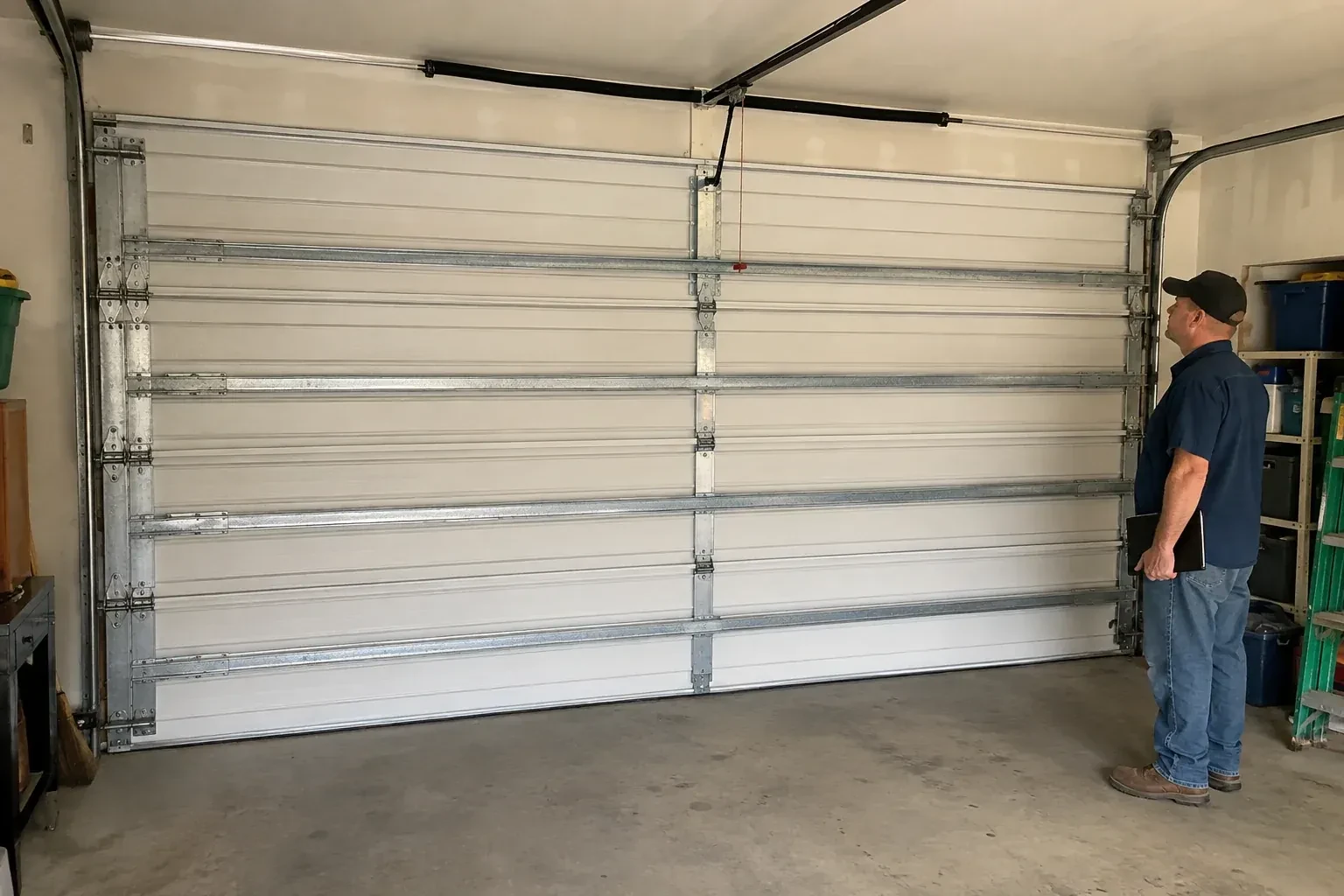
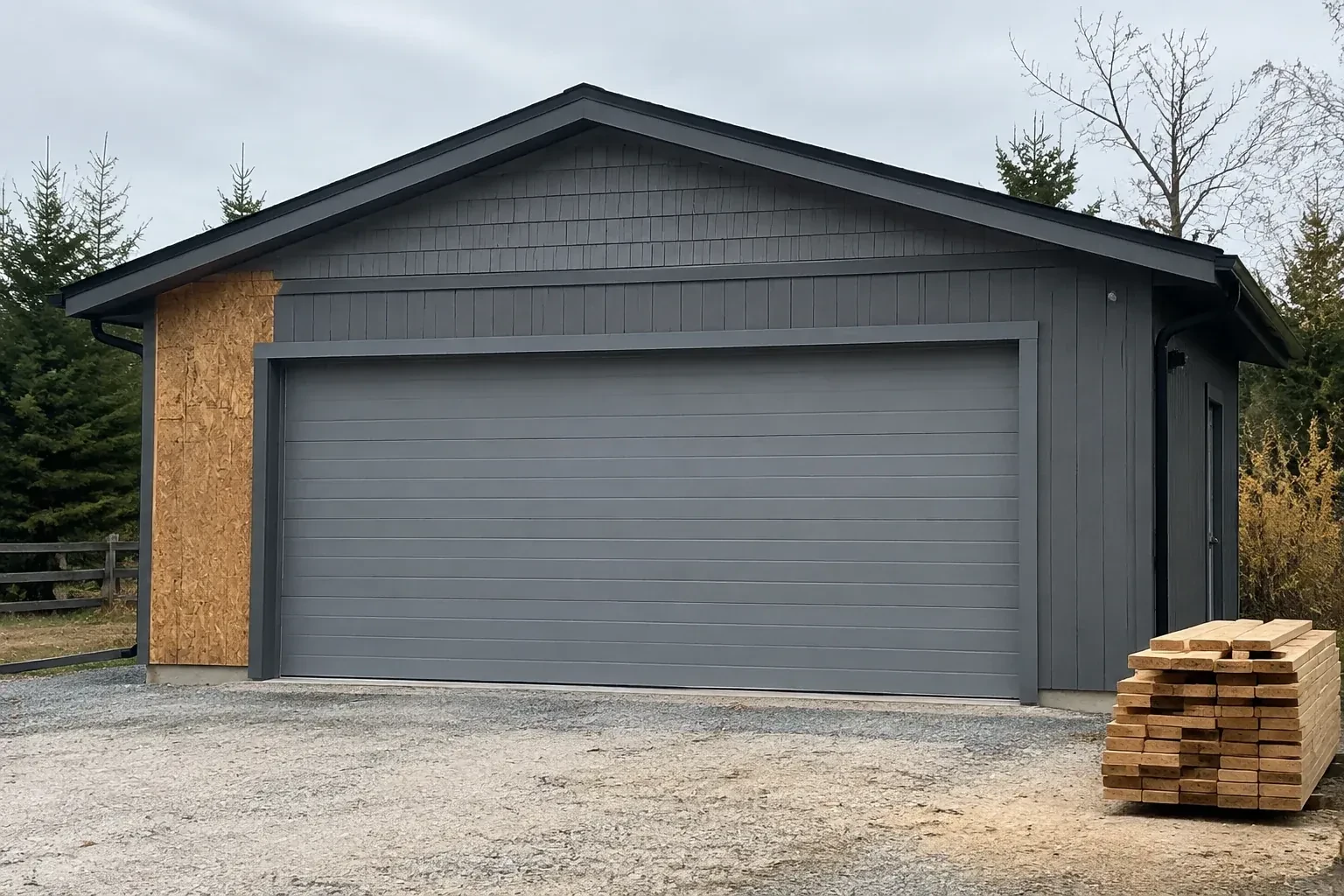
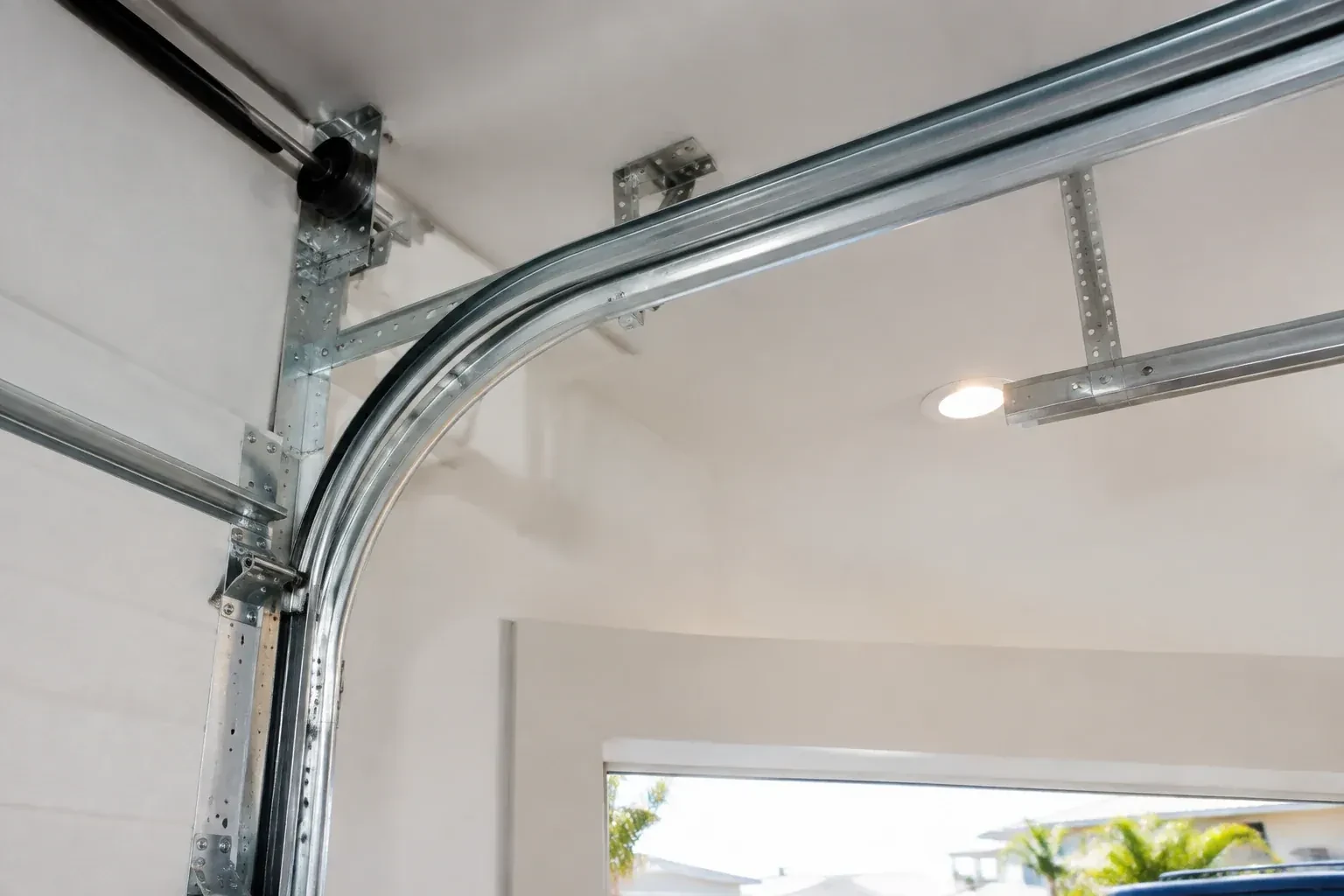
The garage walls are framed, the roof is on and the opening is taking shape. Now the build needs a complete sectional door system measured to the finished width, height and surrounding clearances.
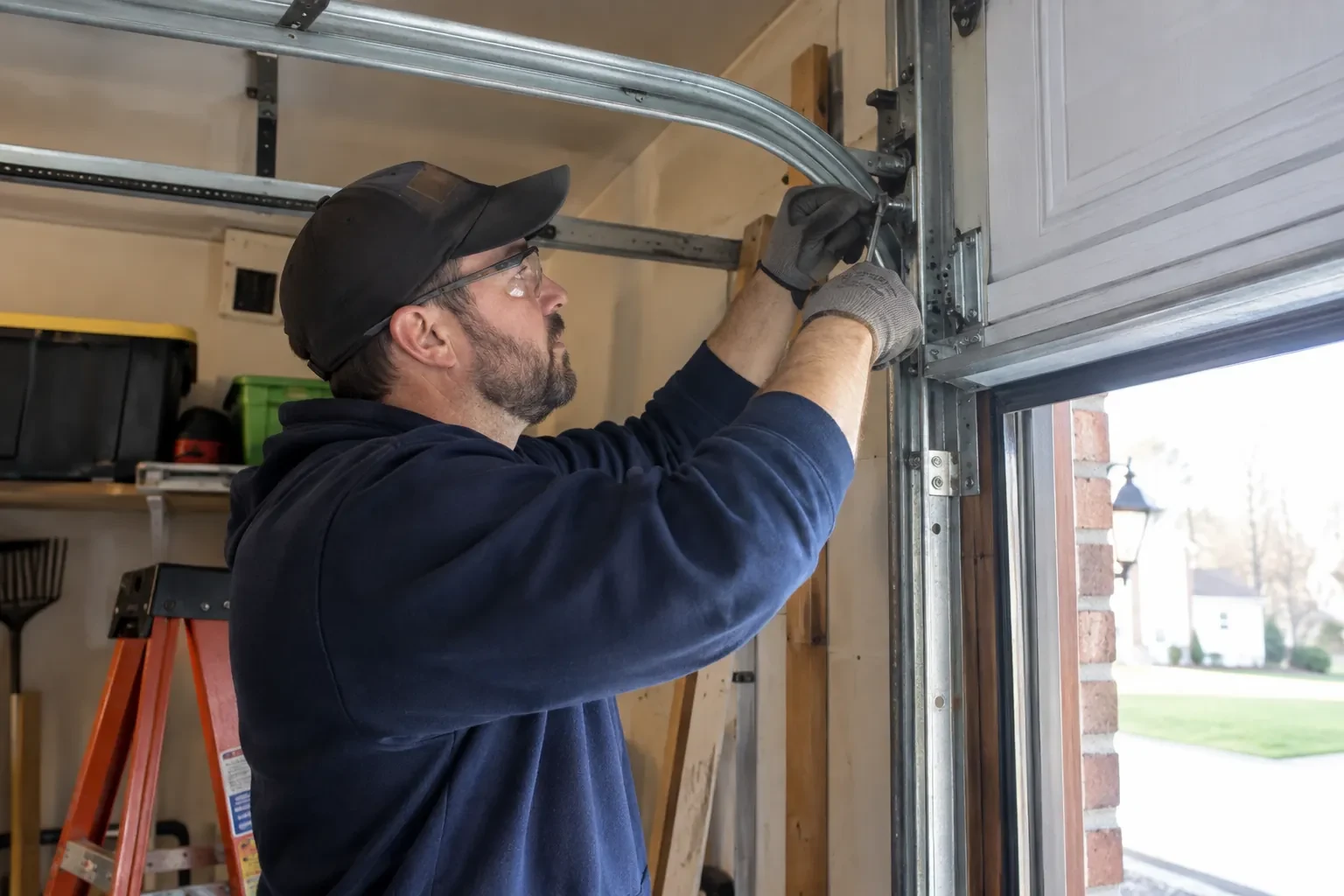
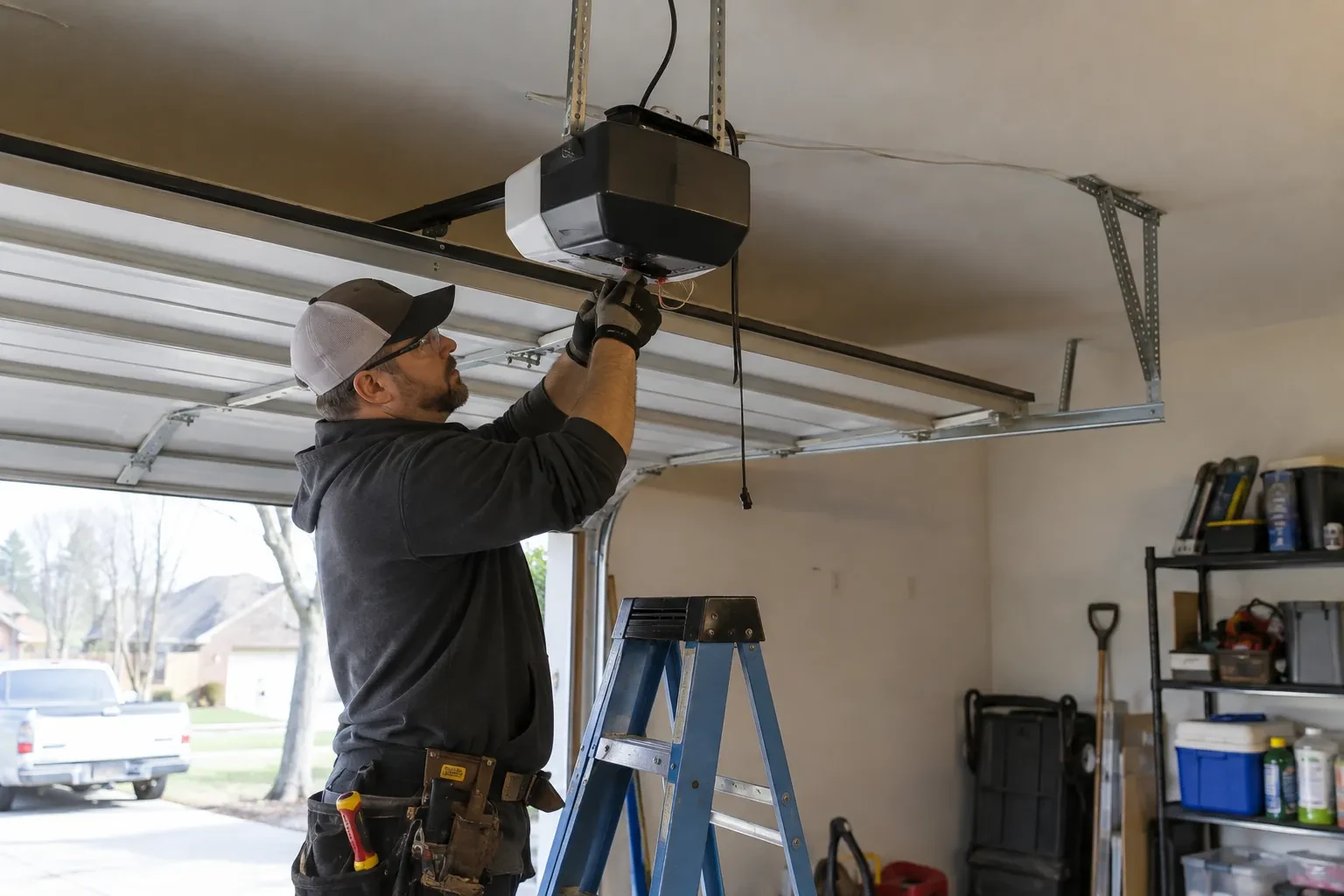
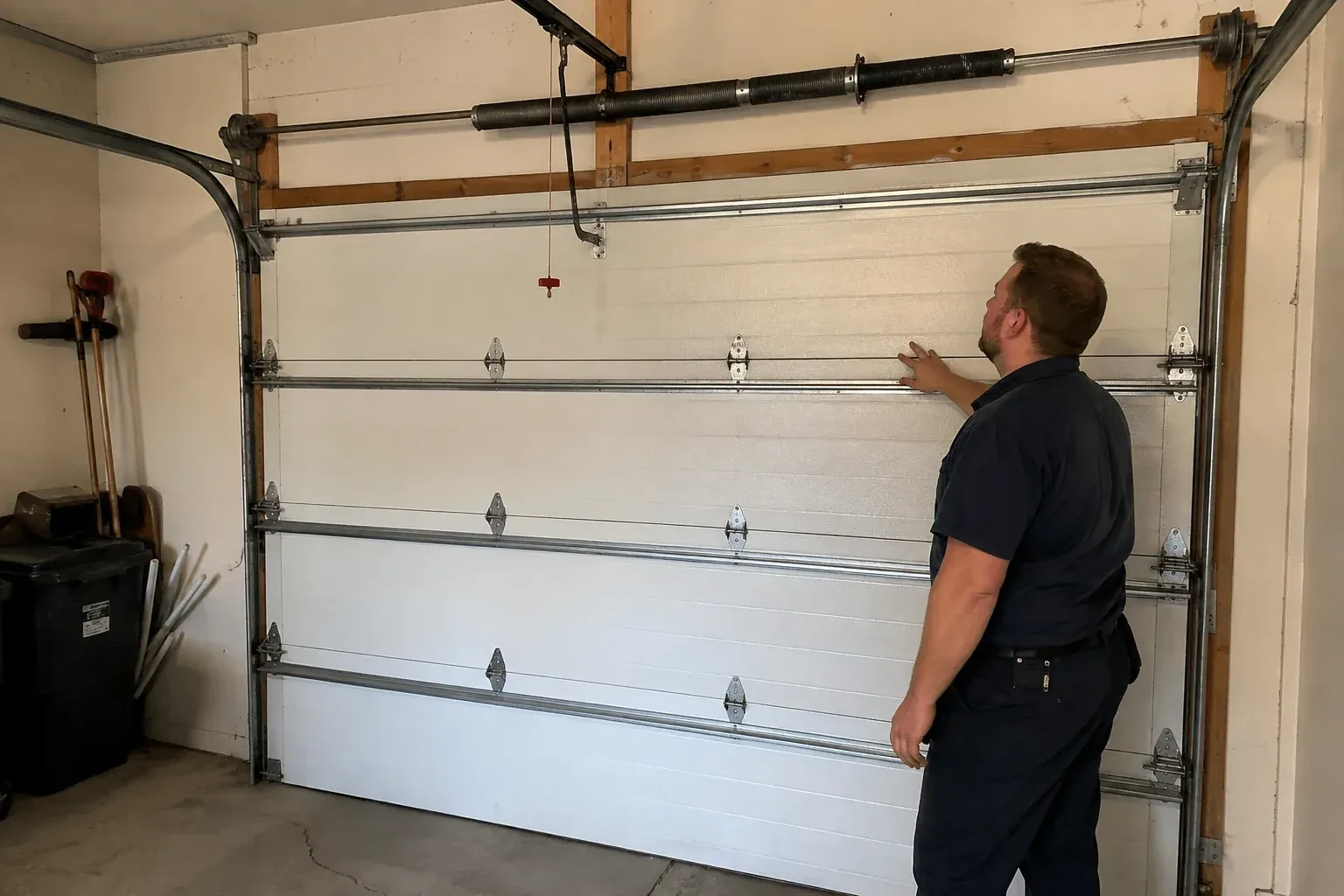
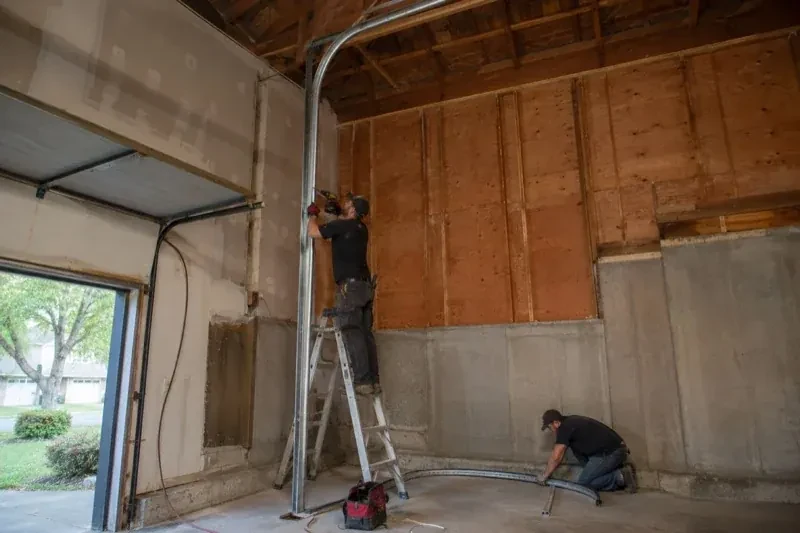
Any door is only as good as its installation. Tracks set plumb, springs wound to the door's weight, seals fitted to the floor and the opener limits set correctly are what separate a door that lasts from one that rattles.
WhyWhat you get back is a report with four kinds of entry.
Every morning the door announces itself to the whole street: a long metallic squeal as it climbs, a rattle at the top, and a groan on the way back down.
WhyAn off-track reset is the visit that puts a crooked, jammed or hanging garage door back onto its rails.
There are mouse droppings along the wall behind the recycling bins, and at one bottom corner of the door the vinyl has a neat chewed notch the width of a thumb.
WhyGarage doors are balanced by one of two spring systems, and the extension kind is the one you find on many single-car doors and older detached garages.
WhyIf your opener has no sensors at the floor, that alone does not date it, since a pair can be missing, removed or never reconnected; the technician identifies the model before deciding whether a pair can be restored or the operator itself needs replacing.
The property faces open fields, leaving the garage frontage more exposed than neighbouring homes sheltered by trees and buildings.
Why does my door reverse on the way down for no reason?
Most often it is the photo eyes. A sensor knocked slightly out of line, a lens with a film of road grime, a loose wire, or low afternoon sun shining straight into one eye will each break the beam as far as the opener is concerned. The next candidates are a down-force setting that has drifted, a binding roller or a door that has gone out of balance. The inspection checks each in turn.
Do I need to be home for the tune-up?
It helps to be there, at least at the start and the end. At the start you can describe what you have noticed and where, and open the garage. At the end the technician walks you through the record, shows you the balance test and the reversal tests, and points out anything to watch. If you cannot stay, arrange access and a way to reach you by phone so any part replacement can be approved before it is done.
Can I keep using the opener until someone comes?
It is better to leave the opener alone. A racked door does not become straighter with another cycle; every press of the button forces the crooked sections deeper into the rails and strains the hinges and wall brackets. Unplug the opener or pull the red release cord if the door is fully closed, keep people and vehicles clear, and let the technician move it in a controlled way.
Is the seal on an insulated steel door different?
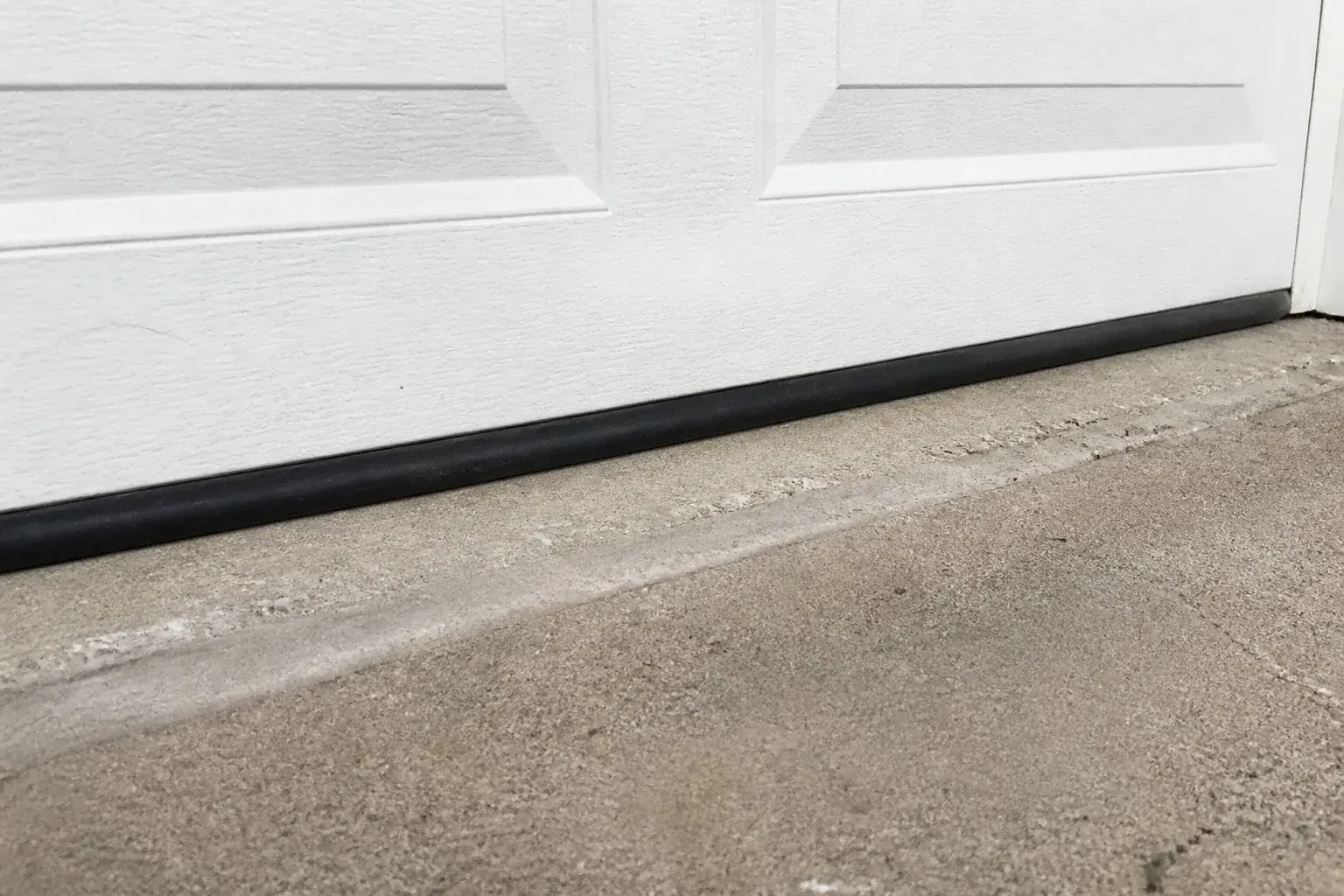
Sometimes. Many insulated doors have the seal channel moulded into a plastic cap that wraps the bottom rail, which takes a specific profile rather than a generic one. If that cap is cracked or the channel has opened, a screw-on aluminum retainer can be fitted over the rail so a standard T-style or bulb seal can be used from then on. Identifying the retainer at the first look settles which route applies.
Are hinges on a wood door different?
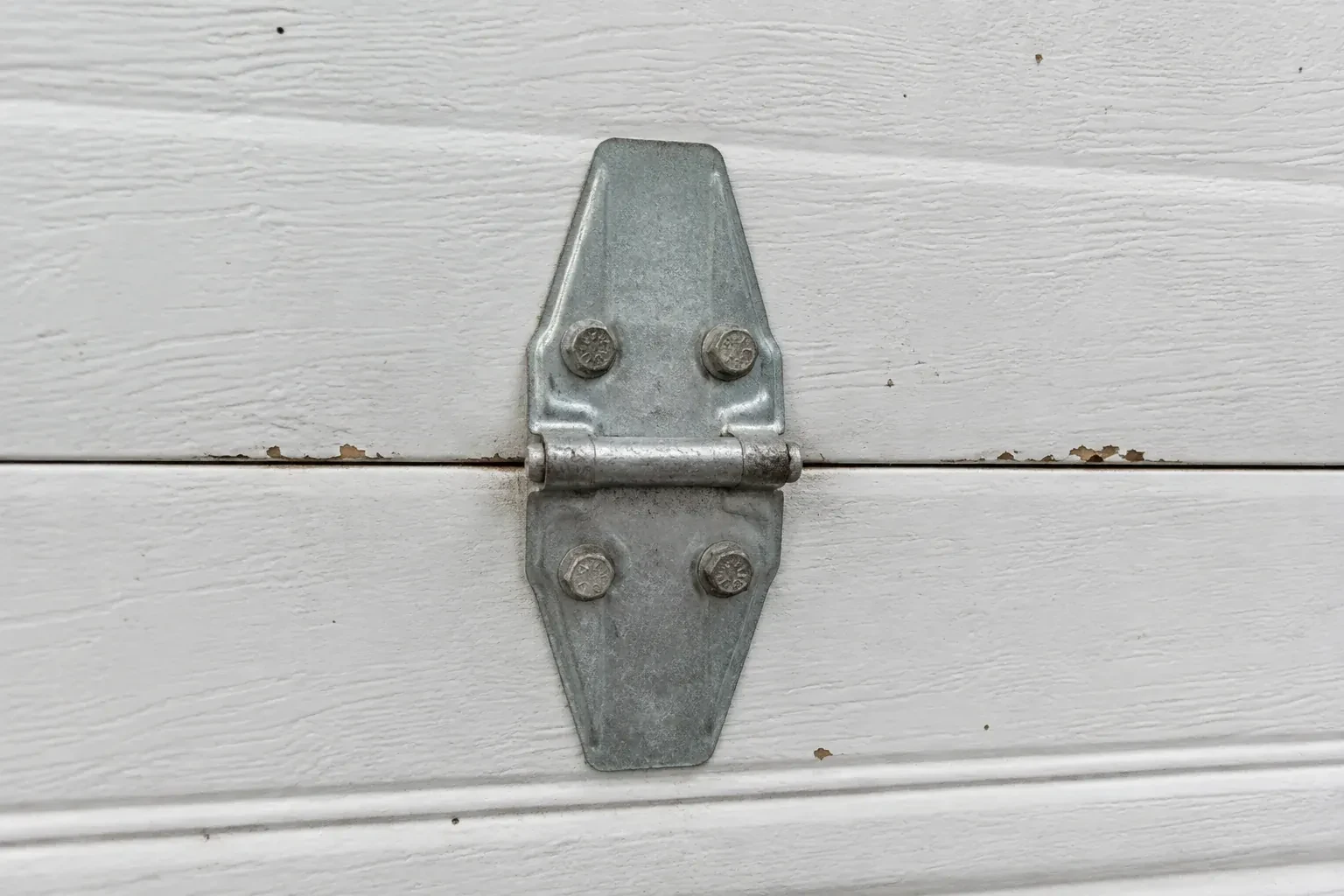
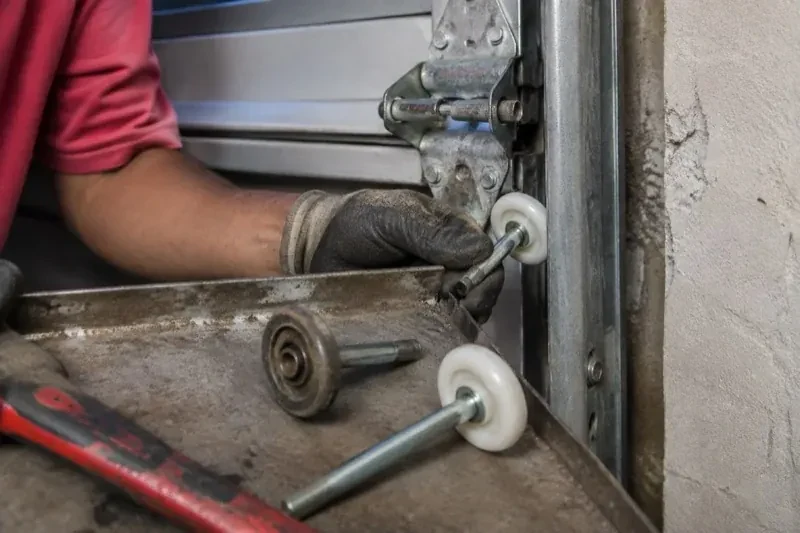
The hinges themselves are the same numbered galvanized parts, but the fastening changes. Wood stiles take lag screws or carriage bolts with nuts and washers rather than self-drilling metal screws, and the timber's condition matters as much as the hinge. Softened or split wood around the holes is filled, reinforced or bridged with a backer plate before the hinge goes back on, so the new hardware bites into something solid.
What information helps when I call?
Whether the springs run along the tracks or sit above the door; whether one is broken, hanging loose or just looks stretched; whether the door is closed, open or stuck partway and level or crooked; roughly how wide and tall the door is and what it is made of; and whether there is a cable running through each spring. A photo taken from inside with the door closed answers most of that at once.
I pulled the red cord during a power cut. Could that have caused this?
It can, if the door was open or out of balance when it was released. The release itself disconnects the trolley from the belt, so a falling door does not throw its weight onto the drive; the real risk is the door itself crashing down and damaging the tracks, hinges or panels. Nothing about the cord itself is harmful; it is designed to be used. The habit to keep is to release the door only when it is closed.
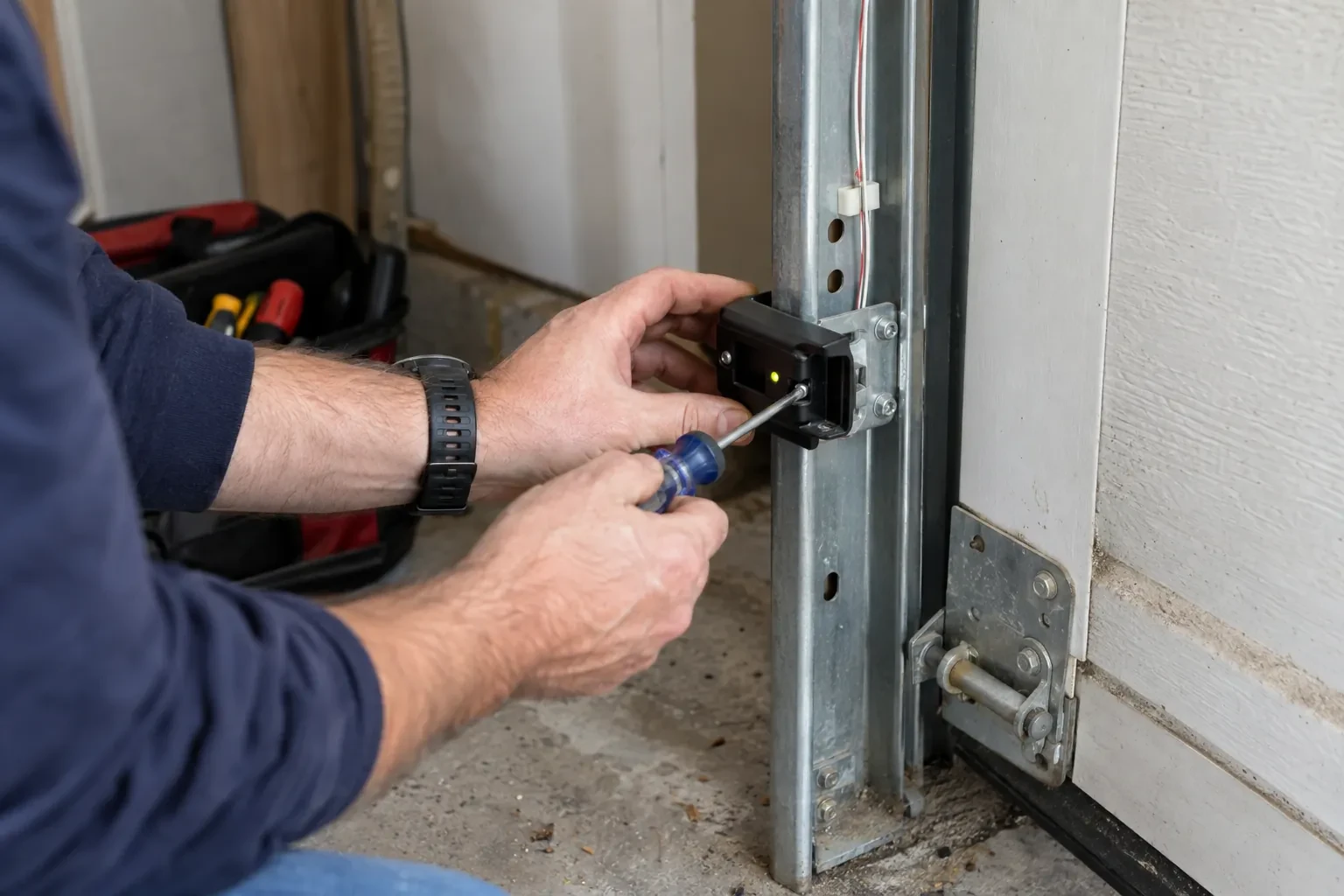
What do the small lights on the sensors mean?
Arrangement varies by model: most pairs carry an indicator on each side, in differing colours for sender and receiver, though some older pairs light only the receiver, so check the maker's chart. A receiving light that is dark or flickering means the beam is not landing on it, so the pair needs aligning or something is in the way. Both lights dark means the pair has no power, which points to the wire or the terminals at the head unit. Steady lights on both sides mean a healthy system.
Can reinforcement be added to my current door instead?
Sometimes a door manufacturer provides a documented reinforcement arrangement for an existing model and size. Adding generic struts does not create a known rating by itself because tracks, rollers, hinges, anchors, sections, and jamb connections also share the load. The existing label and construction should be identified before deciding whether a supported upgrade path exists or replacement is more appropriate.
What happens if the opening dimensions change during the build?
The revised finished width, height and surrounding clearances are measured and compared with the selected door package. A small framing change can affect section size, track position, seals or spring specification, so compatibility is confirmed before installation proceeds. The responsible project party decides how the building work is corrected or the selection is revised. Recording the accepted dimensions gives the builder, supplier and installer one shared basis for the next step.
Request a visit
For an older door in Brantford we look for ways to keep it. Original wood doors and extension-spring setups can run for many more years with safety cables, fresh pulleys and a properly set opener. When a door truly is finished, we say so and explain what a replacement would involve, without pushing.