Repairs · Tutela Heights
Garage Door Perimeter Weatherstrip in Tutela Heights
The vinyl strip around the door used to be soft and white.
In plain words
When the work is finished you have a door that closes against a soft, continuous line of contact on both sides and across the top. From inside with the lights off there is no daylight at the edges; from outside, the new stop matches the trim colour. The door moves through its full travel without the fin catching or squealing. You are told what profile, colour and lengths were fitted, so a match is simple later, and shown the few habits that keep the seal supple: no paint on the fin, a silicone wipe before freezing rain, and slush kept off the bottom of the jambs.
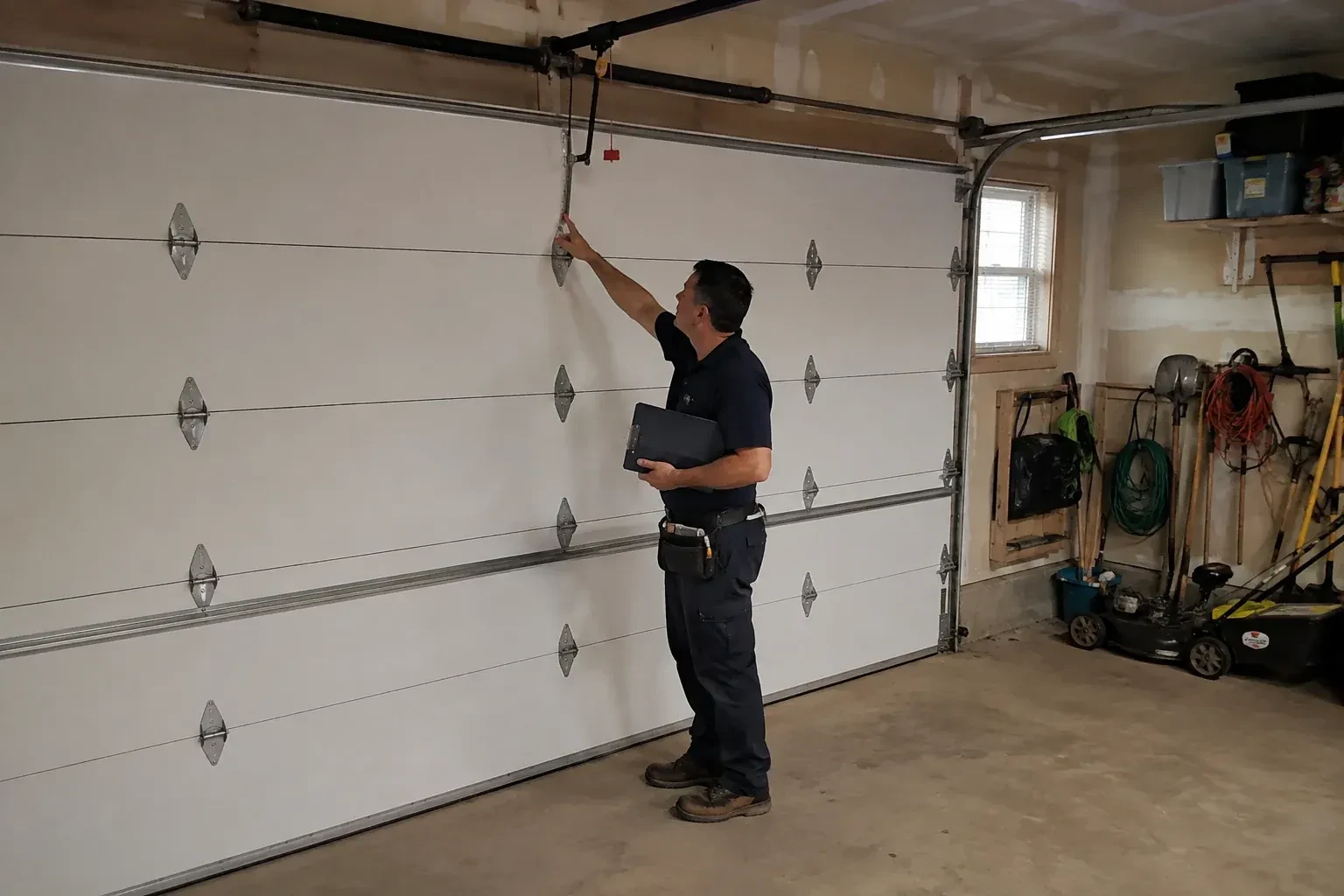
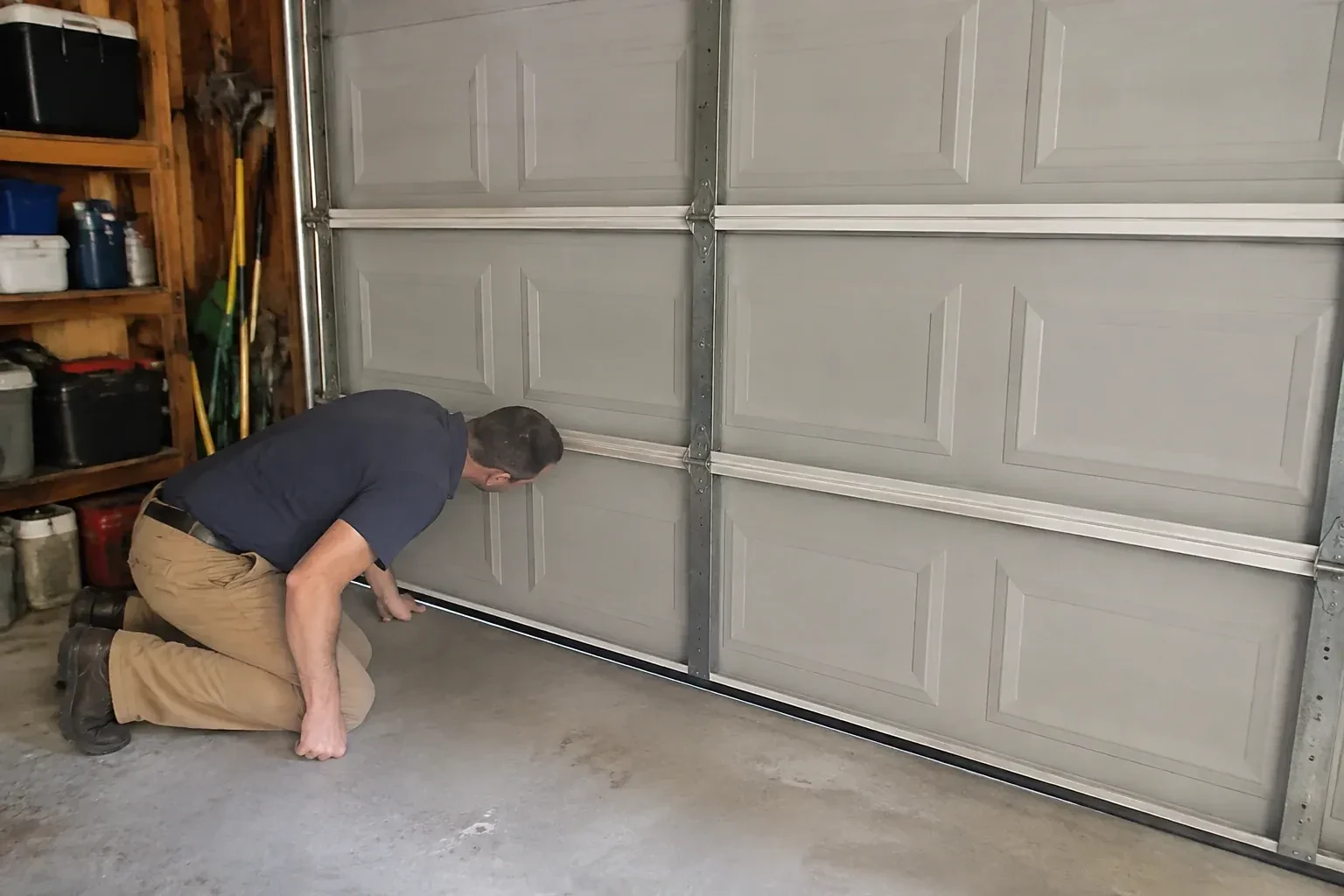
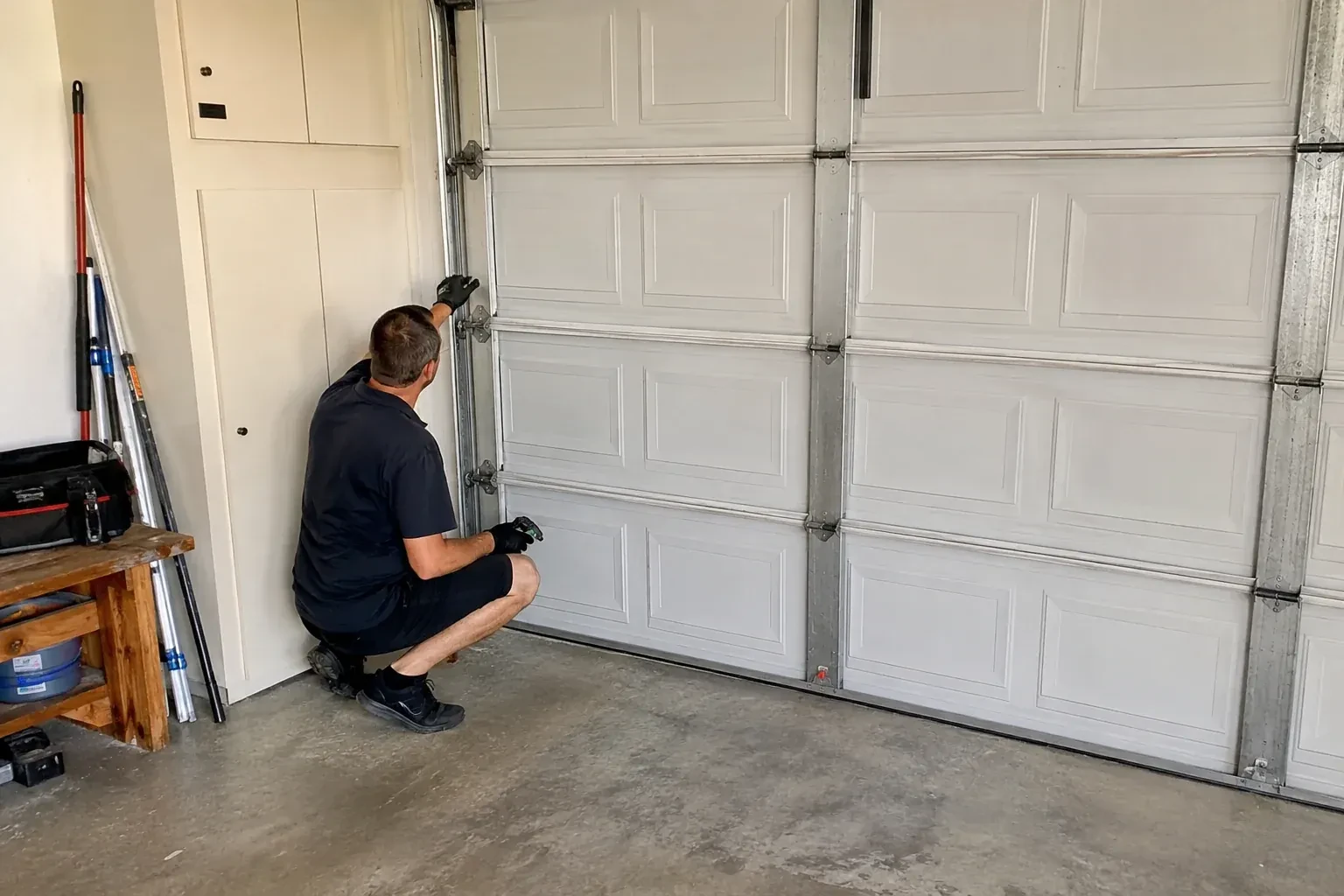
How the visit goesA length of weatherstrip along the right jamb has pulled away, nails and all, and it slaps against the trim every time the wind picks up. The wood behind it is dark and soft where it meets the floor.
Garage Door Perimeter Weatherstrip
How the visit goes
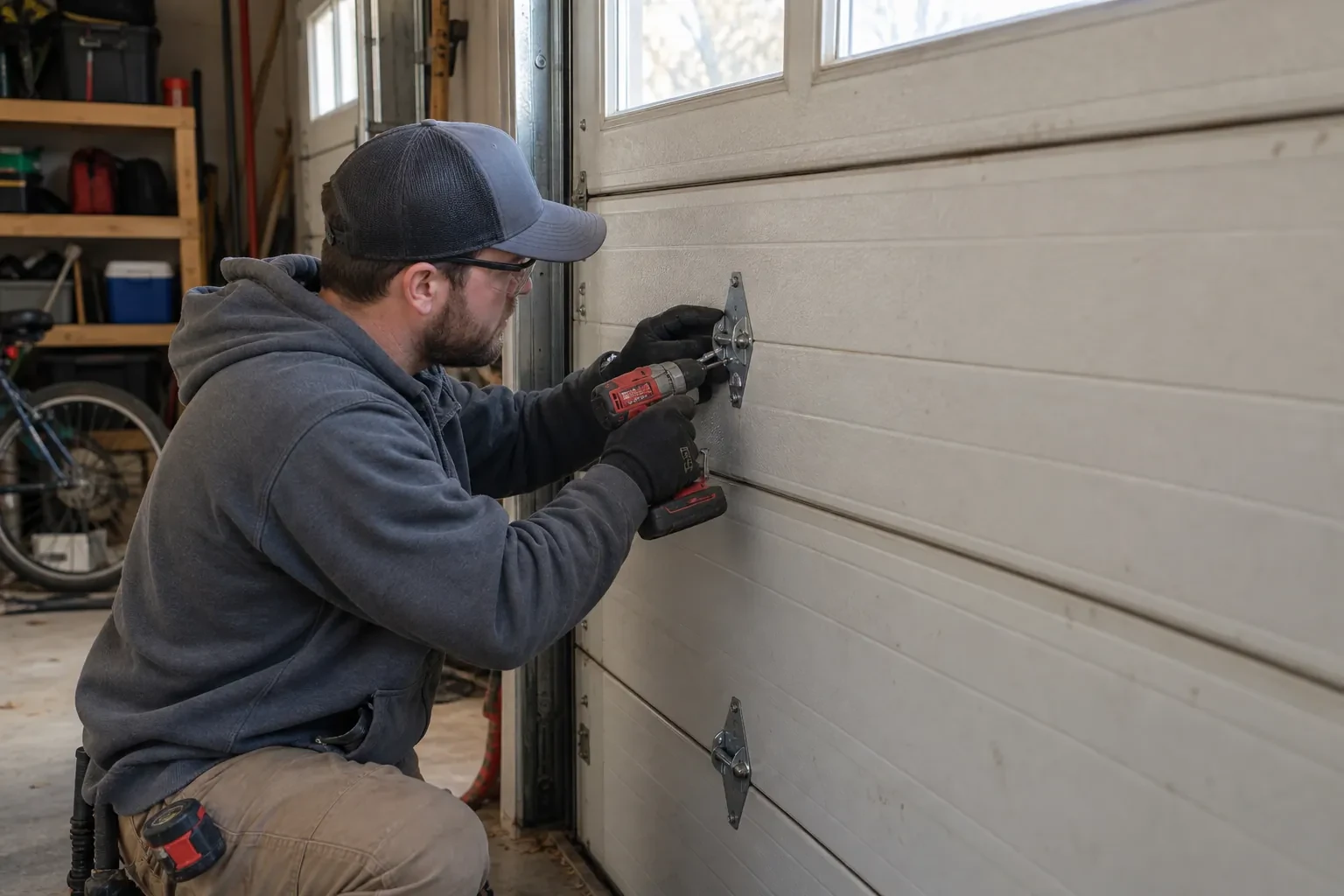
Trim, cladding and where water gets behind
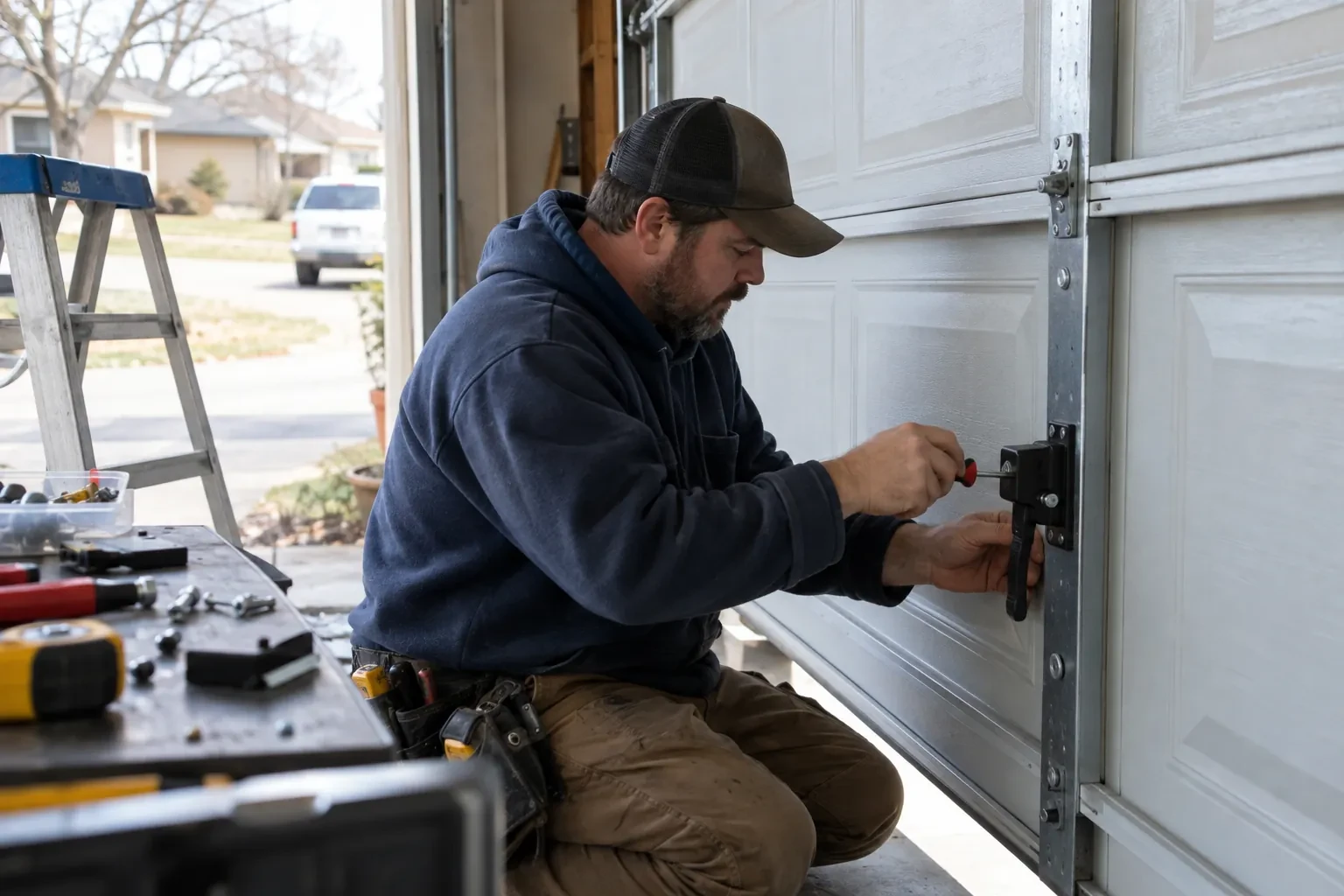
The seal shares the jamb with brickmould, siding, capping and old caulking, and water that gets behind any of them ends up in the wood the strip is nailed to. The technician follows the joint between stop and trim looking for cracked or missing caulk, capping that funnels water down the jamb face, and gaps at the sill where meltwater collects. These are small things to correct while the old strip is off and the surface is bare, and they are what stop the fresh wood from going the way of the old. Anything larger, such as damaged siding, is pointed out for a separate decision.
Making the jamb sound
Where probing found soft wood, it is dealt with before the seal. Rot at the base of the jamb is cut back to solid material and a matching piece of lumber or PVC trim is spliced in, fixed and primed. Minor soft spots are hardened with an epoxy consolidant and filled. Fasteners that will hold the new stop are then going into wood that grips them, which is what keeps the strip tight through years of the door pressing on it. Where the jamb is clad, the technician finds the solid framing behind the cladding and fastens through to it rather than into the thin skin.
A continuous line of contact
The change is visible the moment the lights go off: no bright edge down either side, no glow along the top. From outside, the new stop or fin sits flush and matches the trim. When the door closes, the fin bends gently against it along its whole length and springs clear as it lifts, without a squeal or a drag. Snow that used to drift in along one side is largely kept out, and the garage stays quieter on a windy night. If a jamb was repaired, the fresh wood or PVC at the base is primed and painted so it reads as part of the frame rather than a patch.
Garage Door Perimeter Weatherstrip
In the van
Jamb repair lumber or PVC trim
Exterior caulking and gun
Flexible vinyl fin seal
Flat bar, hammer and nail set
Epoxy consolidant and exterior primer
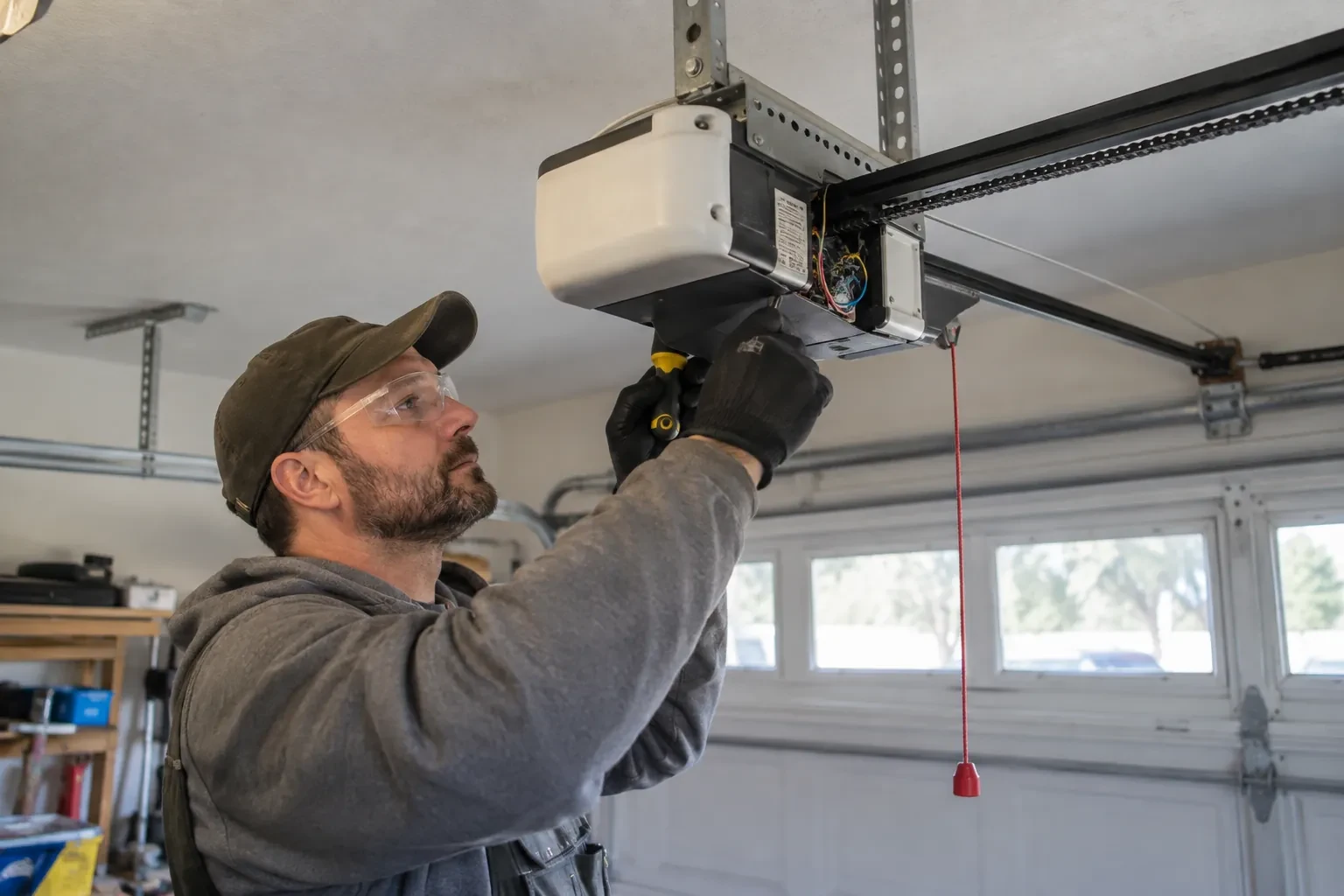
Garage Door Perimeter Weatherstrip
What affects the quote
Alignment work on the door
Where the door sits out of square and a track bracket or the door itself needs small correction before the seal can meet it evenly, that adjustment is named separately.
Condition of the jambs
Soft or rotten wood at the base of a jamb is cut out and spliced with new lumber or PVC trim before the seal goes on, and that repair is quoted as its own item.
Size of the door
A double door has a longer header and the same two sides as a single, so more material and a two-person lift for the top piece; taller openings take longer side lengths.
What to have ready
- Has the door recently been replaced or adjusted?
- Is your garage attached to the house, and is it heated?
- Have mice, leaves or water been getting in?
Garage Door Perimeter Weatherstrip: questions
QuestionsDo you adjust the door as part of the seal work?
Small corrections, yes. If a track bracket needs re-setting or the door needs to come plumb so the fin can meet it evenly, that is done so the new seal is fitted to a door that sits properly. Larger work, such as replacing rollers or a bowed section, is explained and offered as its own job so you can decide on it separately.
My door was replaced last year. Does the perimeter seal need doing too?
Often, yes. A new door is sometimes fitted against the original wood stop and its old fin, and the new door may sit slightly differently in the opening, so the old seal no longer meets it. If daylight shows at the edges or the fin is hard and cracked, a new seal set against the new door completes the installation and matches the fresh look of the door.
How should I look after the new seal?
Four times a year, check for daylight from inside with the lights off and press the fin to feel that it is still soft. Wipe the seal with a damp cloth to clear grit and salt, keep paint off the fin, apply a silicone wipe before winter, and keep slush and bins away from the bottom of the jambs. Press any lifted corner back and call if a length has come loose.