Springs · Brantford
Extension Spring Replacement
You pulled the red cord to open the door during a power cut and it barely moved.
In plain words
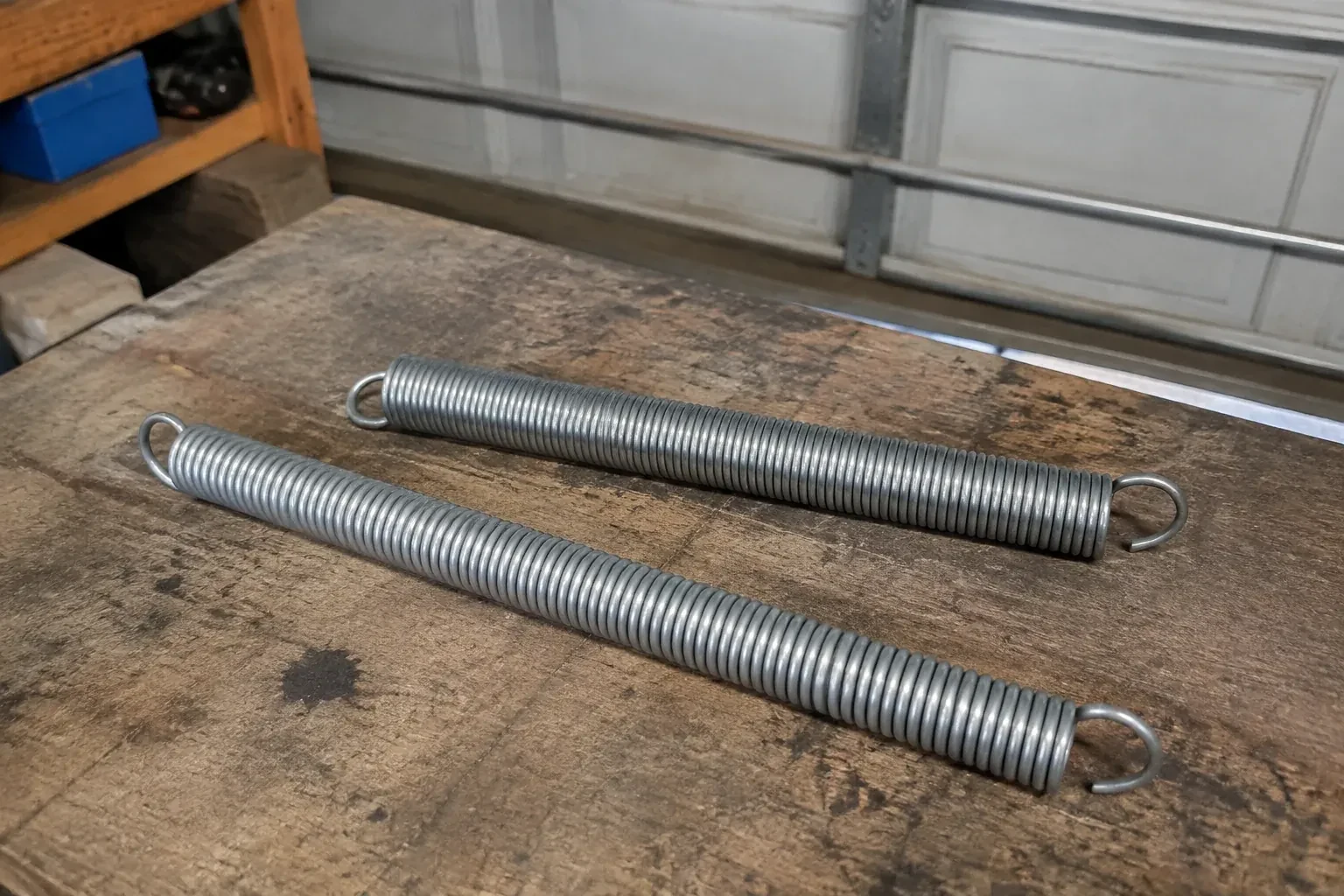
Garage doors are balanced by one of two spring systems, and the extension kind is the one you find on many single-car doors and older detached garages. Instead of a spring wound on a shaft above the opening, an extension system uses two springs stretched along the horizontal tracks, working through pulleys and cables. It needs less headroom, which is why it suits garages with a low ceiling. Replacing these springs is its own service with its own parts: springs chosen by door weight, pulleys, S-hooks and containment cables. A technician confirms which system is on your door before any part is chosen.
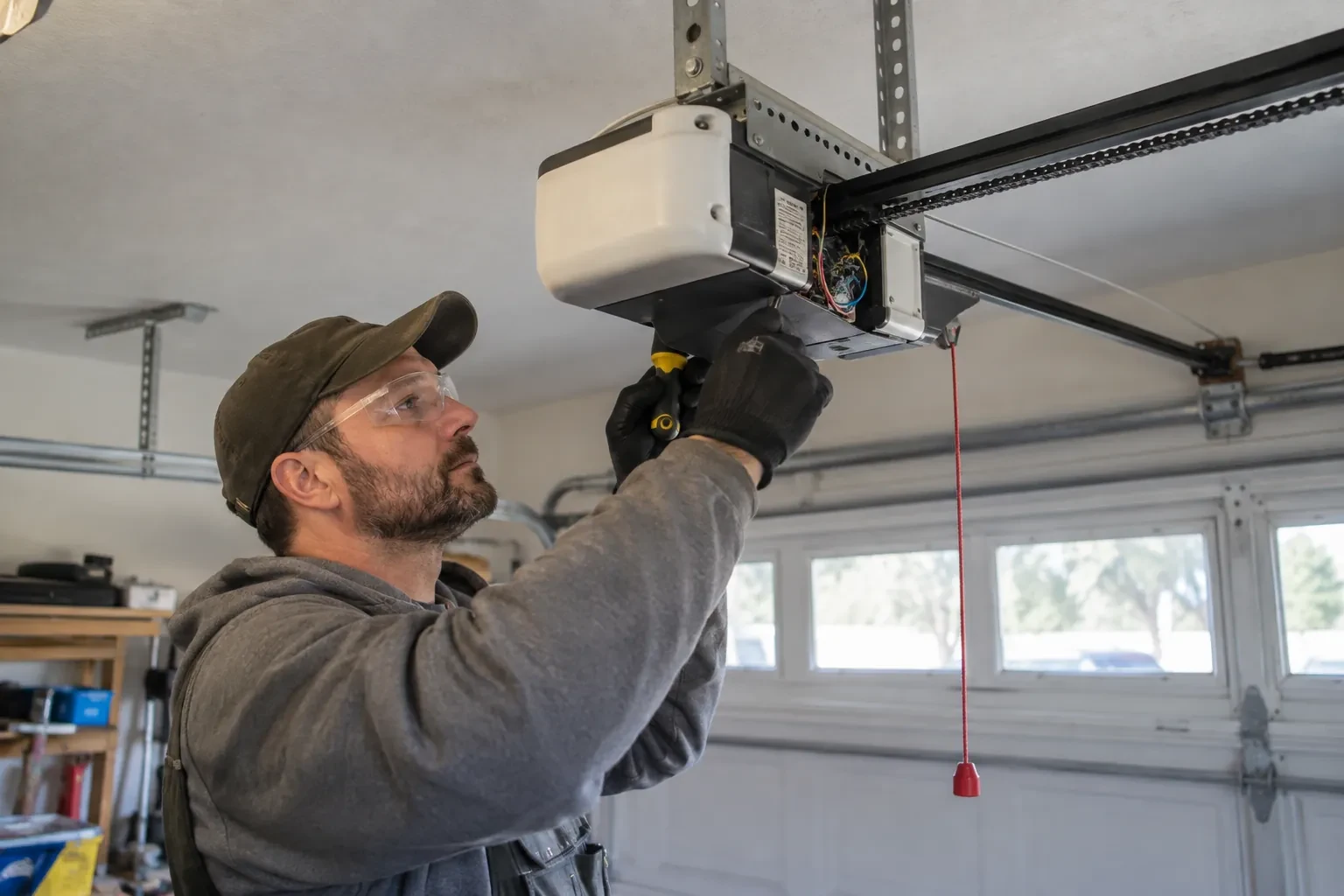
How the visit goesYou pulled the red cord to open the door during a power cut and it barely moved. Lifting it took your whole weight, and when you let go it came down hard. It used to float up with one hand.
Extension Spring Replacement
How the visit goes
Hangers, brackets and what they are screwed into
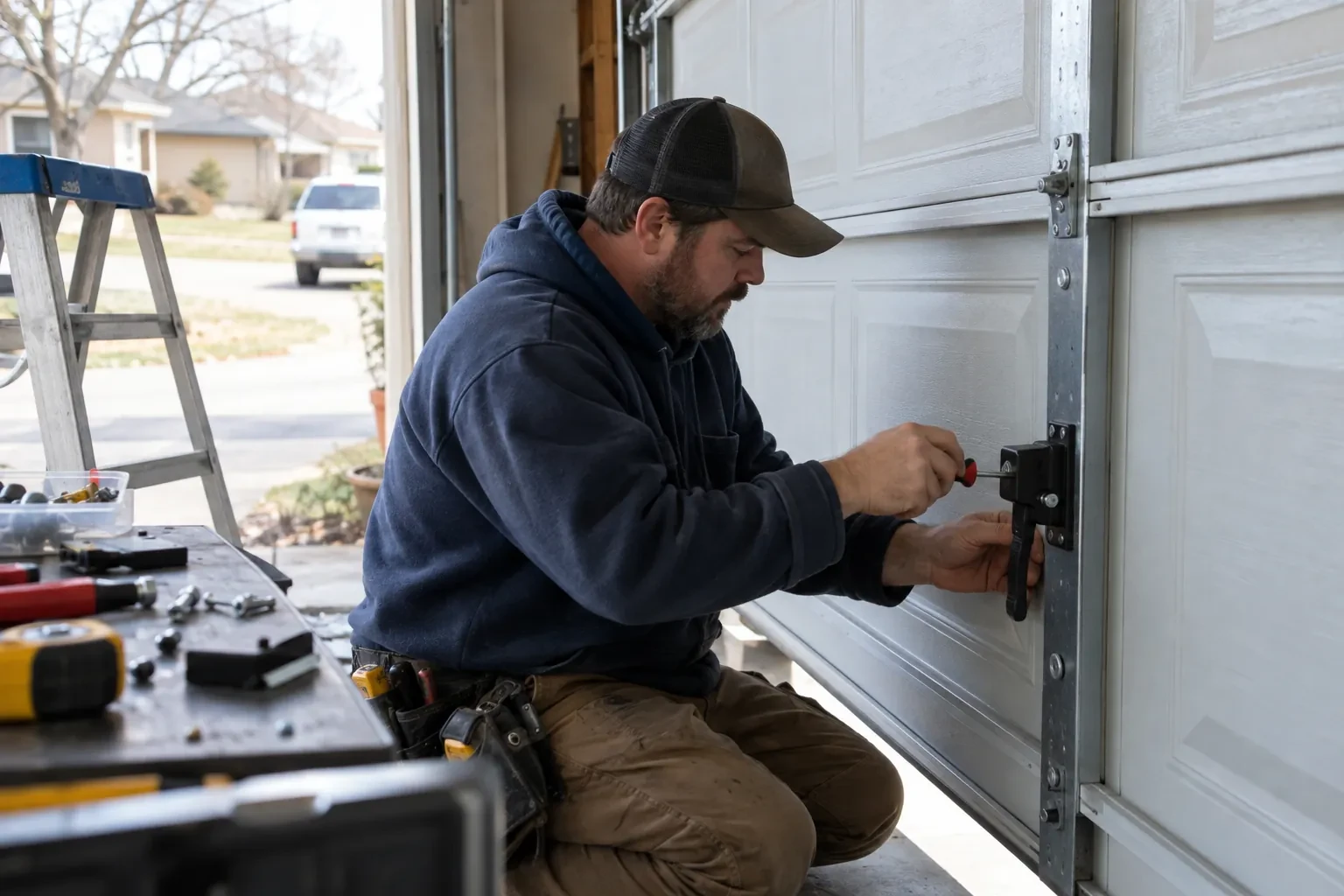
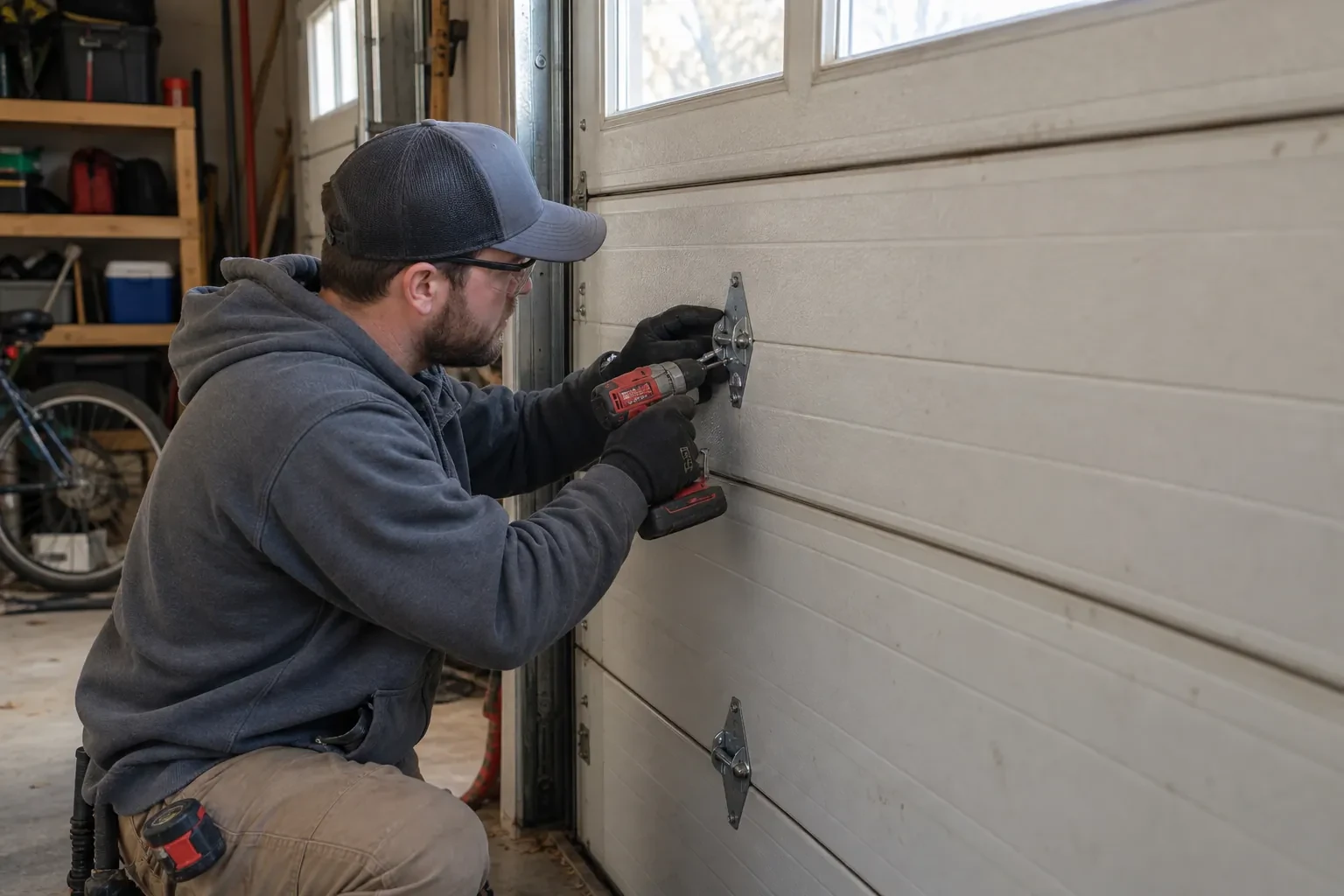
Extension springs pull against whatever holds their back end, usually an angle-iron hanger bolted to the rear track support or lag-screwed into a ceiling joist. The technician checks that this anchor is tight, that the lag screws bite into wood rather than drywall or a split joist, and that the hanger has not bent under years of load. The bracket that carries the fixed pulley at the front of the track is checked the same way, along with the bottom brackets on the door that the lift cables pull on. An anchor that has loosened lets the spring's geometry drift, which is one reason a door slowly becomes uneven.
Renewing the hardware around the springs
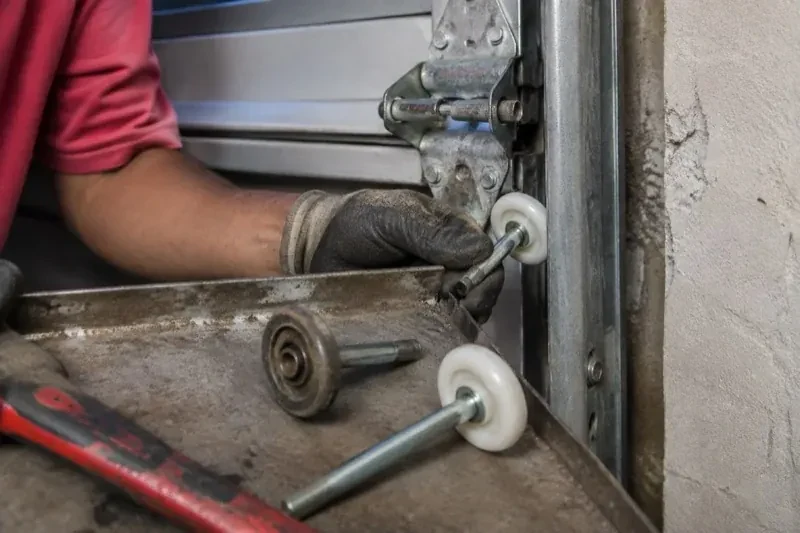
Anything the inspection flagged is dealt with while the door is open and the springs are slack, because that is when the work is easiest and the parts are already in hand. A pulley with a grooved wheel or a stiff bearing is swapped for a new one on its fork or bracket. Lift cables with rust at the loop or broken strands are replaced along with the springs. A rear hanger that had loosened is re-fixed with lag screws into a sound joist, and a bent front bracket is straightened or renewed. Bottom brackets eaten by salt and rollers with cracked wheels are changed at the same time.
Checking the balance yourself
You can confirm the springs are still doing their share without going near them. With the door closed and nobody in the opening, pull the opener's red release cord so the trolley lets go of the door. Lift the door by its handle to roughly hip height and take your hands away. A door on good springs stays about where it is; if it sinks to the floor the springs have weakened, and if it rises on its own they are pulling harder than the door weighs. Either way it is a call rather than a job for you. Reconnect the opener the way your manual describes, usually by running it once.
Extension Spring Replacement
In the van
Extension springs, matched pair
Track clamps or locking pliers
Lift cables
S-hooks and adjusting clips
Rear spring hangers and angle iron
Extension Spring Replacement
What affects the quote
Condition of the lift cables
Cables with fraying, rust at the loop or a kink are renewed as a pair while the springs are off. Sound cables are re-routed and set, and the quote says which applies.
Opener adjustment and testing
Resetting the opener's force and travel to the newly balanced door and running the reversal tests is a short task that the quote names when it applies.
Pulleys that need renewing
Each side has two pulleys, and a wheel worn to a groove or a bearing that has stiffened is replaced with the springs. The quote names how many and which type.
What to have ready
- Has insulation, glass or a wood facing been added to the door?
- Does the door drop the last bit, or drift up on its own?
- Is a car parked inside that will need to come out first?
Extension Spring Replacement: questions
QuestionsCan I use the door as soon as the work is done?
Yes. The last steps of the visit are the balance test by hand, several full cycles under power and the opener's reversal checks, so the door is ready for normal use when the technician leaves. New springs need no settling period. It is worth running it yourself once or twice while the technician is still there, so you know what a properly balanced door sounds and feels like from now on.
What information helps when I call?
Whether the springs run along the tracks or sit above the door; whether one is broken, hanging loose or just looks stretched; whether the door is closed, open or stuck partway and level or crooked; roughly how wide and tall the door is and what it is made of; and whether there is a cable running through each spring. A photo taken from inside with the door closed answers most of that at once.
Is it all right to keep shelves and storage near the springs?
Keep a clear zone around them. The springs, pulleys and cables move on every cycle, and anything leaning into their path, such as a ladder, a hockey bag or a shelf edge, can catch a cable or knock a pulley. Storage that crowds the rear hangers also slows any future service. A hand's width of clear air around each spring's full travel, and nothing hung from the springs or their cables, is the rule of thumb.
Related services
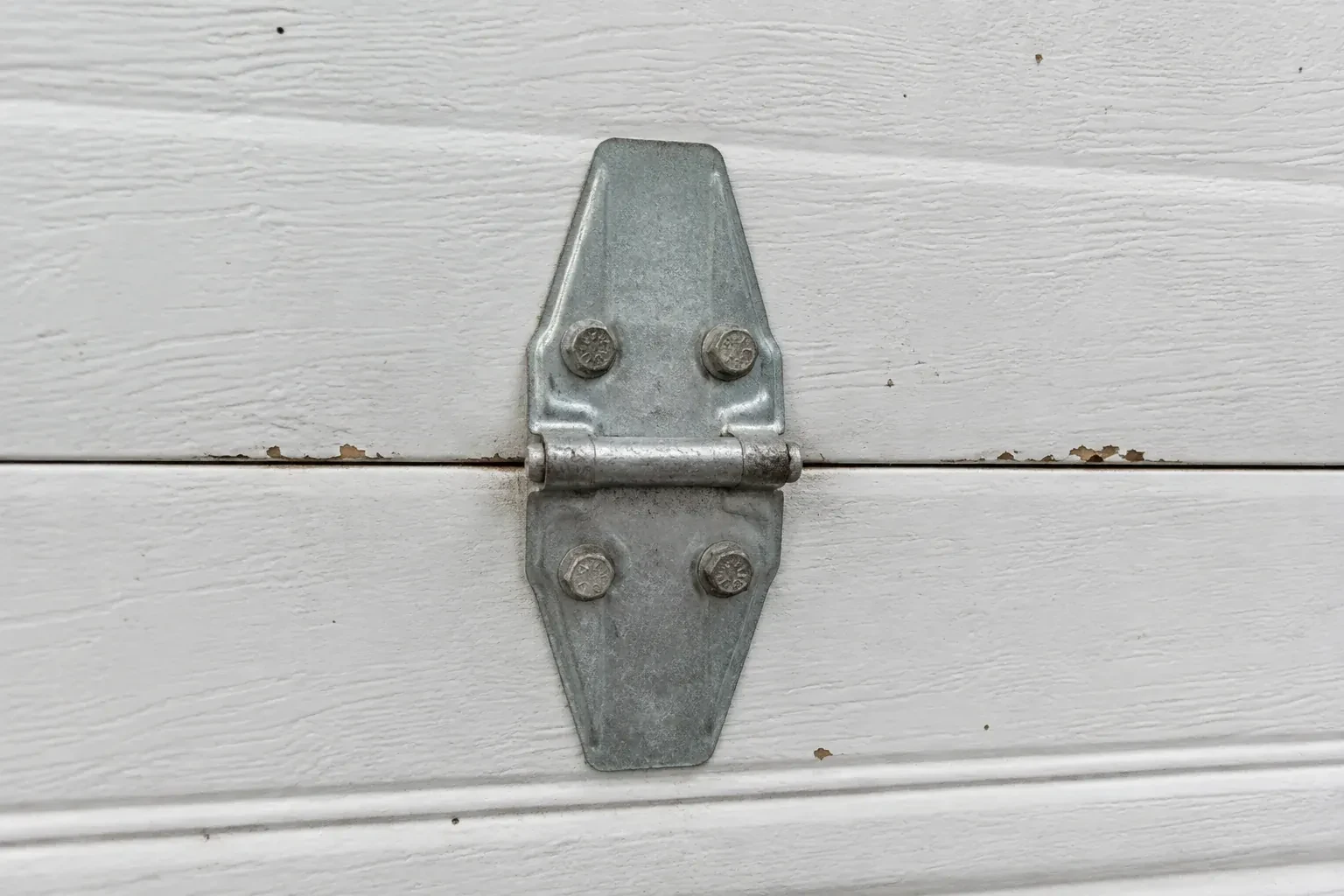
- Garage Door Hinge ReplacementEvery time the door goes up there is a sharp pop from the same spot, about a metre off the floor, and the whole door gives a little shudder.
- Garage Door Track Repair or ReplacementYou bought the house with a door that sticks near the top of its travel.
- Garage Door Cable ReplacementYour older door has springs along the tracks, and one cable has slipped off its pulley and dangles slack.