New Doors · Brantford
High-Lift Garage Door Conversion
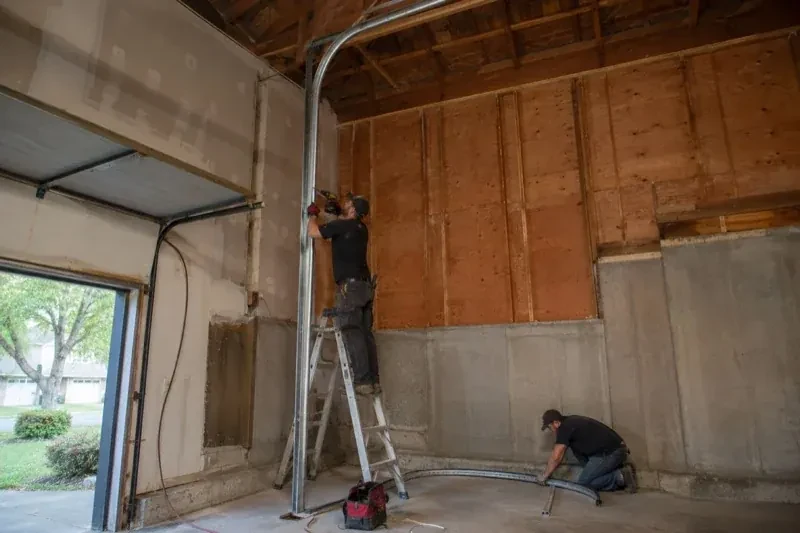
Storage racks were planned near the ceiling, but the existing tracks and centre-mounted opener divide the only practical zone.
In plain words
A high-lift conversion changes where a sectional door turns from vertical to horizontal travel. Extended vertical track carries the panels farther up the wall, then a new transition guides them toward the ceiling. Because that geometry changes cable movement and the force needed through the cycle, the conversion normally includes matched drums, cables and torsion springs rather than track alone. The result is more usable space beneath the open door for a vehicle lift or another planned use, provided measurements, structure and operator placement support the design.
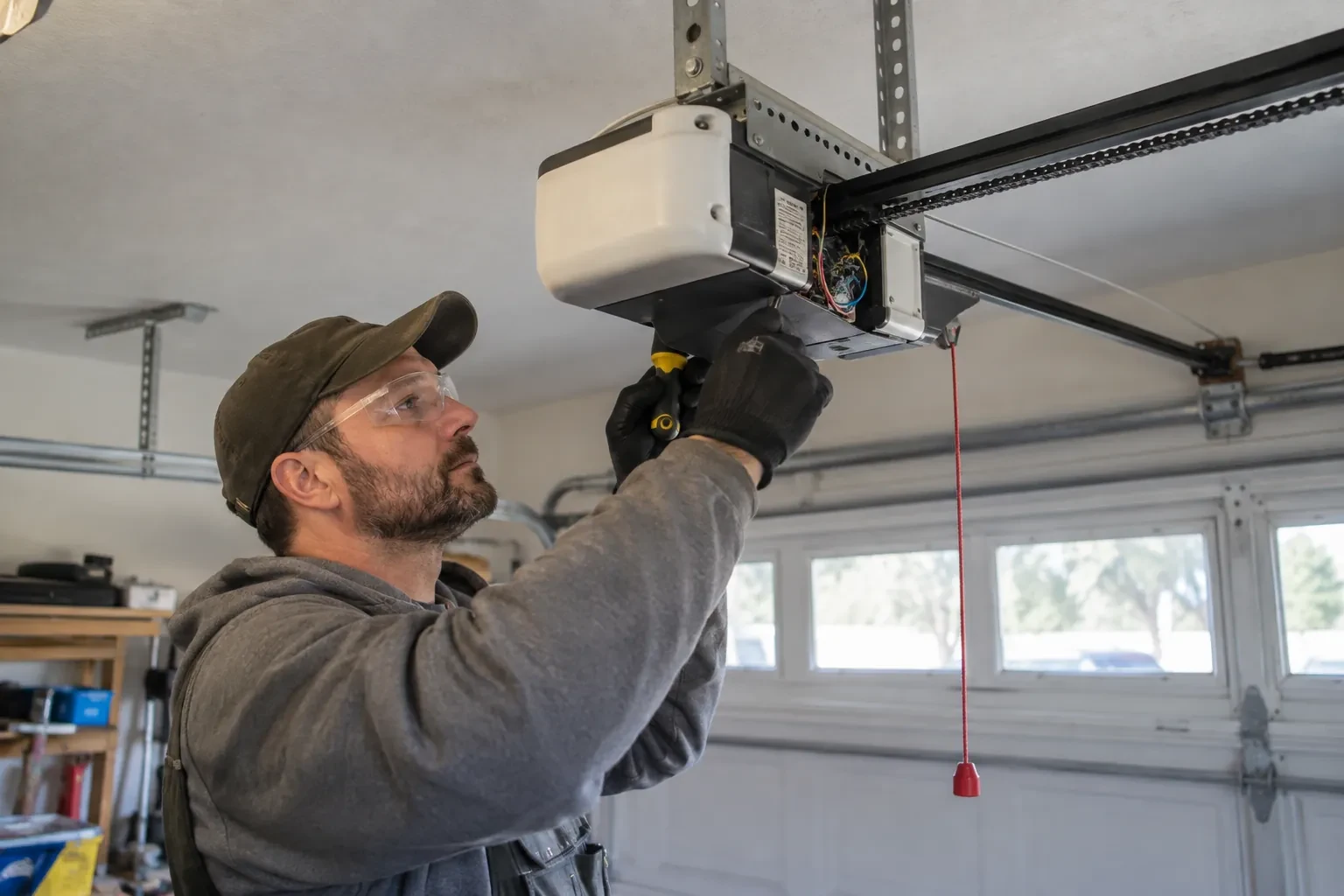
How the visit goesWorkshop equipment is moving in, and the present opener rail and door sections occupy the same overhead zone planned for lighting and clear working space. A different travel path could organize that ceiling area more effectively.
High-Lift Garage Door Conversion
How the visit goes
Distinguish high lift from full vertical lift
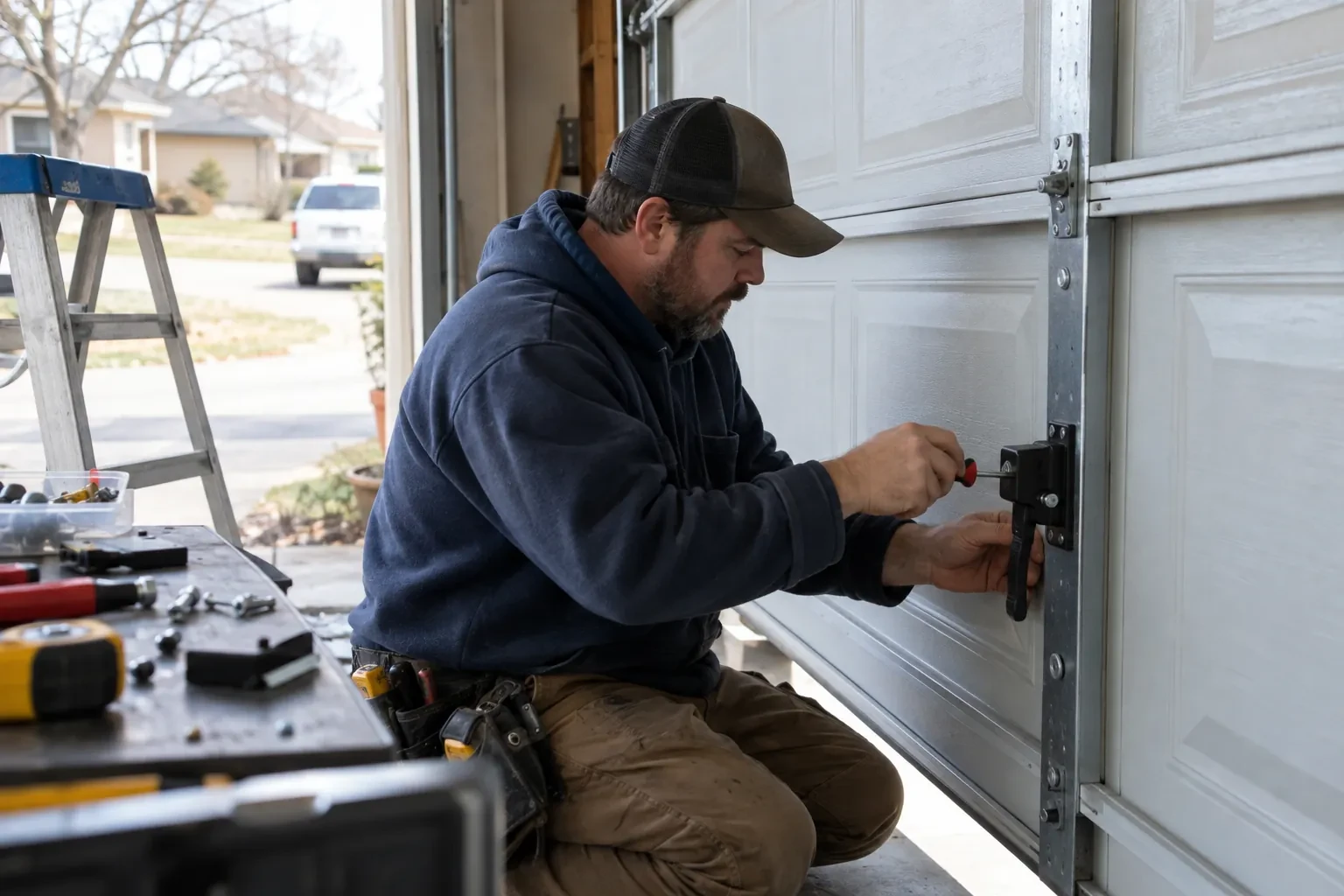
The room geometry determines which track family fits. A high-lift door rises an additional distance up the wall and then turns to a horizontal position. A full vertical-lift door continues upward without horizontal track. The technician checks wall height above the opening, usable ceiling depth and the desired open position to confirm which description matches the project. Naming the arrangement correctly matters because drums, tracks, spring placement and support details differ, and the quote should reflect the actual travel path being designed.
Secure the door before changing its geometry
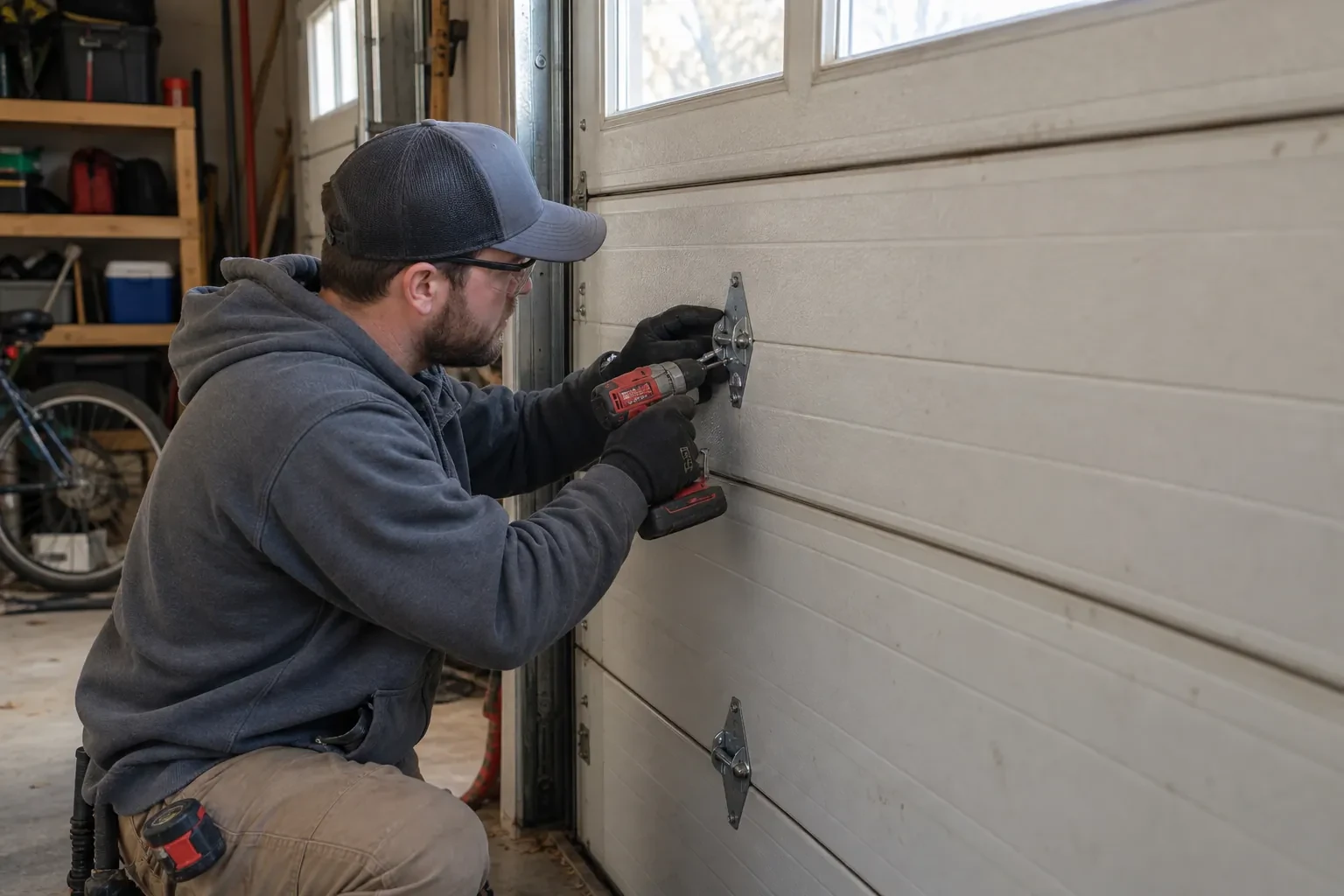
Conversion begins with the door closed, the work area organized and the panels firmly supported. The operator is disconnected from door movement, and the spring system is released through controlled professional procedures. Clamps and lifting equipment keep the door from shifting while loaded components are removed. This deliberate setup gives technicians stable access to tracks, cables, drums and shaft hardware. It also protects the reusable sections and creates a known starting condition for building the new path rather than dismantling parts around an unsupported door.
Care after a change in door weight
New windows, reinforcement, decorative hardware or multiple layers of coating can change what the counterbalance system must lift. If a later project adds meaningful weight to the sections, arrange an assessment so manual balance and spring selection can be reviewed against the altered door. The same applies when damaged sections are replaced with a different construction. Keeping the recorded configuration current helps the operator continue working with a balanced system and lets drums, cables and springs perform the roles selected for the high-lift geometry.
High-Lift Garage Door Conversion
In the van
Track and flag brackets
Calculated torsion springs
End bearing plates
Transition track sections
High-lift cable drums
High-Lift Garage Door Conversion
What affects the quote
Condition of reusable sections
Sound panels and hardware may remain in service, while worn hinges, rollers, top fixtures or damaged reinforcement add related work to the conversion.
Access to the elevated work zone
Ceiling height, fixed storage, vehicle lifts and restricted floor space influence the ladders, lifting equipment, staging and labour needed to reach components safely.
Electrical coordination
A relocated operator may need a suitable power location or revised control wiring, which is identified separately from the mechanical door scope.
What to have ready
- Where is the current opener and its rail mounted?
- Has weight been added through reinforcement, overlays or extra coatings?
- What clear height do you need beneath the fully open door?
High-Lift Garage Door Conversion: questions
QuestionsWhat does high lift mean on a garage door?
High lift describes a sectional-door arrangement that travels vertically above the opening for an added distance before curving into horizontal track. The dimension from the header to the underside of that raised track is the high-lift distance. It uses more wall height than standard lift while still storing the open panels overhead.
Will the doorway opening become taller?
The conversion changes how the existing sectional door travels inside the garage; it does not enlarge the framed vehicle opening by itself. Its benefit appears when the door is open, because the panels can sit higher above the floor. If the project also needs a taller entrance, that is a separate building and door-sizing scope requiring its own design.
Can a high-lift conversion create room for a vehicle lift?
That is a common reason to consider one. The assessment uses the lift's raised height, the vehicle profile and working clearance to define the needed zone. The proposed door path is then measured against that zone, including the lowest section in the open position. Final feasibility depends on available wall height, ceiling conditions, structure and equipment placement.
Related services
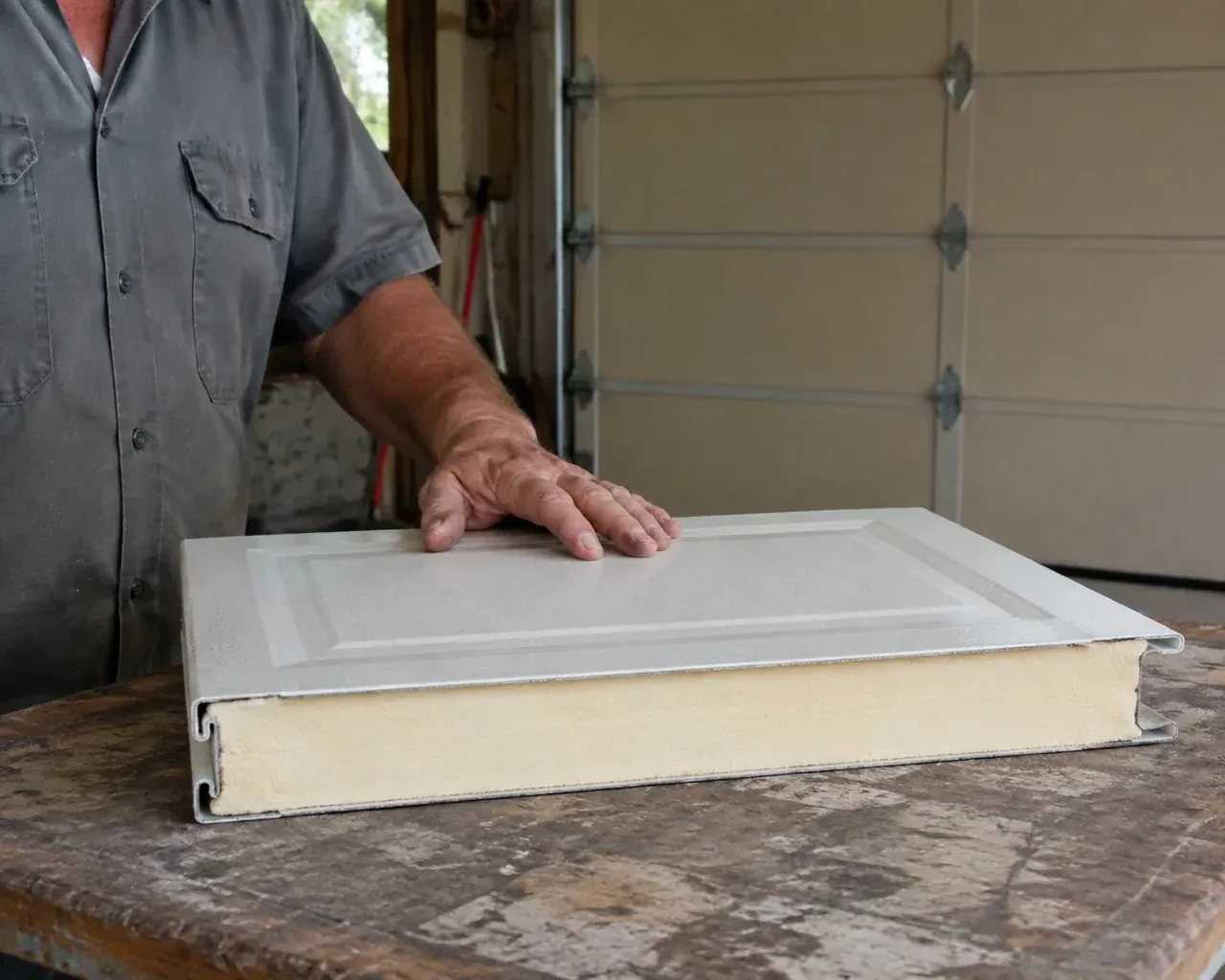
- Insulated Steel Garage Door InstallationDaylight appears beside the closed door and powdery snow collects just inside after windy weather.
- Wind-Rated Garage Door ReplacementYour renovation drawings call for a garage door with a stated design pressure, yet the existing door has no readable label or installation record.
- Carriage-House Garage Door InstallationTwo garage openings sit side by side, and small differences in window spacing or decorative hardware would be obvious.