Springs · Brantford
Garage Door Track Repair or Replacement
You bought the house with a door that sticks near the top of its travel.
In plain words
Track rarely fails on its own; something moves it. A bumper creases the vertical run, vibration works lag screws out of the jamb, slush and salt eat the bottom foot of the channel, worn rollers slowly spread the lip, and a hanger pulling from the ceiling lets the horizontal run sag. Track repair treats the cause with the symptom: the jamb is repaired if it has gone soft, rollers are renewed if they did the spreading, hangers are refixed into joists, and the threshold is checked for ice ridges. Correcting the reason is what keeps the straightened track straight for years.
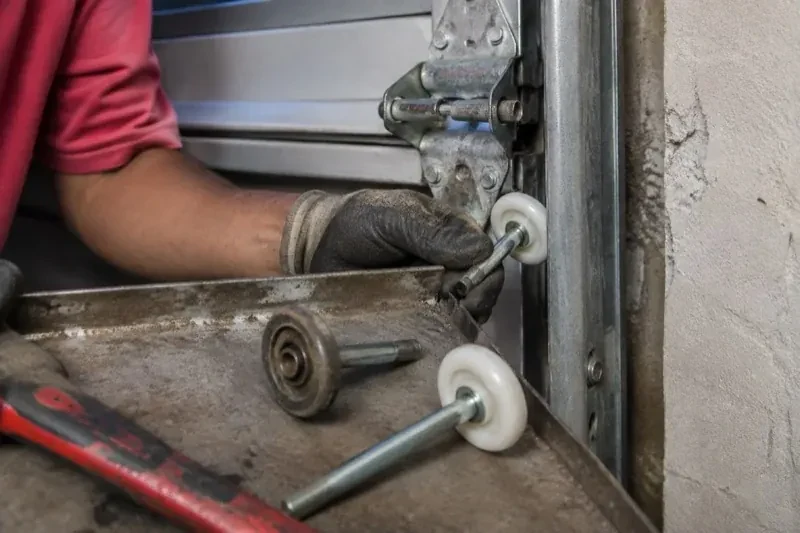
How the visit goesAfter a decade of slushy winters the bottom foot of the track is flaking rust. A roller squeals as it passes, and the channel edge has gone rough and thin where the salt collects.
Garage Door Track Repair or Replacement
How the visit goes
What bent it
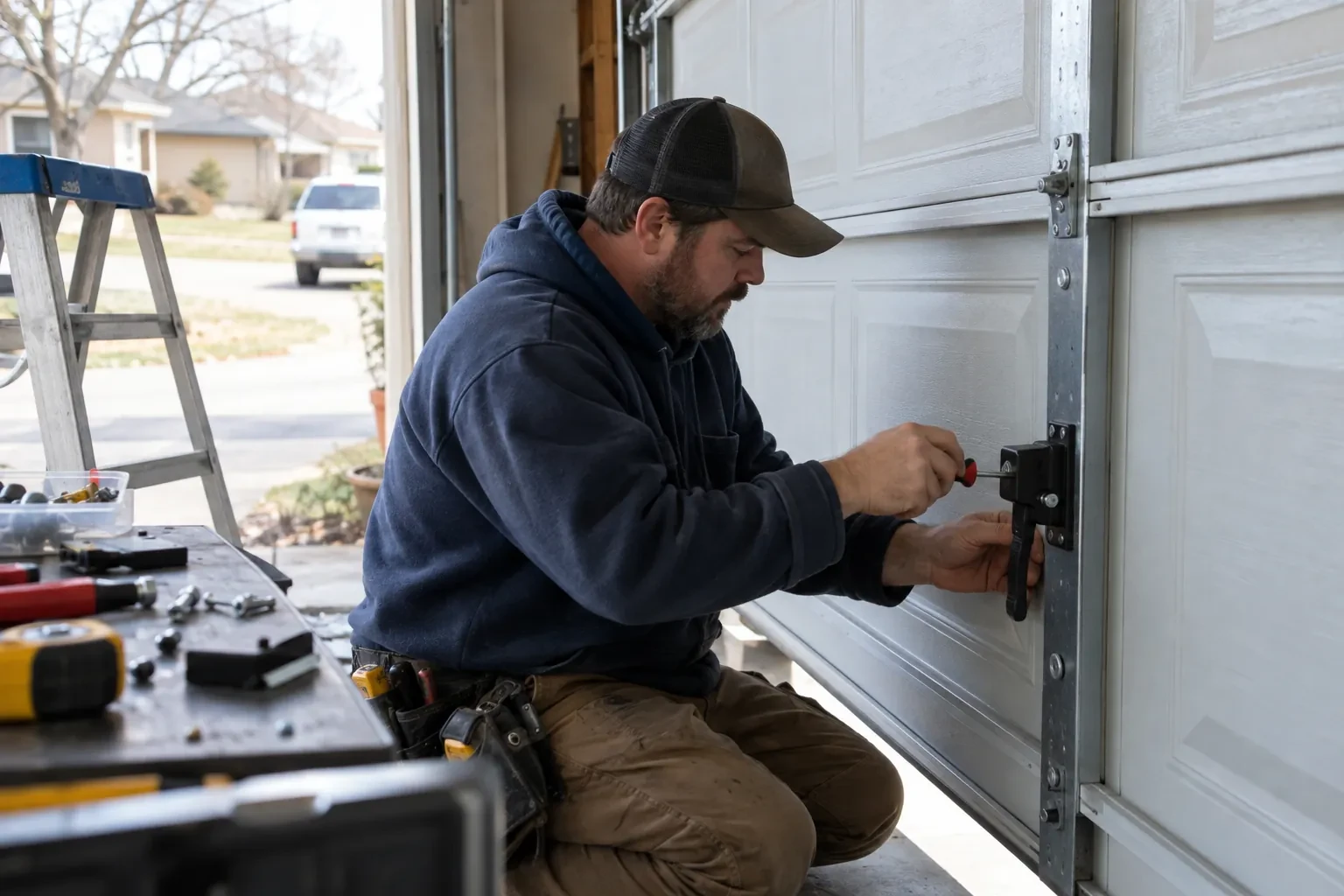
The last question is why the track moved, because the answer shapes the repair. A crease at bumper height with paint transfer is impact. A track that has crept off the jamb with screws backed out is vibration and time. Rust at the floor is winter. A twisted section on one side with a slack cable beside it usually follows a cable or spring failure that tipped the door. Overhead damage tends to trace back to storage, a ladder or a hanger that gave way. You will be asked what happened before the symptom, since a shovel in the opening or a nudge from the car is a fact only you can supply.
Renewing the curve or the horizontal run
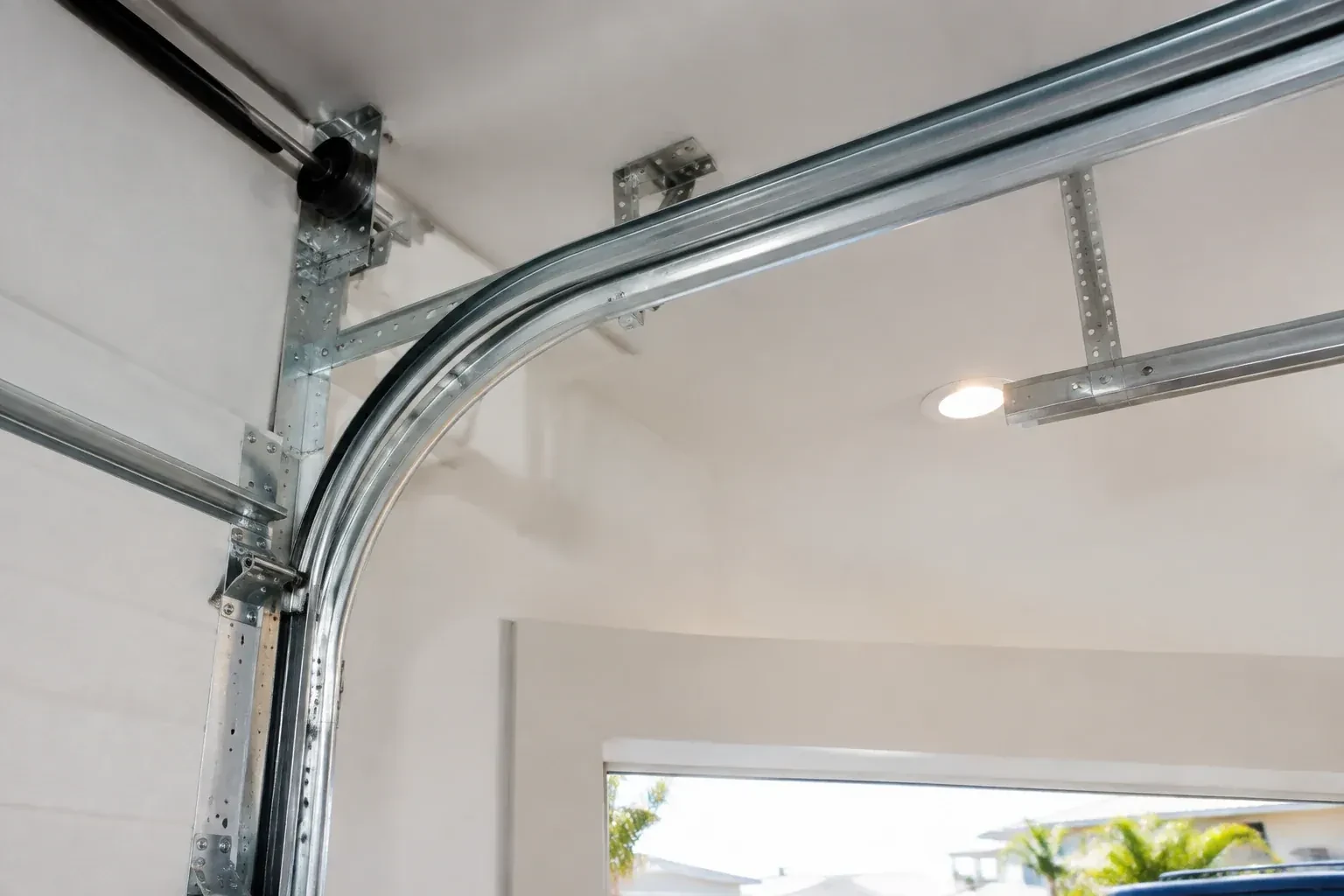
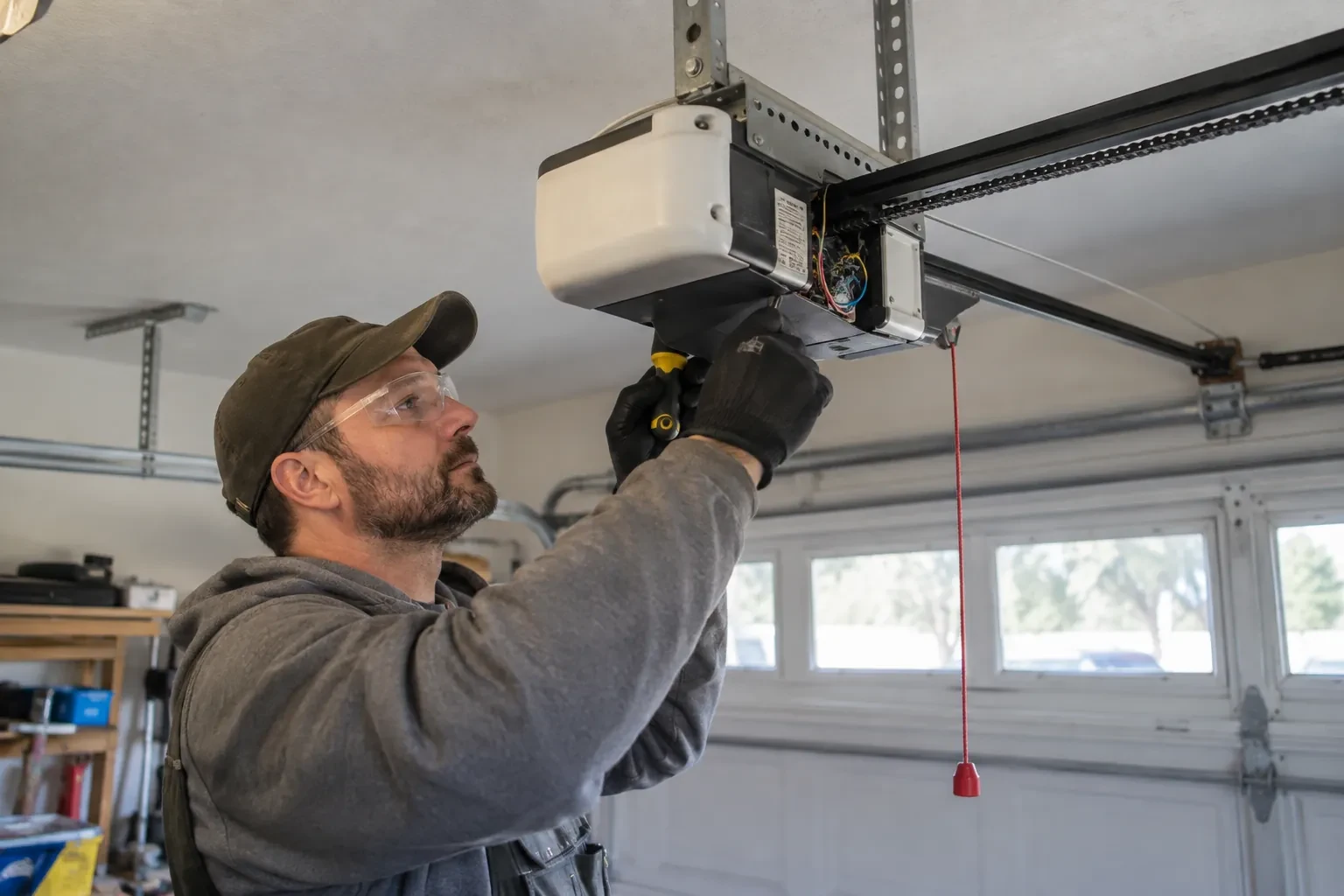
Overhead work starts with the springs unloaded, since the flag bracket carrying the end bearing plate has to come loose for the curve to change. The technician fits a curve of the same radius so the door meets the horizontal run at the same height, then hangs a new or straightened horizontal track from back hangs screwed into joists, not drywall, with a stiffening angle along its length. The rear of each run is set level with its partner, or to the same pitch, and square to the vertical track, and the two hangers are adjusted until a straightedge across the pair reads true. A bent hanger is replaced rather than bent back.
A door that runs the full path without a catch
The change is felt more than seen. The door rises without the bang or hesitation that marked the damaged spot, both sides climb together, and it turns the curve overhead without the top section twisting. Closed, it sits flush against the stop moulding on both jambs with no stripe of daylight, and open, it stays where the opener leaves it instead of drifting back. The opener sounds calmer because it is no longer dragging a door through a pinch point. Lifted by hand with the opener released, the door moves lightly and holds at waist height, which tells you the track and springs are working together again.
Garage Door Track Repair or Replacement
In the van
Flag brackets
Jamb lumber and construction screws
Level, plumb line and square
Jamb brackets or continuous angle
Replacement rollers and hinges
Garage Door Track Repair or Replacement
What affects the quote
Low-headroom or high-lift hardware
Changing the layout, rather than repairing the existing one, brings new horizontal track, curve pieces, top fixtures and often drums and spring adjustment, and is quoted as a separate scope.
Access and storage around the track
Shelving, a workbench or a ceiling full of stored goods around the horizontal run slows the work. Clearing the area beforehand changes the time quoted.
Ceiling hangers and what they are fixed to
A hanger that has bent or pulled from a joist is replaced, and a run that was only fixed into drywall gets angle reaching to solid framing. Each hanger corrected is named in the quote.
What to have ready
- Can you see a bracket standing away from the wood or screws backing out?
- Does the door rub the frame or catch at the same spot every time?
- Is the wood beside the door soft, split or discoloured at the floor?
Garage Door Track Repair or Replacement: questions
QuestionsMy door came off its track last month. Is this the same service?
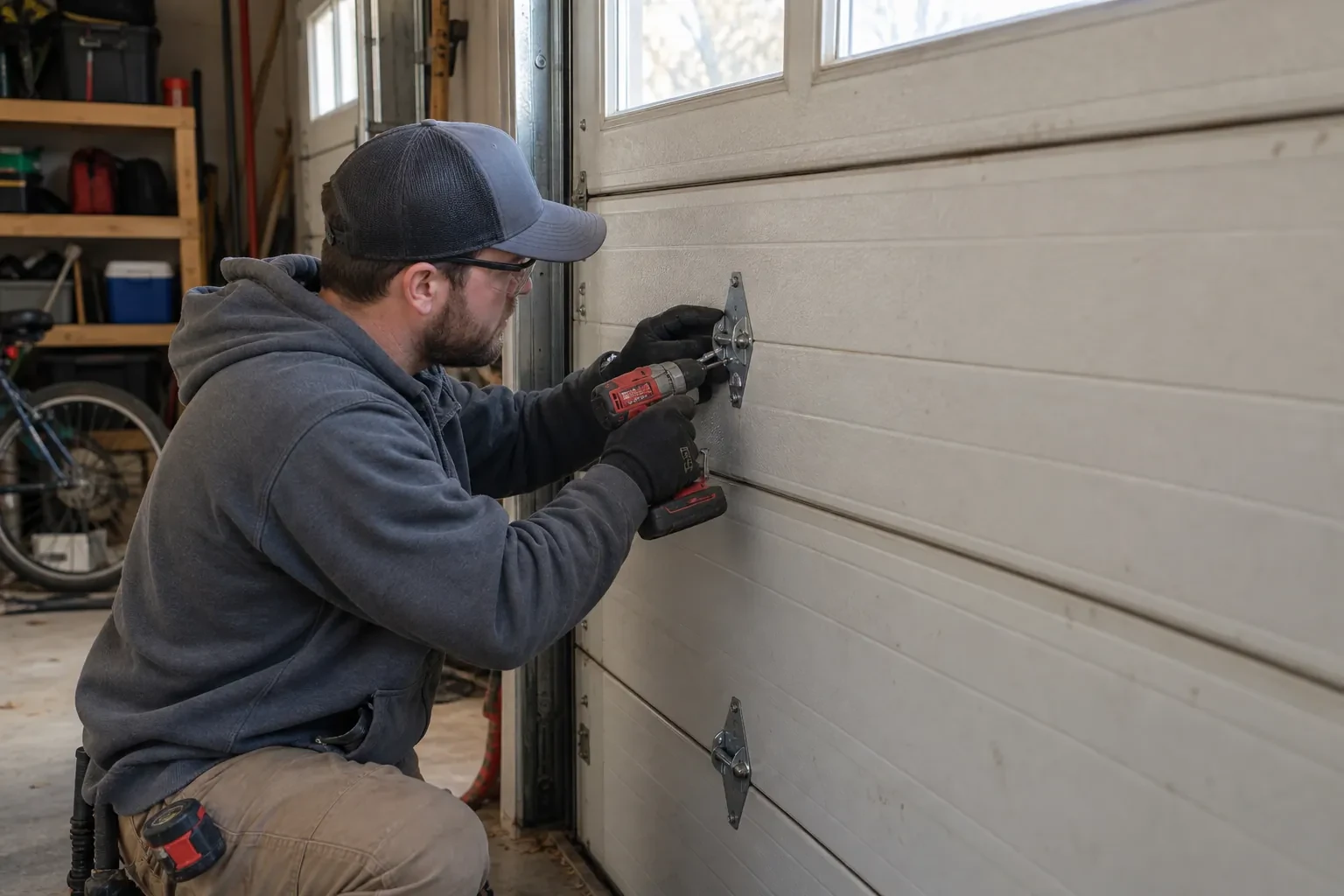
It is the follow-on. Putting a door back on its track deals with the rollers and gets the door running again; track repair deals with the reason it left. If the reset showed a spread channel, a bent section or loose brackets, those are corrected now so the rollers stay put. Where nothing on the track was at fault and the cause was a cable or an obstruction, the track is simply checked and confirmed.
What does track radius mean, and does it matter for a replacement piece?
The radius is the size of the curve where the track turns from vertical to horizontal, typically 12 or 15 inches on two-inch residential track. It fixes how high the door climbs before it turns and how much headroom is needed, and the cable drums and spring setup are chosen around it. A replacement curve has to match the other side, otherwise the door meets the horizontal run at different heights and twists as it opens.
What information helps when I call?
Where the damage is, at floor level, near the curve or overhead; what caused it if you know, such as a bumper or a ladder; whether the door is closed, open or stuck partway; whether any roller has come out of the channel; whether there is a spring above the door or springs along the tracks; and the door's rough size. A photo of the damaged length and of a bracket with its screws is very useful.
Related services
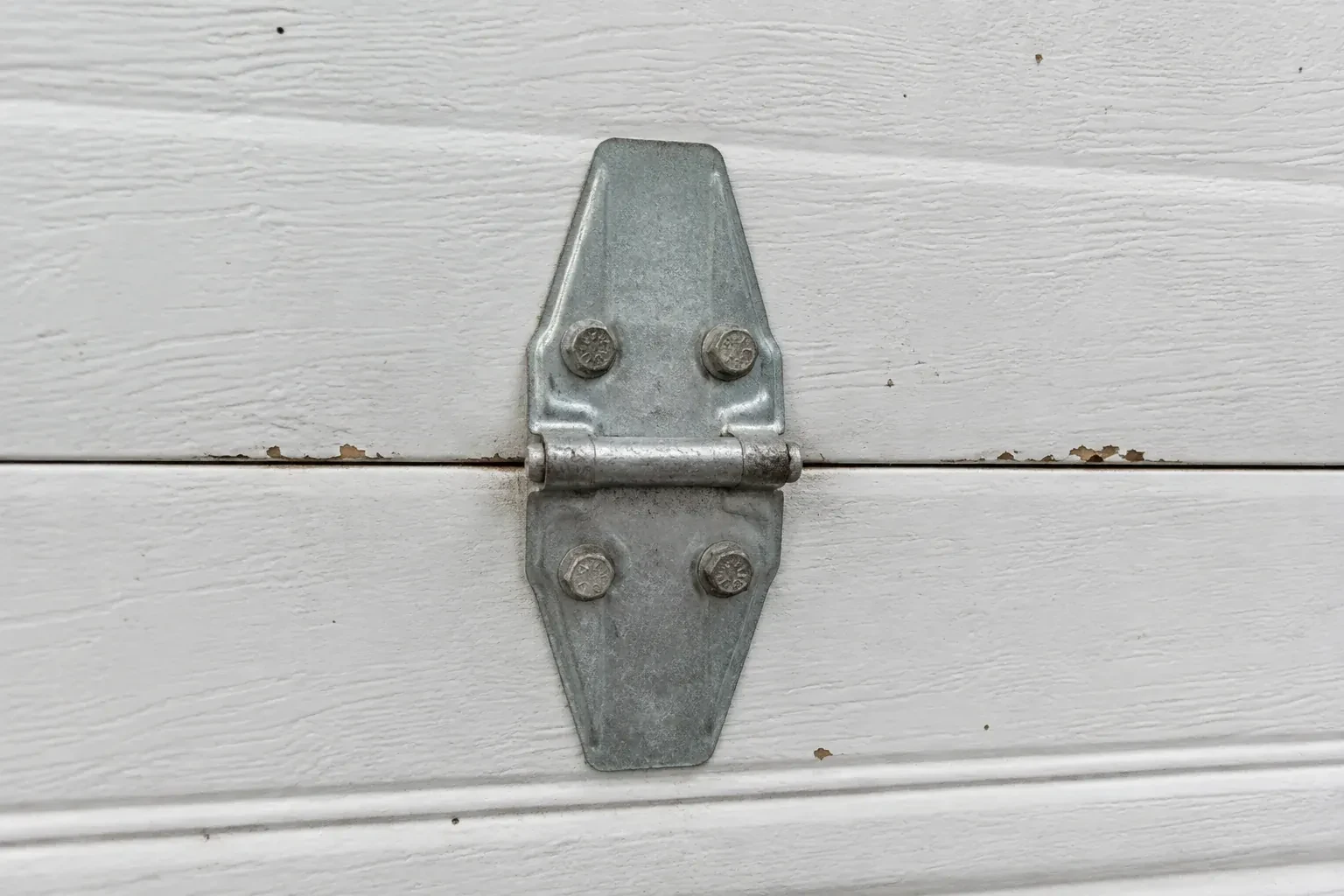
- Garage Door Hinge ReplacementEvery time the door goes up there is a sharp pop from the same spot, about a metre off the floor, and the whole door gives a little shudder.
- Garage Door Cable ReplacementYour older door has springs along the tracks, and one cable has slipped off its pulley and dangles slack.
- Torsion Spring ReplacementYou heard a sharp bang from the garage, and now the opener hums for a second and gives up.