Garage Doors in Tutela Heights, OntarioAn old opener,brought up to date.
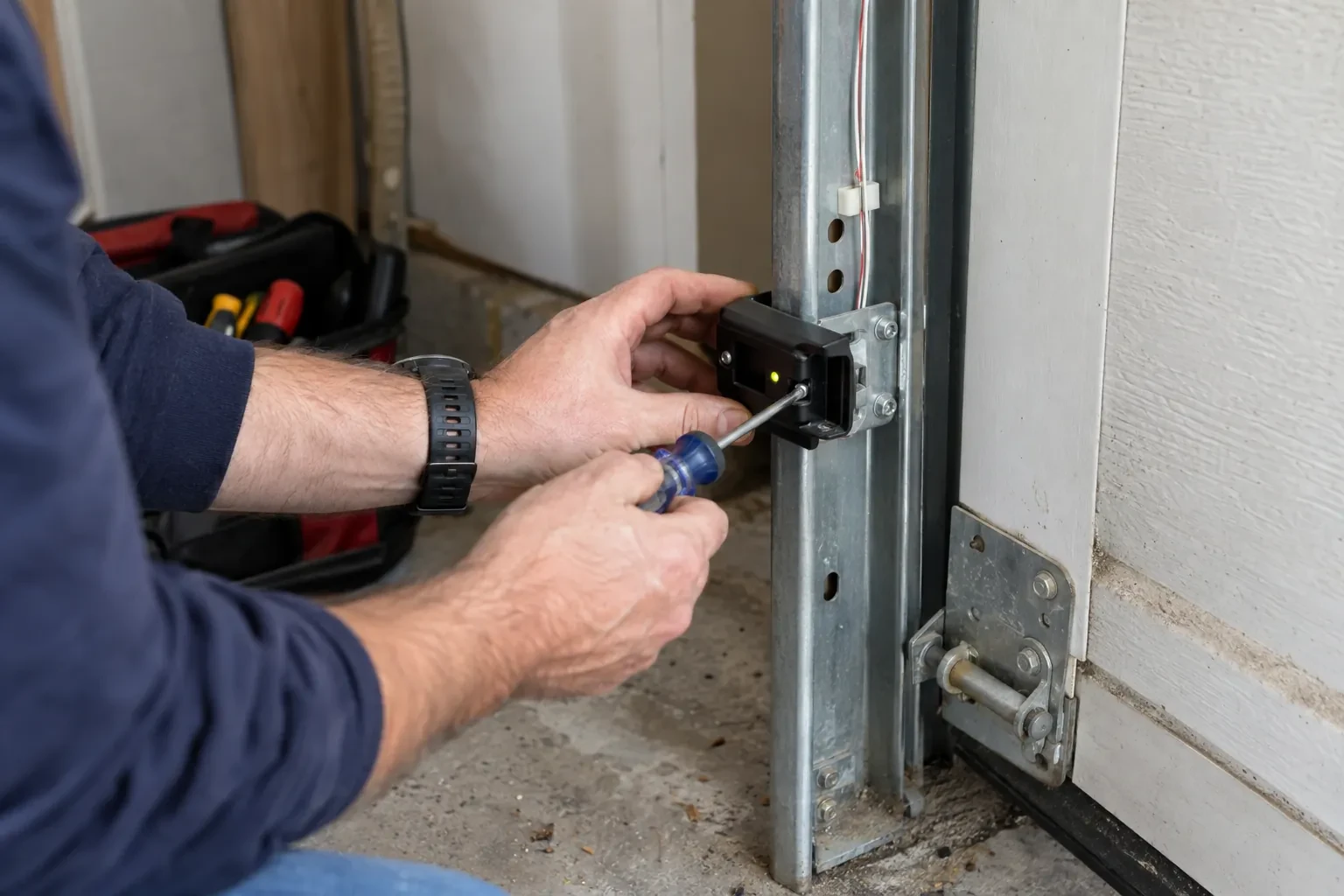
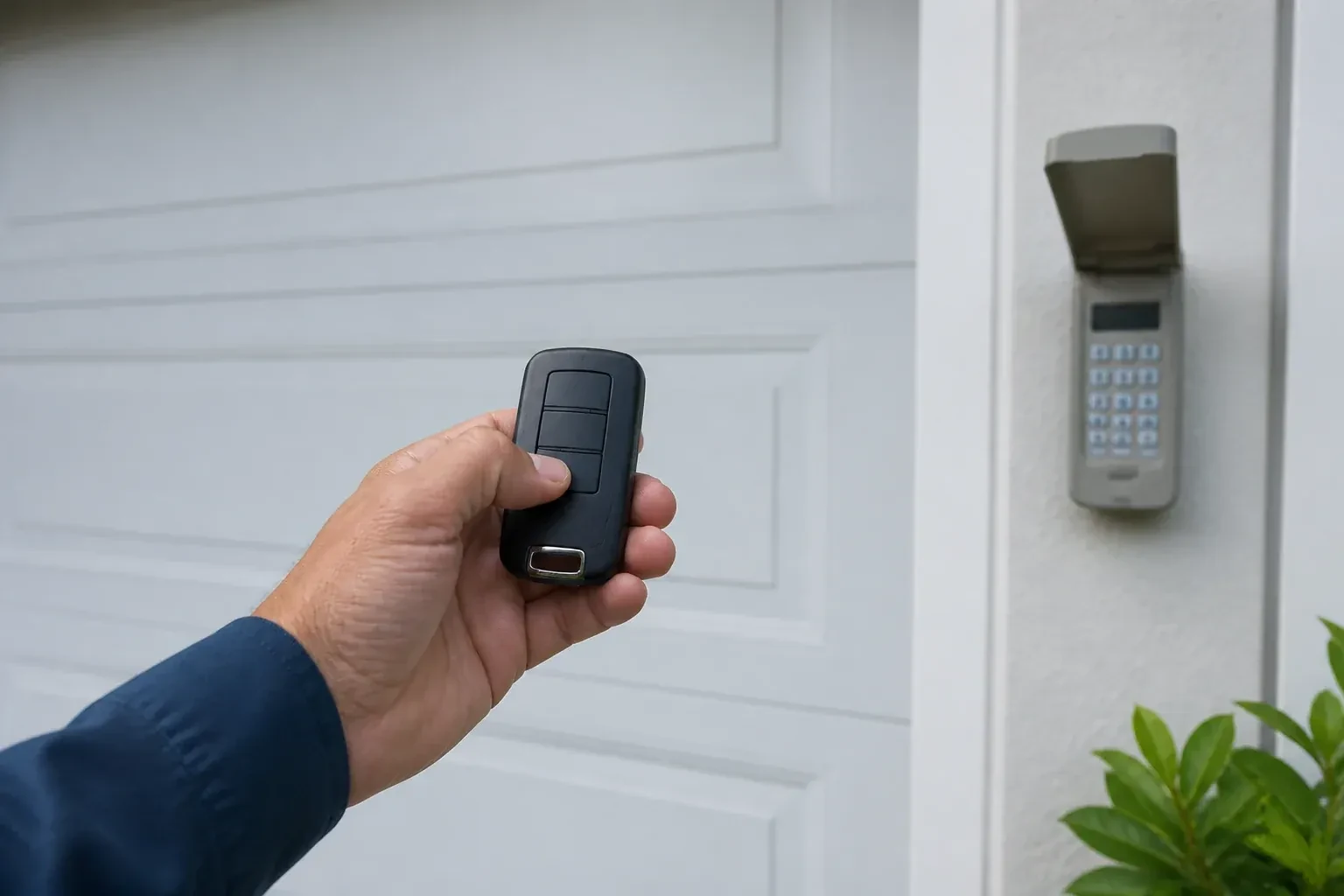
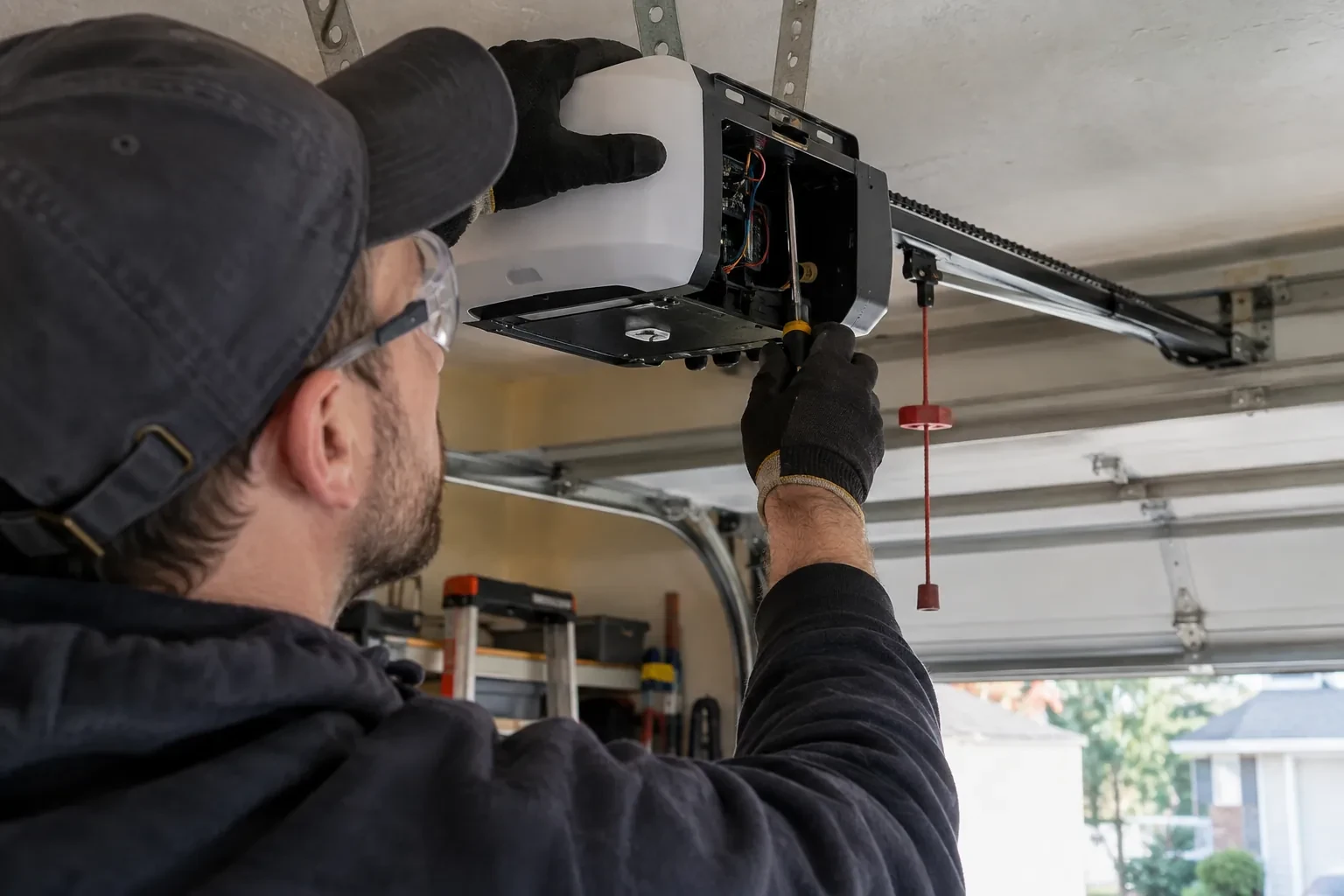
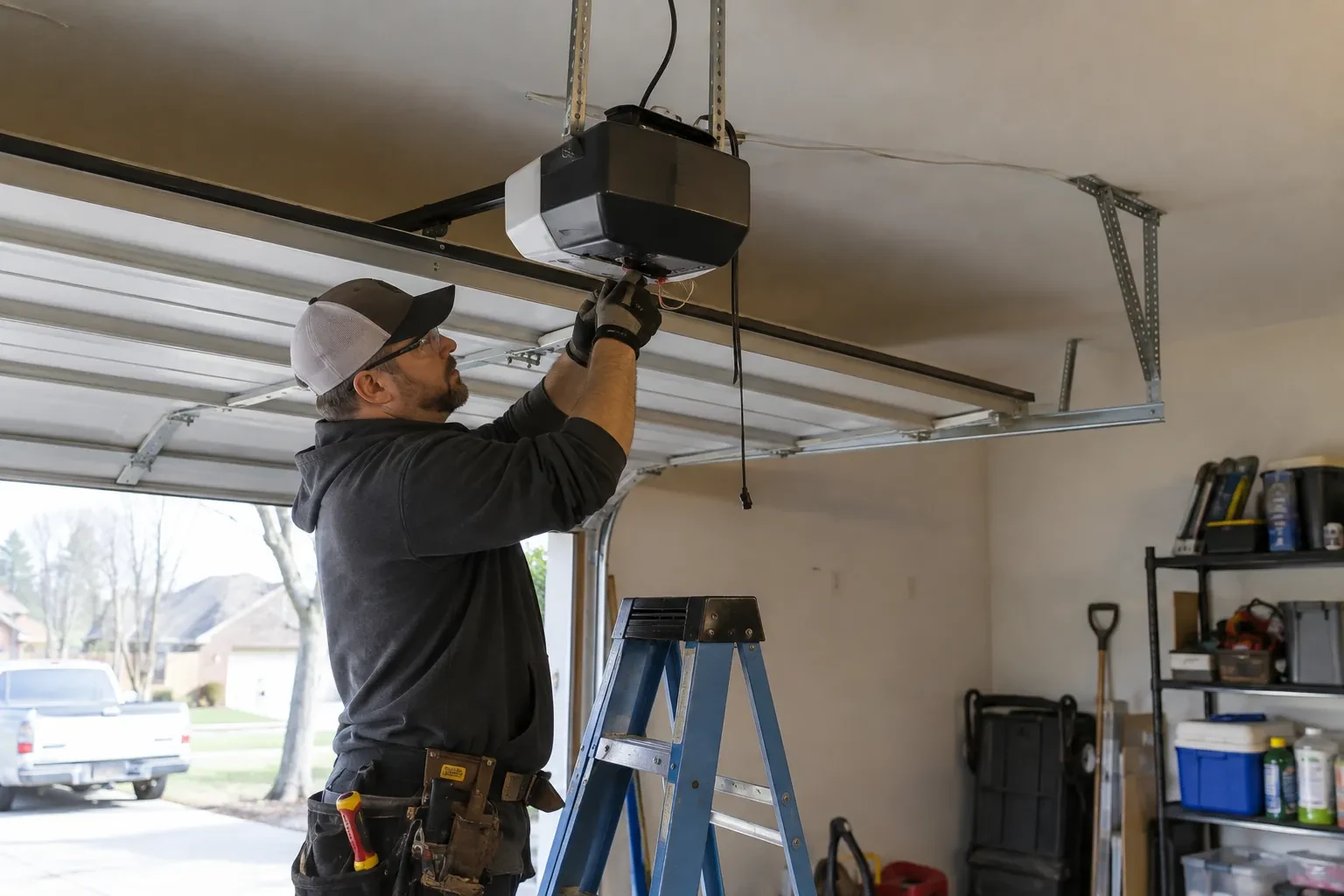
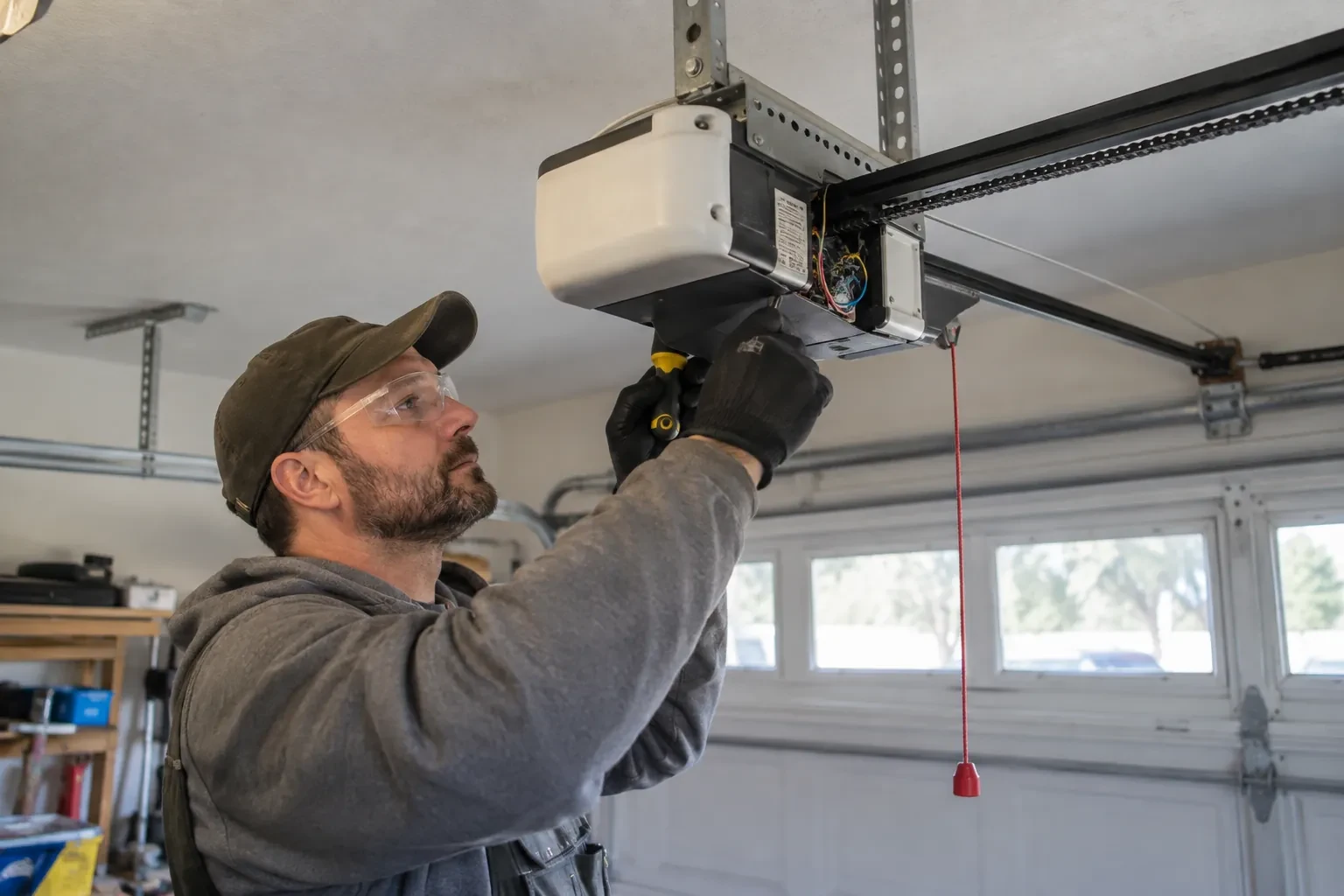
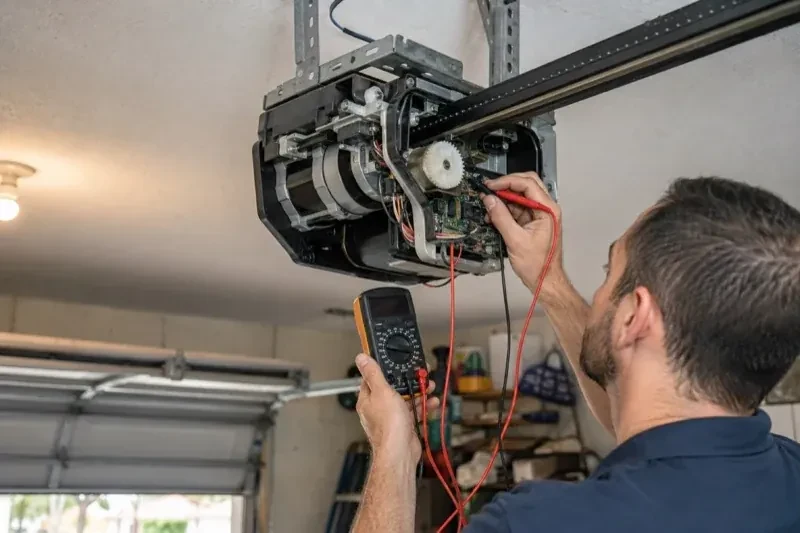
Many openers still running in Tutela Heights predate photo-eyes and rolling-code remotes. Replacing one brings a quieter motor, a battery backup for power cuts, sensors that stop the door for a child or a pet, and remotes that cannot be copied from the driveway, all installed and tested in a single visit.
Many openers still running in Tutela Heights predate photo-eyes and rolling-code remotes. Replacing one brings a quieter motor, a battery backup for power cuts, sensors that stop the door for a child or a pet, and remotes that cannot be copied from the driveway, all installed and tested in a single visit.
Honest advice, steady hands.
Households in Tutela Heights are not left guessing about cost. The technician assesses the door, explains the cause, and gives the price on the spot, before starting. There is one fee whatever hour we arrive, and if you decide to wait or think it over, that is a perfectly acceptable answer.
Our approach in Tutela Heights is the same one that built the company: look at the whole door, explain what was found in ordinary words, offer sensible choices and do the work carefully. Whether the visit is a single roller or a complete new door with a new opener, the household ends up with a door that works and a clear understanding of what was done.
13years in business
24/7open every day
Explained on the spot. As each part is checked, the technician tells you what it shows and what it means for the door as a whole.
Tidiness as standard. Old springs, cables and packaging leave with us, and the workspace is swept. A clean finish is part of every visit.
Options at your pace. Hear the choices, ask your questions, take the time you need. The work starts when you say so and not before.
Homeowners in Tutela Heights can read below about the repairs we make most, the parts we replace, the opener and remote work we do, and how a new door is chosen and installed. Commercial customers will find rolling and sectional door service alongside the residential pages.
About 63% of homes in Brantford were built in 1980 or earlier, according to the 2021 Census.
Older homes
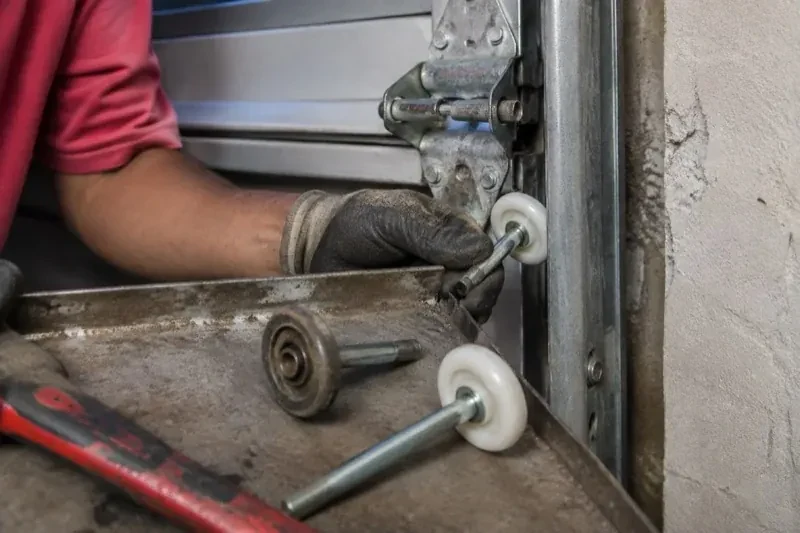
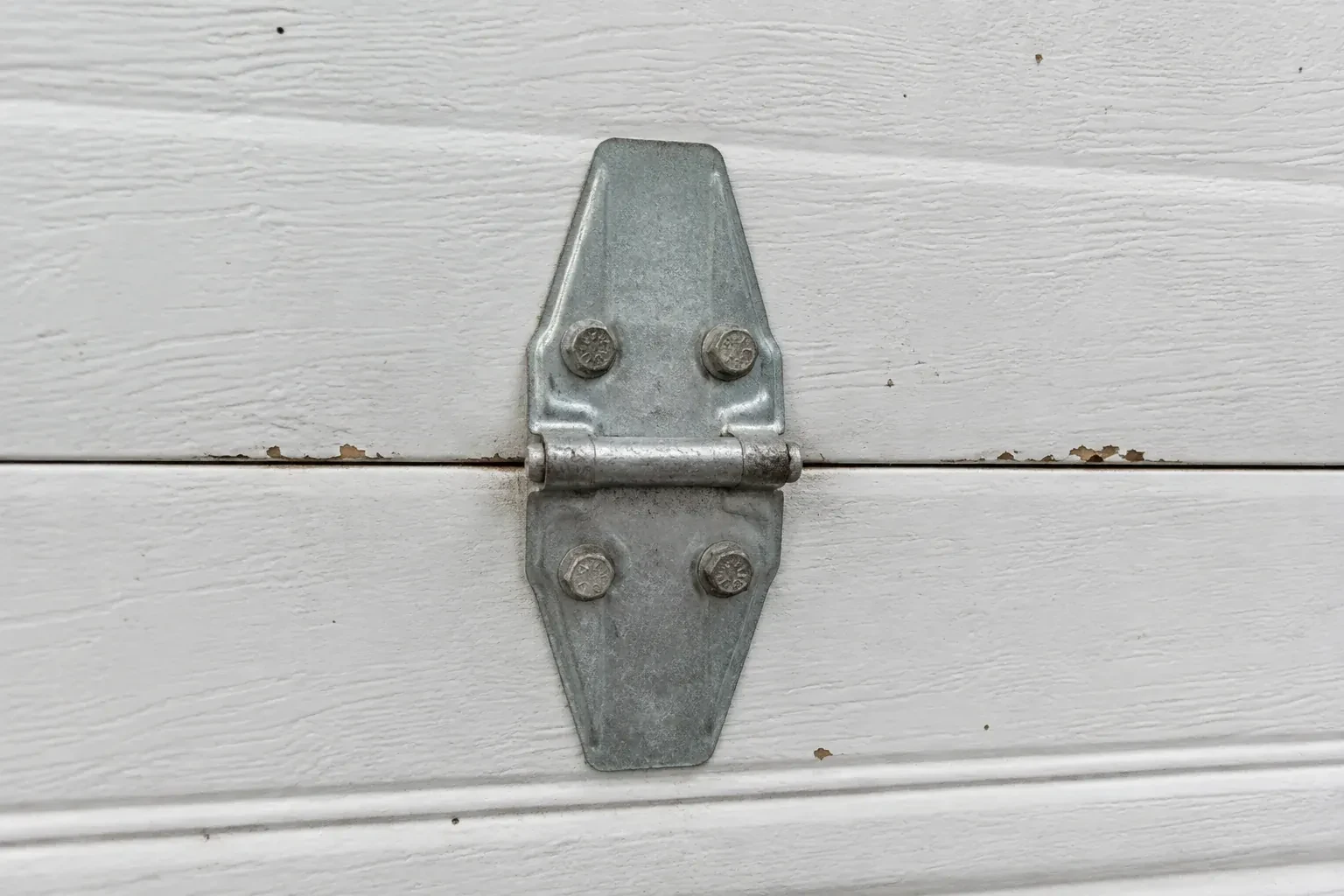
Hardware on an older door has often been through many winters: hinges with worn pins, rollers with tired bearings, bottom brackets rusted at the floor line. Replacing these in sets restores a smooth lift and takes a surprising amount of noise out of the garage.
Single-detached houses make up about 61% of homes in Brantford (2021 Census).
Mostly houses
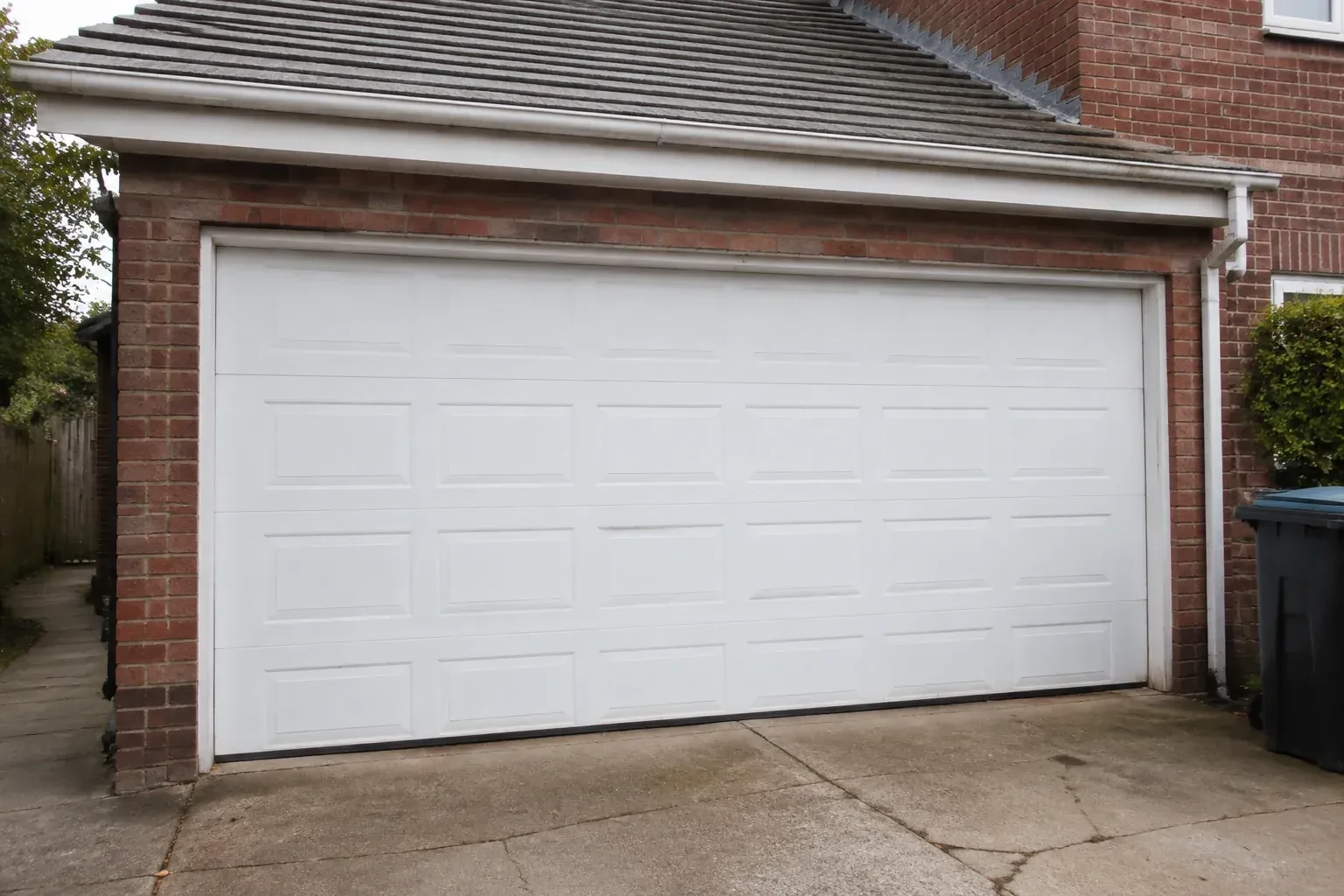
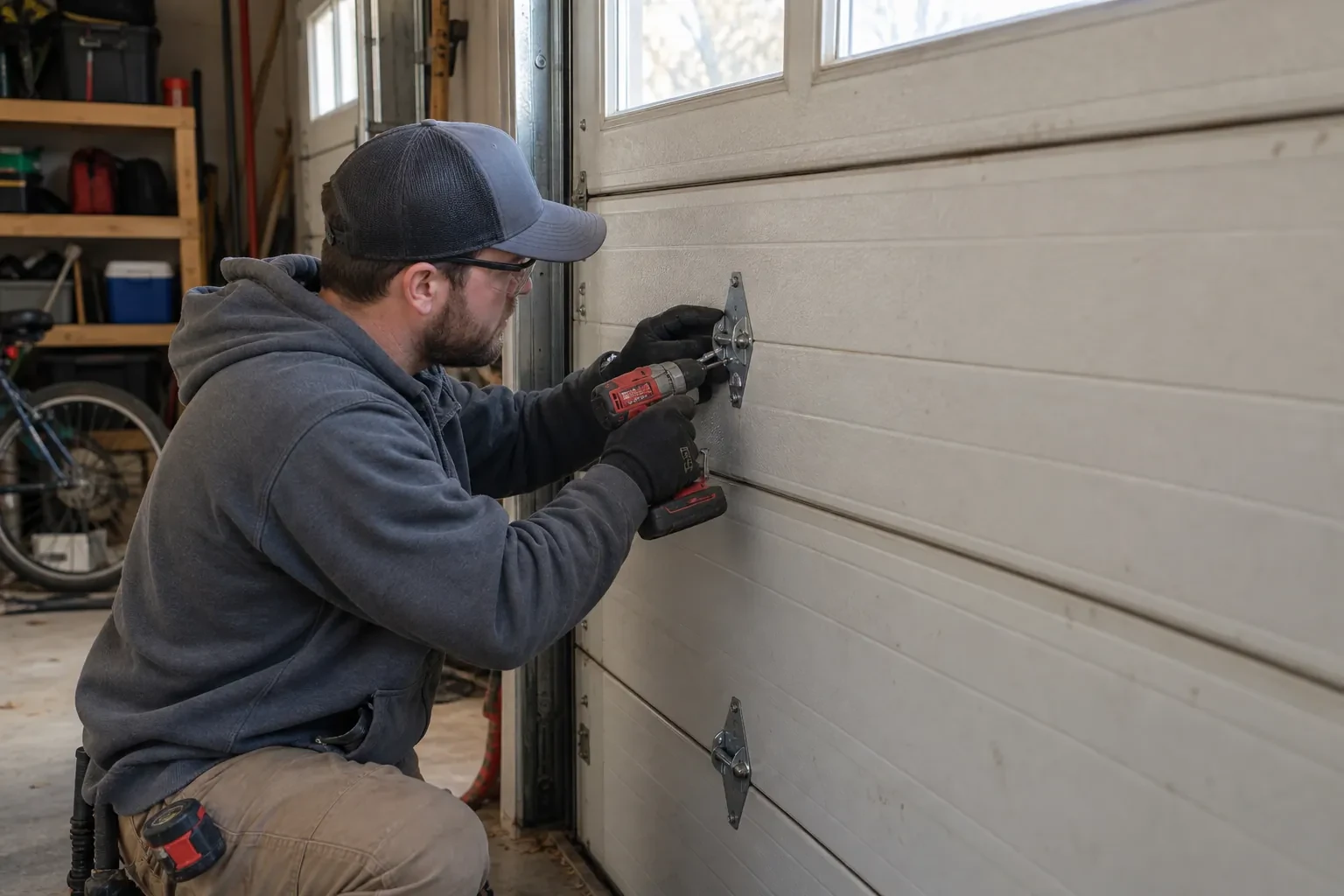
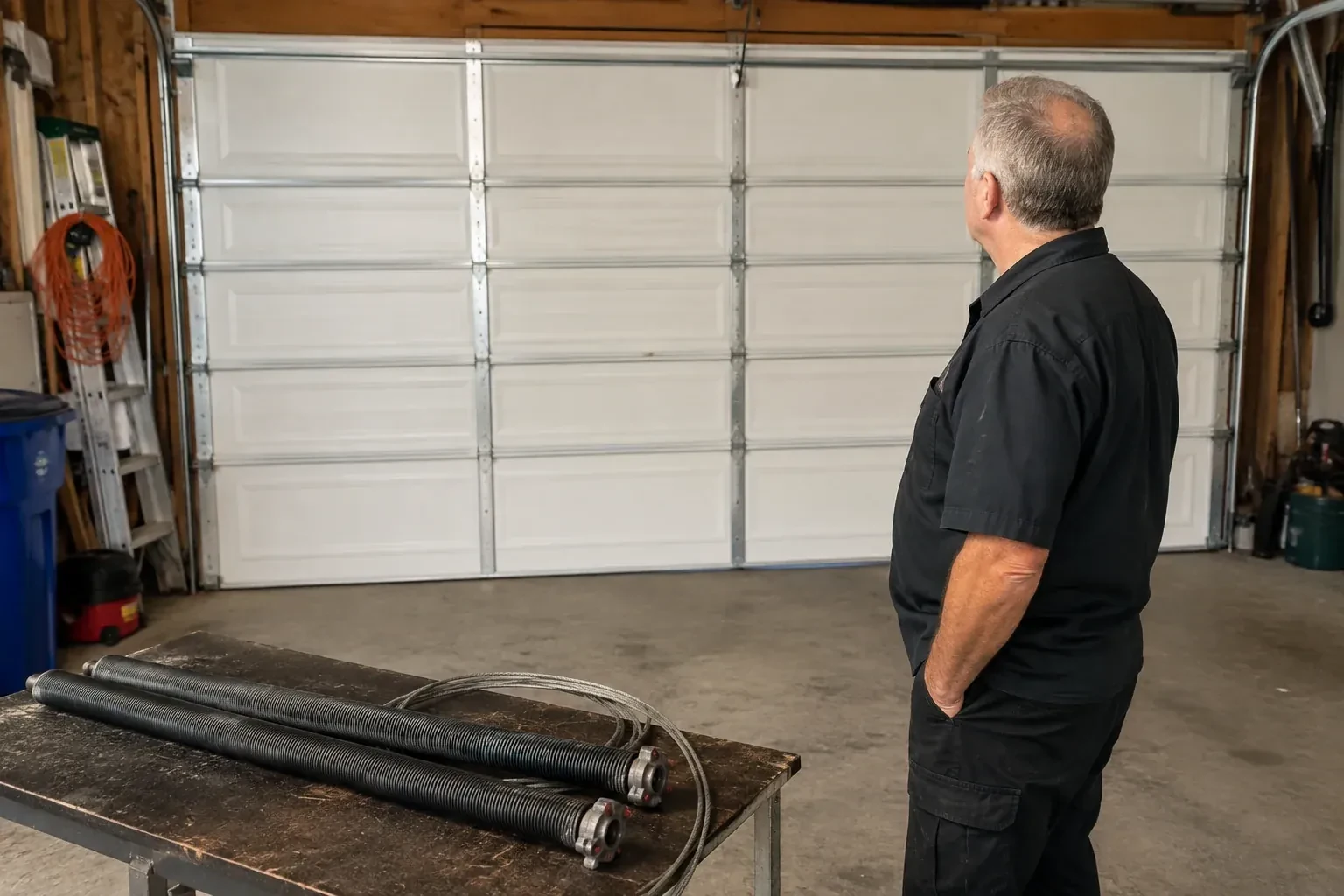
Detached houses commonly have attached two-car garages with a wide double door, which is a heavy door on a pair of torsion springs. Spring and cable work on these doors is done as a matched set so the door lifts level and the opener carries only its intended load.
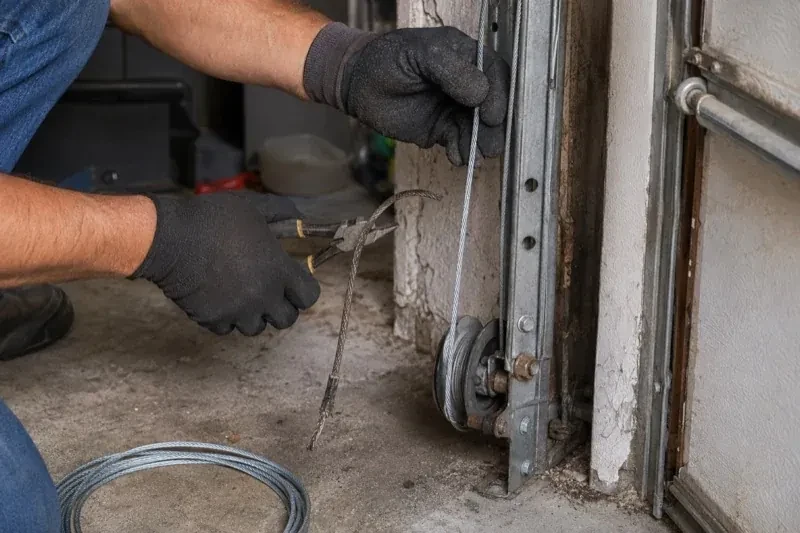
When a cable jumps its drum, the door tilts and jams in the track. Putting it back is only half the job: we look for the slack, the worn roller or the frozen seal that caused it, so it stays on.
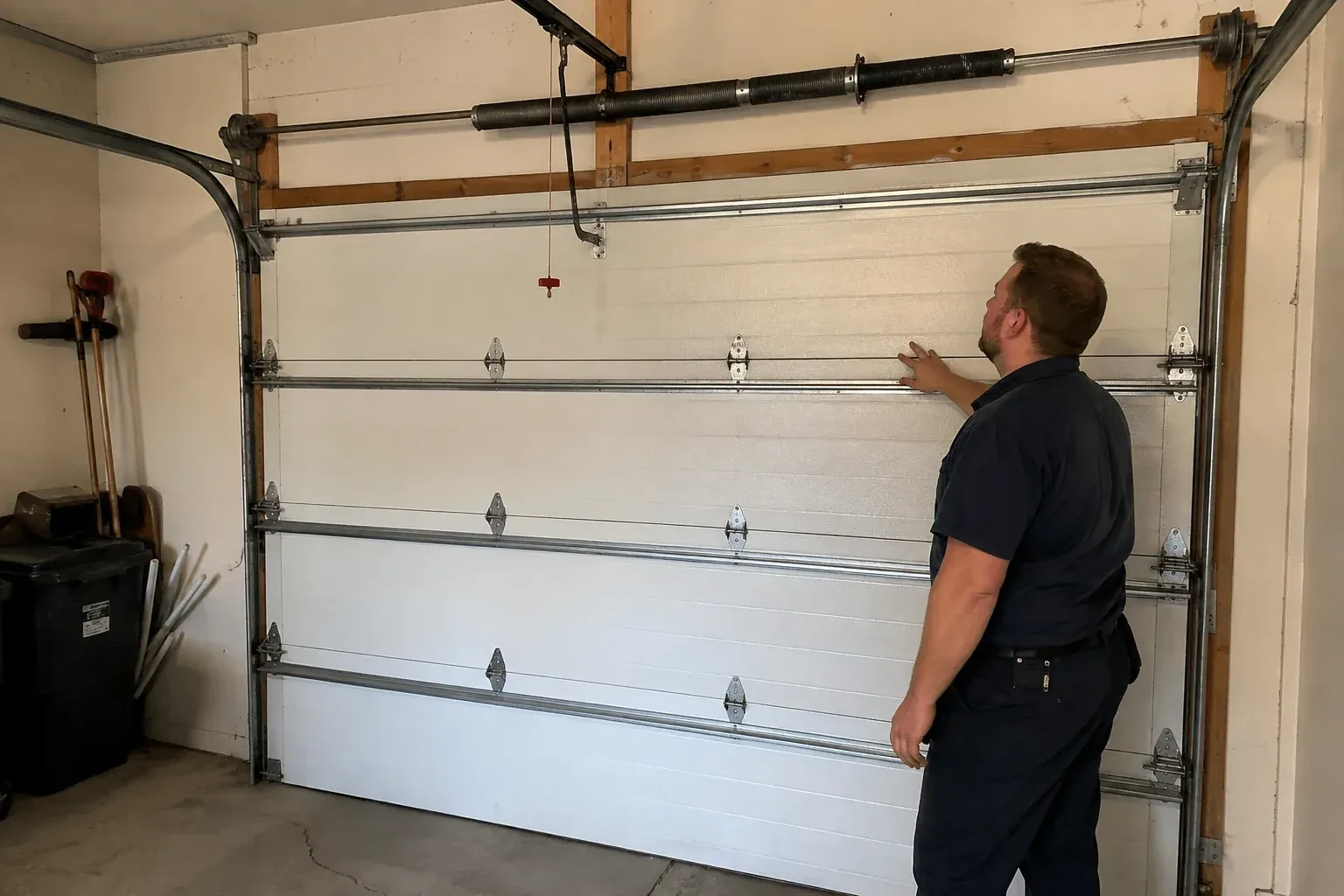
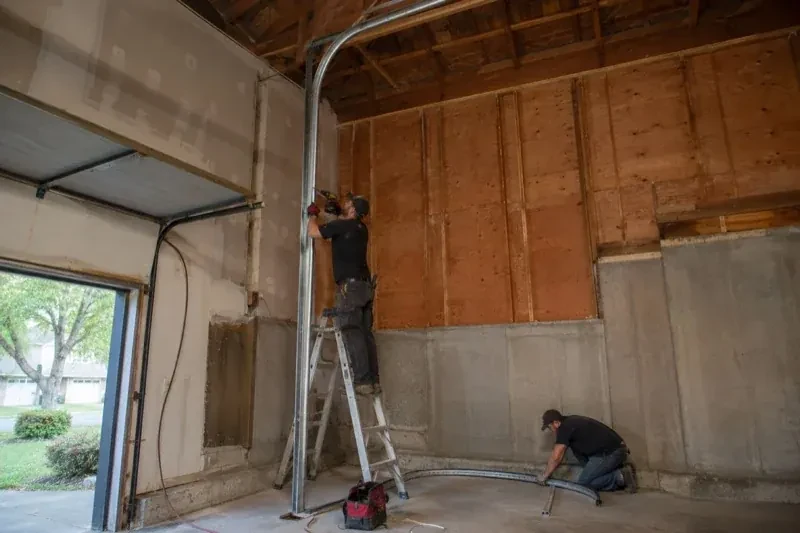
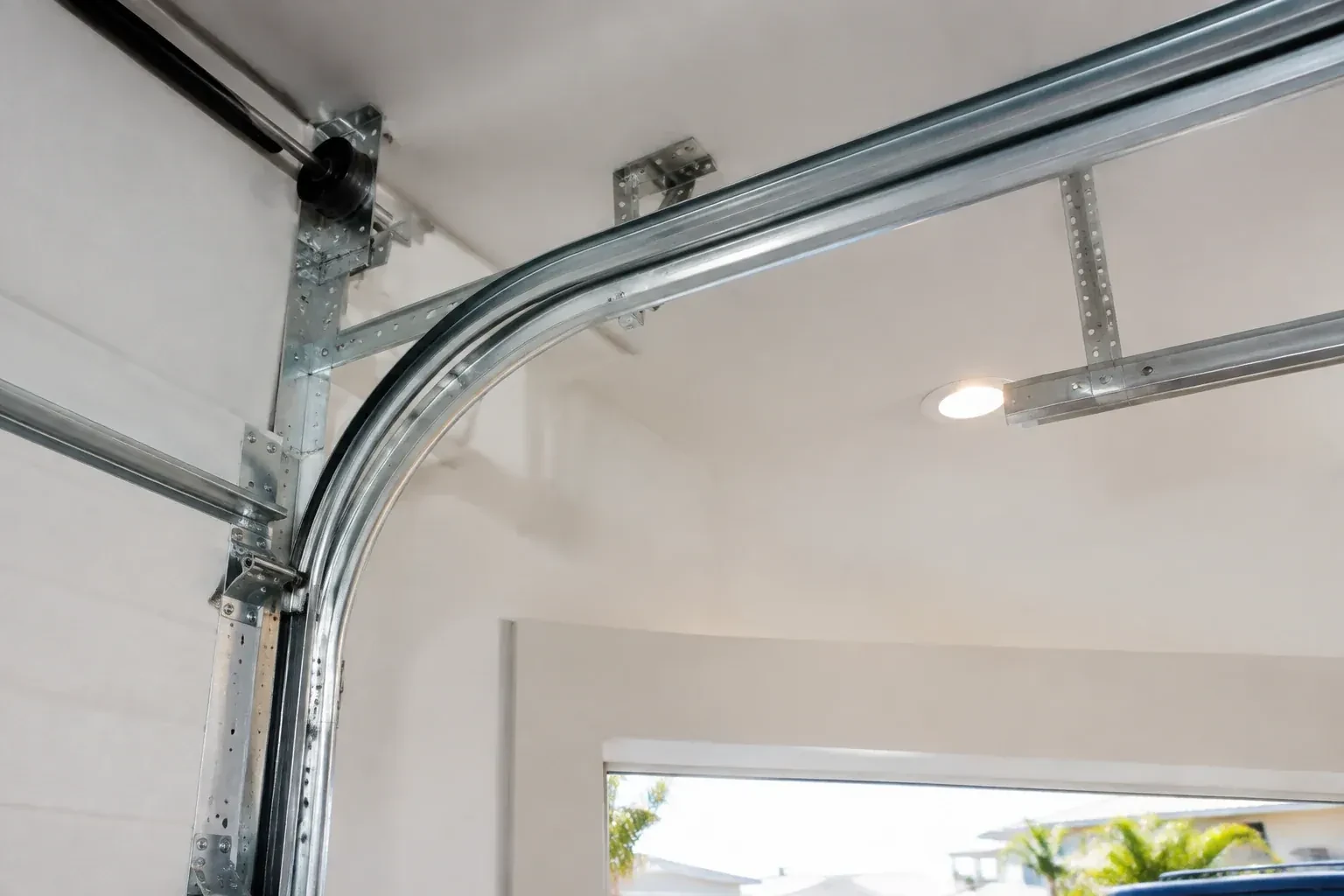
Any door is only as good as its installation. Tracks set plumb, springs wound to the door's weight, seals fitted to the floor and the opener limits set correctly are what separate a door that lasts from one that rattles.
The chain in the detached garage went orange with rust over the winter, the links are stiff, and the opener strains and groans to pull the door up. By afternoon, once the garage warms, it behaves almost normally.
It is minus twenty in the detached garage and the door climbs in jerks, the belt stiff as a board. By the afternoon, when the sun has been on the door, it runs almost normally again.
The bedroom above the garage shakes every morning at six when the chain drive fires up. Everyone in the house knows the moment someone leaves for work.
The new car has three buttons in the mirror for garage doors. You held the old remote up to it as the manual said, the light in the car changed, and yet the door ignores it completely.
It is February. You come down in the morning and the garage door has stood open all night; the car is frosted inside, the furnace has run without a pause, and the pipe in the shared wall is your first worry.
The power went out in the middle of an ice storm, the car is inside, and when you reach up for the red handle there is nothing there. A frayed stub of cord hangs from the trolley, well above your fingertips, and the door sits shut.
WhyA powered door works properly only when its mechanical assembly and operator agree.
An entrance. Not an afterthought.
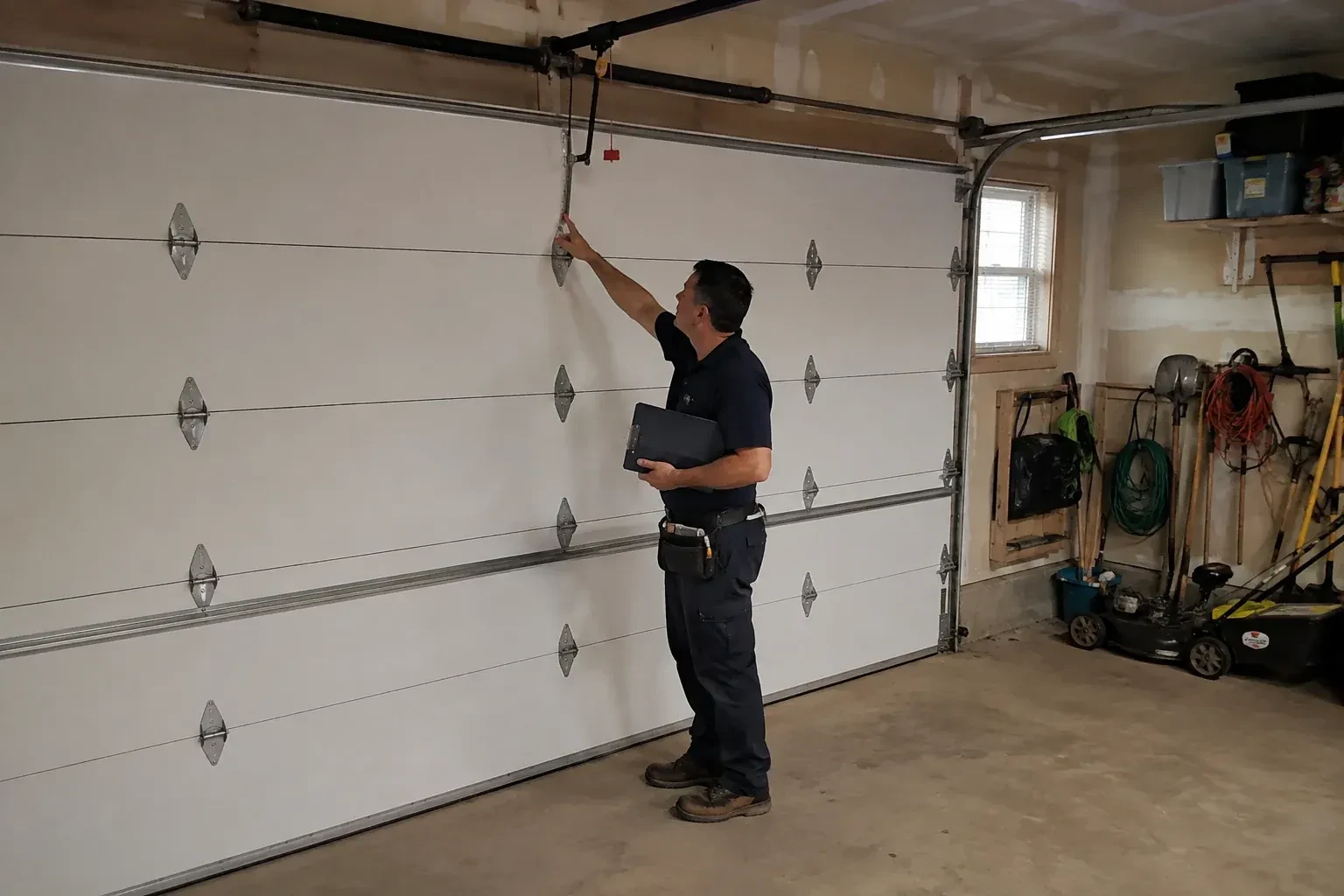
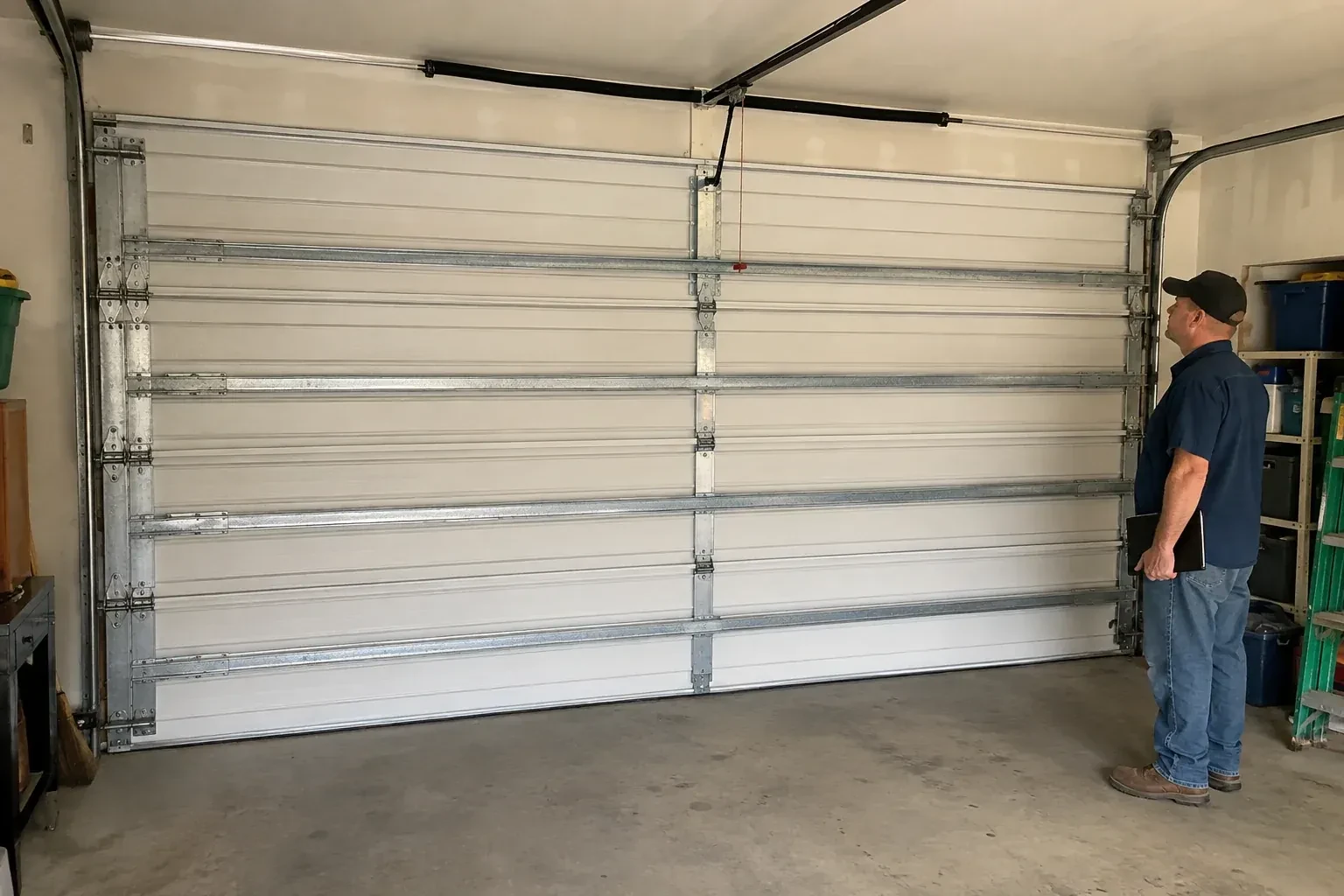
1/10Garage Door Safety Inspection
There is a new sound. Last week the door simply hummed up and down; now there is a bang at the top of travel and a scrape on the way back, and you have started standing well back while it moves.
There was a loud bang from the garage, then silence. The door is jammed a third of the way open, wedged at an angle in the tracks, and the opener light is blinking while the trolley slides uselessly along the rail.
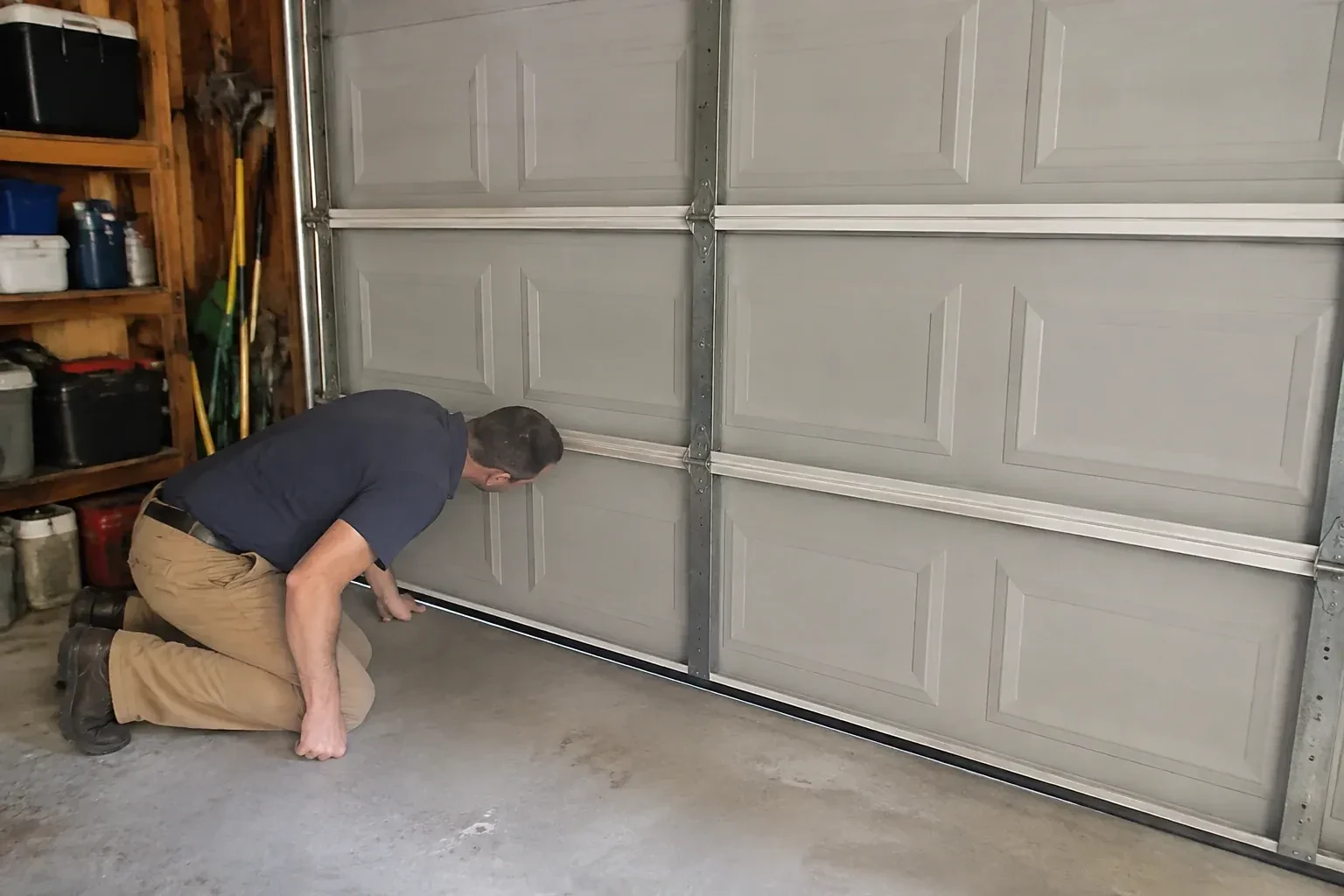
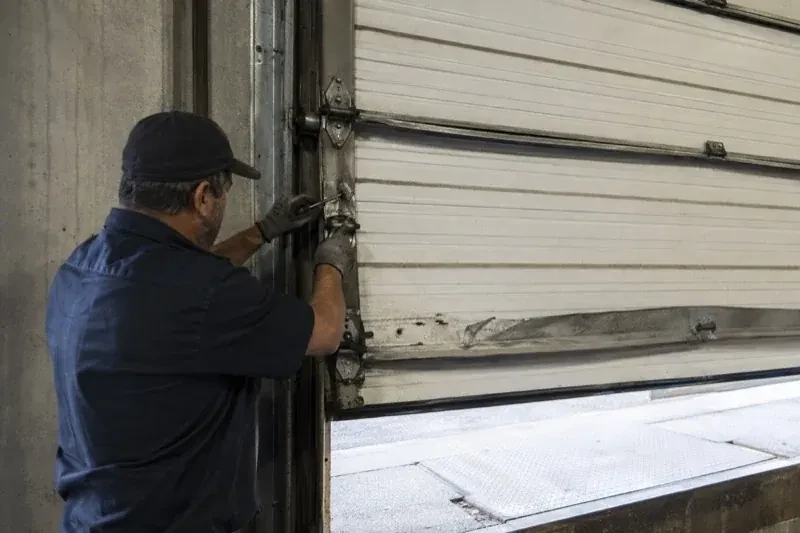
Rust has crept along the bottom edge of the lowest section. What began as bubbling paint is now a soft, flaking strip, the seal retainer is working loose, and a screwdriver pressed against the worst spot goes through the steel.
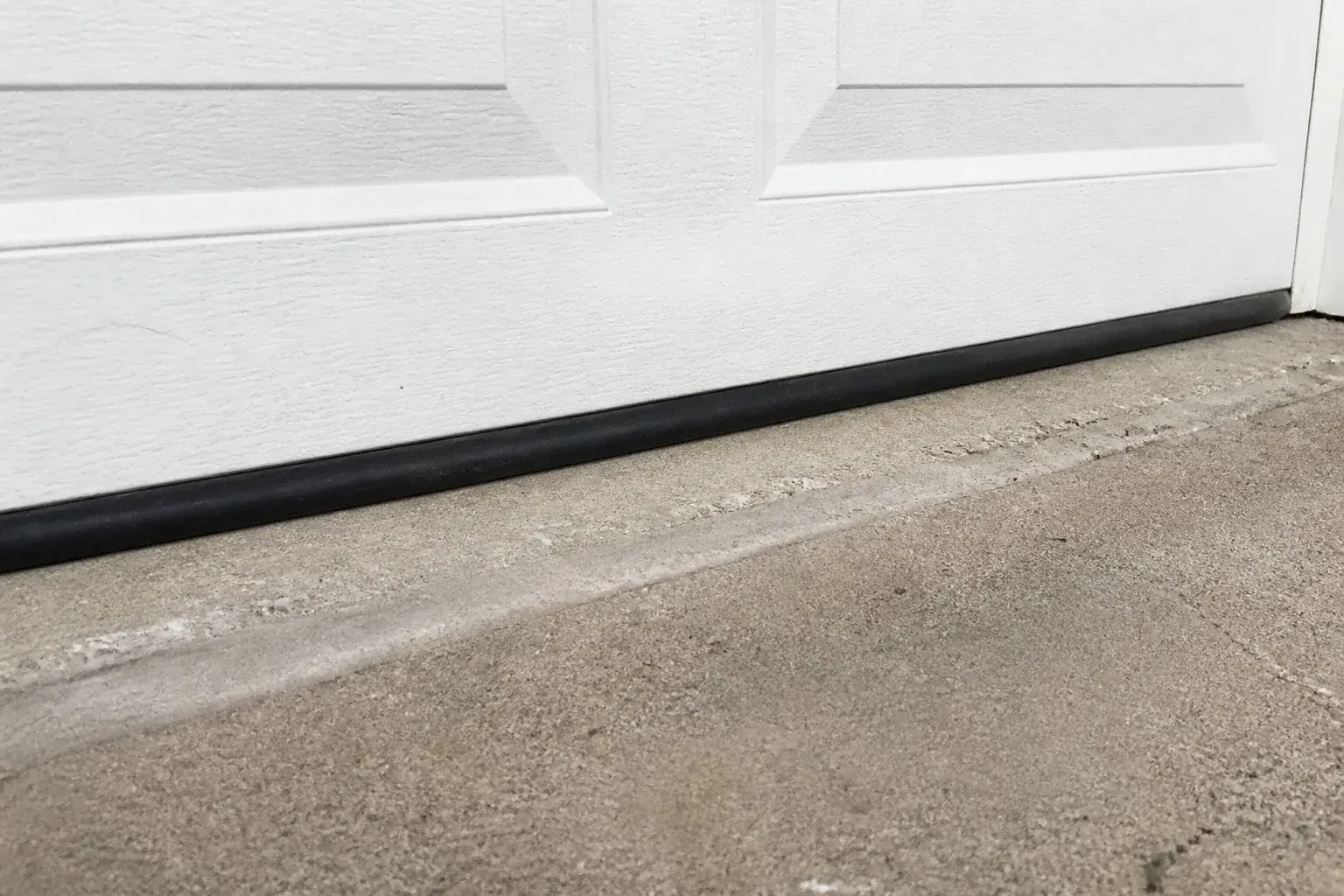
A length of weatherstrip along the right jamb has pulled away, nails and all, and it slaps against the trim every time the wind picks up. The wood behind it is dark and soft where it meets the floor.
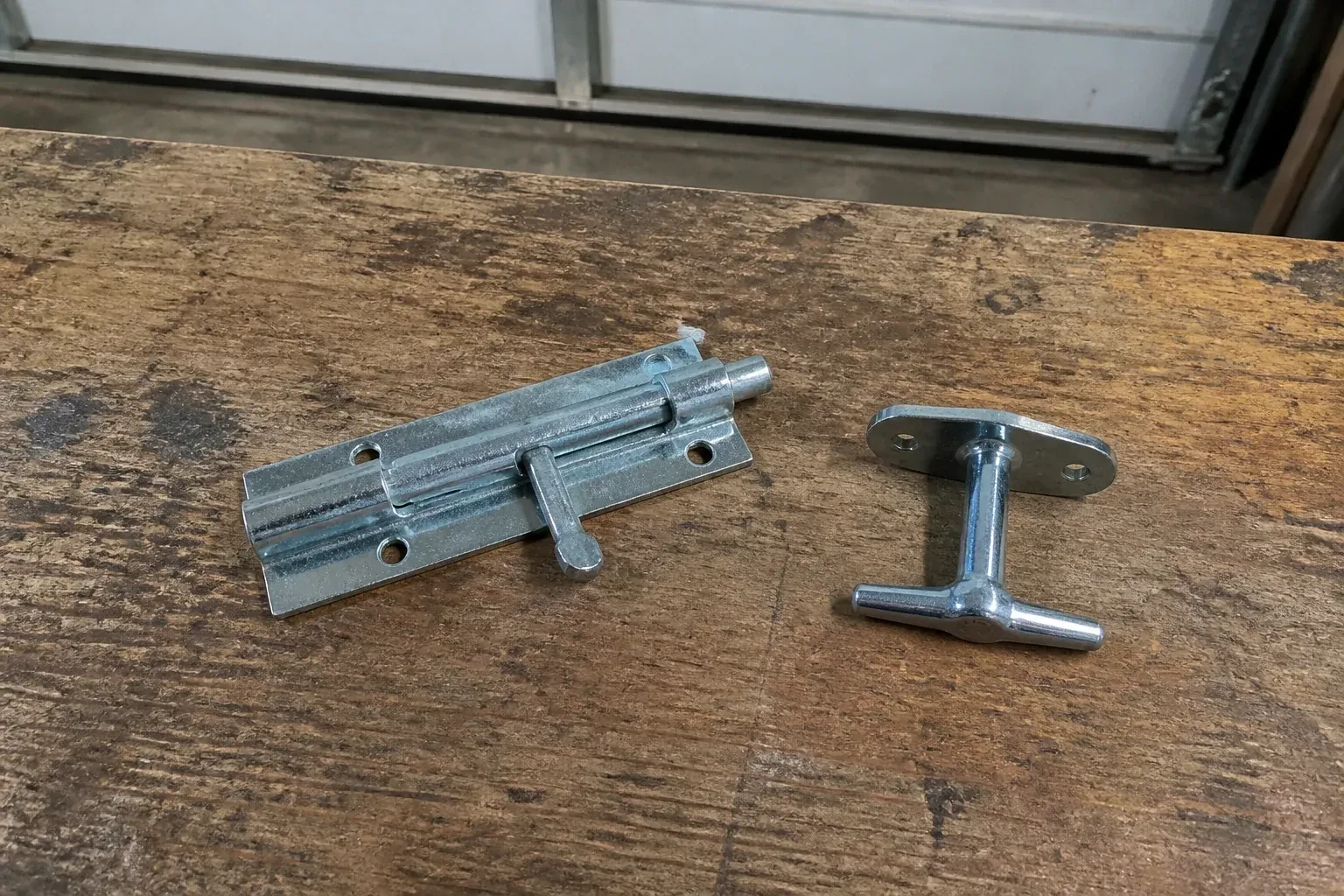
You pushed the slide bolt across like always, but tonight it stops short of the slot in the track and springs back. The door is down, the bottom seal is on the concrete, yet the bar and its hole are a finger's width apart.
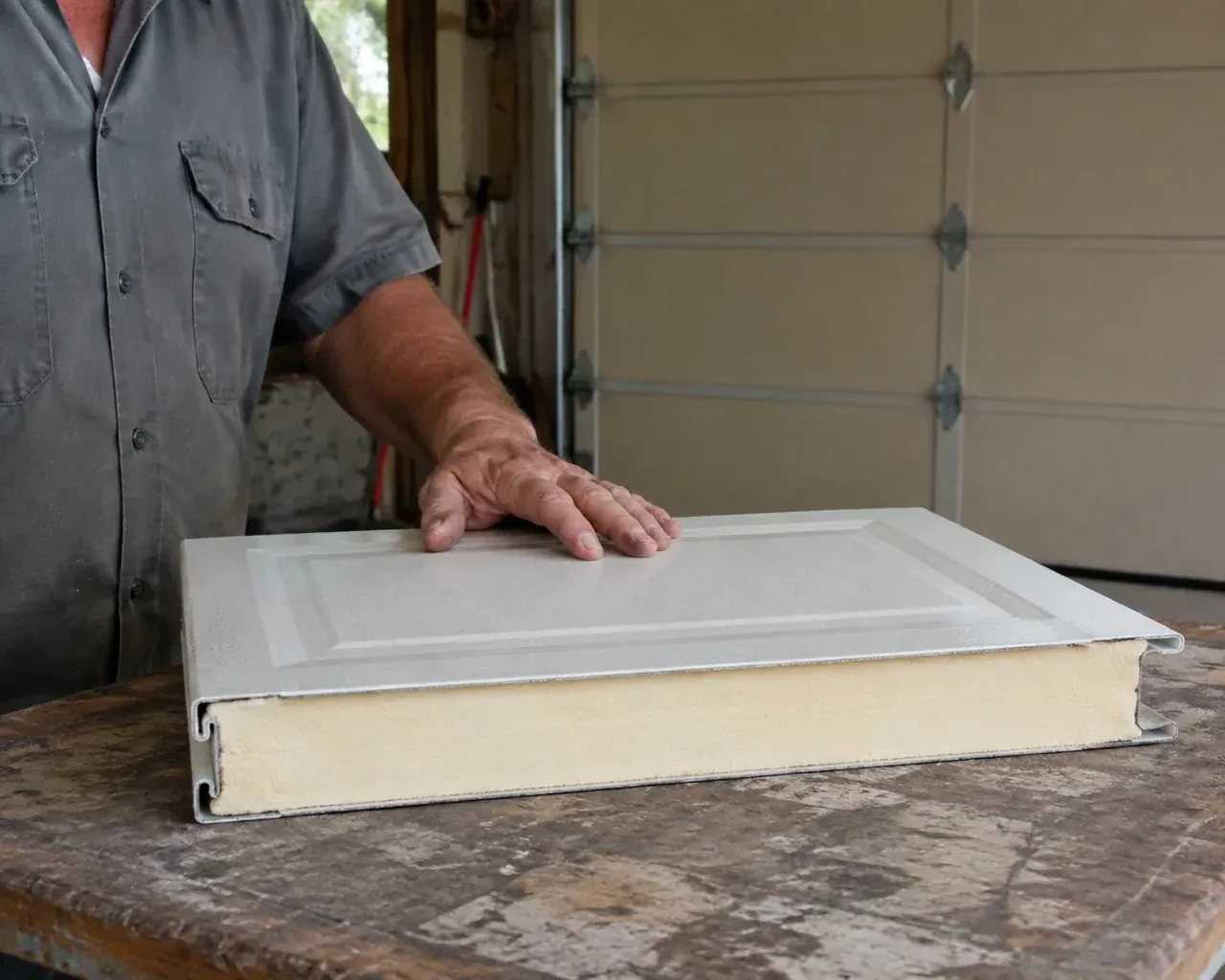
Since the new insulated panels went in, the door feels like a different animal. It closes with a thud, the opener labours where it used to hum, and lifting it by hand takes a proper heave rather than a fingertip.
The outdoor keypad worked all summer. Now that the mornings are below freezing it lights up faintly, takes the code, and the door does nothing. Back inside, the remote works on the first press.
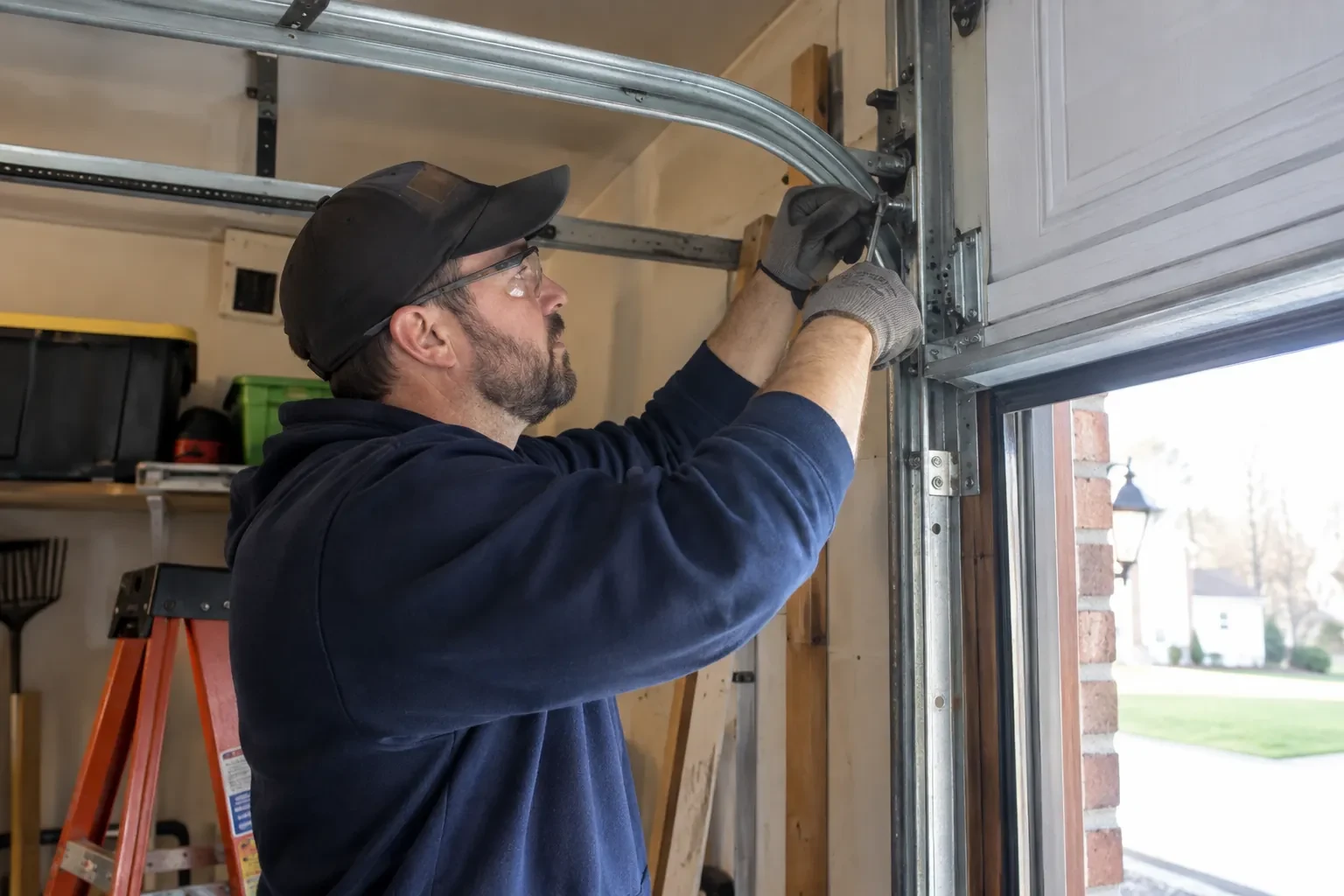
The door shakes through the curved track, hinges have loosened in worn mounting points, and repairs now involve several parts at once. A coordinated new system offers a cleaner path than chasing wear across the assembly.
Your garage is becoming a workshop, but the thin single-skin door rattles, sweats and lets outdoor temperatures shape the whole room. You want a stronger sectional assembly suited to the way the space is now used.
One busy service-bay door has become louder than the matching doors beside it. Its hinges show movement at the fasteners, several rollers have side play, and the operator vibrates through the supporting structure.
Why does my door reverse on the way down for no reason?
Most often it is the photo eyes. A sensor knocked slightly out of line, a lens with a film of road grime, a loose wire, or low afternoon sun shining straight into one eye will each break the beam as far as the opener is concerned. The next candidates are a down-force setting that has drifted, a binding roller or a door that has gone out of balance. The inspection checks each in turn.
Can I keep using the opener until someone comes?
It is better to leave the opener alone. A racked door does not become straighter with another cycle; every press of the button forces the crooked sections deeper into the rails and strains the hinges and wall brackets. Unplug the opener or pull the red release cord if the door is fully closed, keep people and vehicles clear, and let the technician move it in a controlled way.
How should I look after the door after the section is replaced?
A little routine goes a long way. Each month, look along the hinges for loose screws, spin the rollers, and check the door's balance by lifting it by hand with the opener disconnected. Twice a year, apply a light garage-door lubricant to hinge pivots, roller stems and springs, and keep the tracks clean and dry. Rinse salt off the lower sections in spring, touch up chips, and keep the bottom seal clear of ice in winter.
My door was replaced last year. Does the perimeter seal need doing too?
Often, yes. A new door is sometimes fitted against the original wood stop and its old fin, and the new door may sit slightly differently in the opening, so the old seal no longer meets it. If daylight shows at the edges or the fin is hard and cracked, a new seal set against the new door completes the installation and matches the fresh look of the door.
I have no key for the outside handle. Can it be made to work?
Yes. The cylinder is removed and either rekeyed to a fresh combination, so any key held by a previous owner is retired, or replaced with a new cylinder carrying the correct tailpiece. New keys are cut and tested in the handle before the technician leaves. If a locked door has to be opened first, the technician confirms your connection to the property as a matter of course.
How long does a balance adjustment take?
A straightforward tension adjustment on a sound door is generally about an hour, including the inspection, the hand tests and the opener checks at the end. Resetting cables to level the door, replacing rollers to remove friction, or moving to a spring replacement adds time. The technician will tell you what the inspection found and how the visit is shaping up before the work continues.
How long do I have after pressing the learn button?
Roughly half a minute on most openers. Press and release the button, then press the remote button you want to use until the opener light blinks or the unit clicks. If the window closes before you finish, simply press the learn button again and repeat. The window is short on purpose, so a passing signal cannot slip into the memory.
How do you determine the correct replacement size?
The technician measures the finished opening at several points and also records floor level, jamb alignment, headroom, sideroom and backroom. Those dimensions are checked against the selected door system and track arrangement. The nominal width and height are only the starting description; actual site measurements shape the order.
Can I keep the garage door opener I already have?
Possibly, after its identity, condition and compatibility are checked against the new door. The installer reviews door height and weight, track layout, reinforcement, attachment geometry, travel limits, controls and safety sensors. The door is balanced and operated manually before any opener is connected. If the existing unit fits the documented requirements, it can be integrated and tested as part of the installation scope.
What if the door is stuck partly open?
The opening is kept clear and the door is stabilized in its current position before diagnosis. A cable may be displaced, a roller may have left the track, a spring may have failed or the operator may be holding the load. Support and controlled energy handling come before any attempt to move or dismantle the affected assembly.
Request a visit
Households in Tutela Heights are not left guessing about cost. The technician assesses the door, explains the cause, and gives the price on the spot, before starting. There is one fee whatever hour we arrive, and if you decide to wait or think it over, that is a perfectly acceptable answer.