Openers · Brantford
Garage Door Remote and Keypad Programming
The new car has three buttons in the mirror for garage doors.
In plain words
Over the years a garage accumulates controls: a remote in each car, one on a hook by the door, a keypad outside, a button in a vehicle you sold. Programming is the moment to take stock. The technician lists what exists, what works and what is missing, decides with you what should stay, and rebuilds the opener's memory to match. Each retained device is tested at the door and labelled for the door it drives. You leave with a short record of what opens the garage and what was removed, without any secret code written on it.
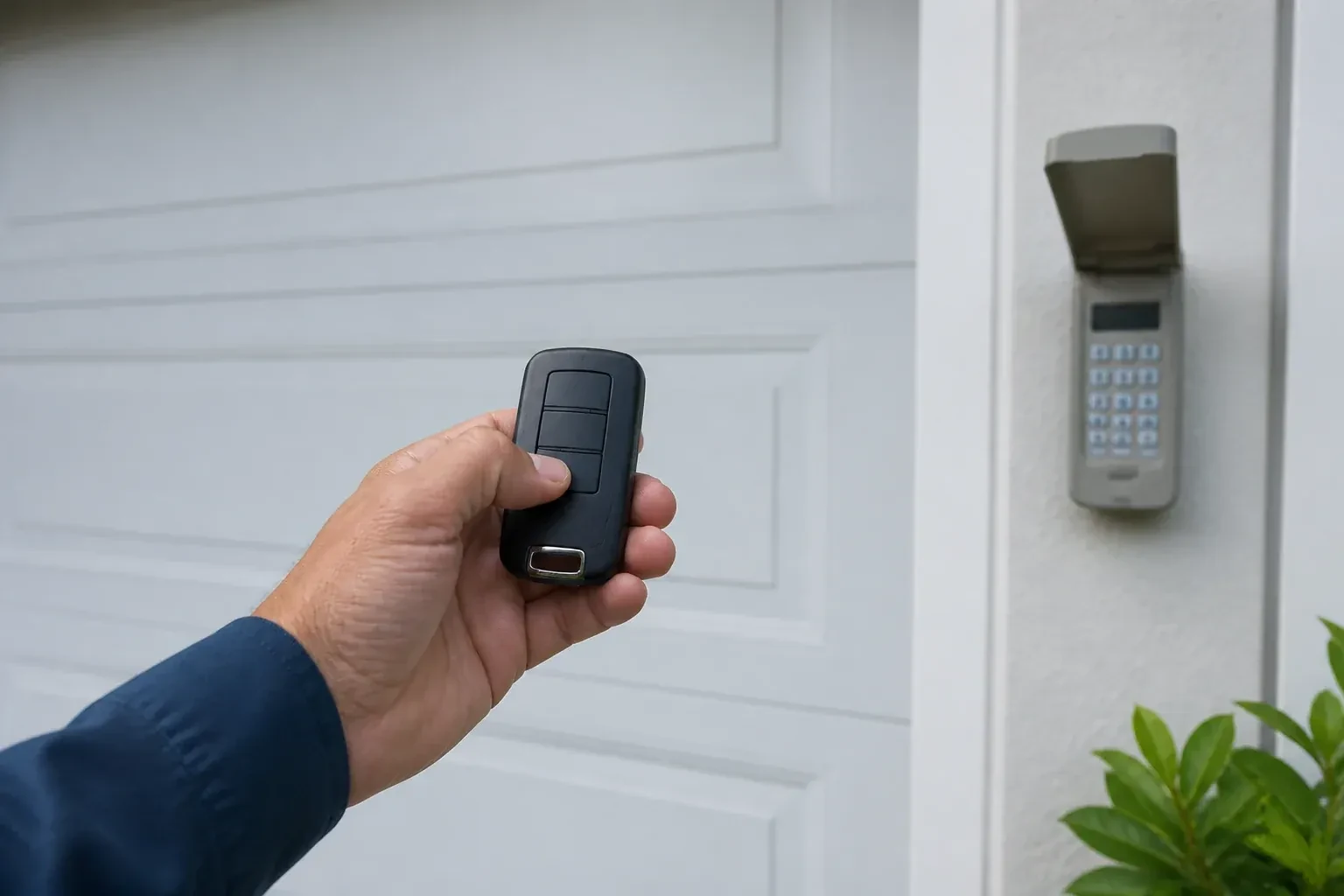
How the visit goesThe new car has three buttons in the mirror for garage doors. You held the old remote up to it as the manual said, the light in the car changed, and yet the door ignores it completely. The handheld remote works fine.
Garage Door Remote and Keypad Programming
How the visit goes
Who should be able to open this door?
Before touching the memory, the technician asks what the household wants the outcome to be. Is this adding one remote for a new driver, replacing a lost one, or starting fresh after a move? Are there vehicle buttons, a keypad and a phone app to keep? Is anyone's remote missing, or has a car with a programmed button been sold? The answers decide between adding to the stored controls and erasing everything and rebuilding. The technician also confirms the person asking is the owner, a tenant with permission, or the manager of a shared building, since access to a garage is access to a home.
Clearing the memory and starting fresh
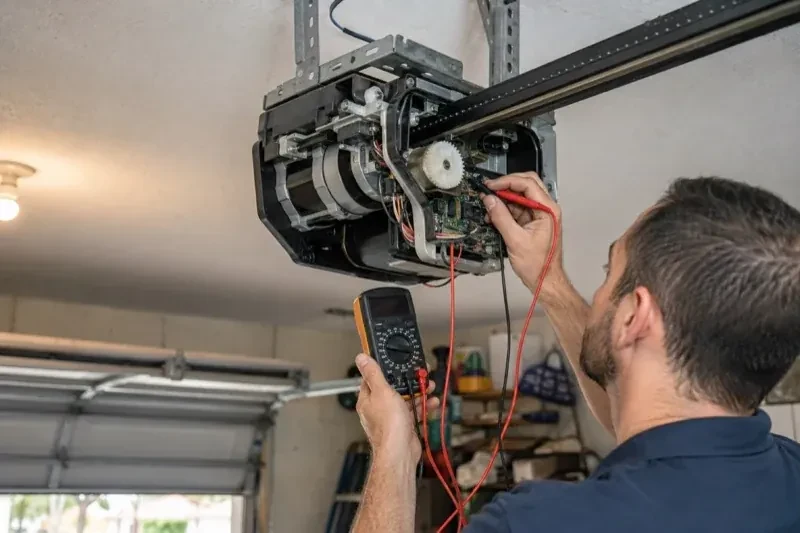
When a remote is lost or stolen, or the household has just moved in, the stored controls are wiped. The technician follows that model's own erase sequence, whether a single held button or a multi-button combination, until every remote, keypad code and vehicle button the opener knew is forgotten, including any the household never saw. Unplugging the unit would not have done this; only the correct sequence does, and a connected app or account is checked separately. Then the controls the household actually holds are programmed back one at a time, the keypad is given a new code, vehicles are retrained, and the door answers to a known and complete set of controls.
Batteries, and when to change them
Each remote and keypad leaves with a fresh cell of the type the maker specifies, and you know what those types are, since a coin cell in a remote and the small cells in a keypad are different. The first sign of a fading remote is shrinking range rather than sudden silence, so a remote that needs you closer than it used to is asking for a battery. Outdoor keypads are hardest on cells in the cold months; changing them each autumn saves a frozen-morning surprise. Rechargeable cells are not recommended for many keypads, and the record notes that.
Garage Door Remote and Keypad Programming
In the van
AAA and nine-volt keypad batteries
Receiver transformer and two-conductor wire
Add-on rolling-code receiver kit
Keypad mounting screws and anchors
Multi-door keypad
Garage Door Remote and Keypad Programming
What affects the quote
Batteries supplied
Coin cells for remotes and the small cells in keypads are counted per device when the technician supplies them, and noted so you know what to buy next time.
Connected features
Linking or unlinking a phone app, or checking that a previous owner's account is removed, is quoted as its own step alongside the remotes and keypad.
Keypad supplied or existing
Programming a keypad already on the wall is one task. Supplying and mounting a new one, including anchors for brick or siding, is a larger item.
What to have ready
- Is the light on the wall control blinking steadily?
- Which controls fail: one remote, all remotes, the keypad, or the car buttons?
- Does the opener connect to a phone app, and whose account is it under?
Garage Door Remote and Keypad Programming: questions
QuestionsWhat is rolling code and why does it matter for programming?
Most openers made from the mid-1990s on change their code every time a remote is pressed, choosing from billions of possibilities, so a copied code is usually useless next time; the technician confirms the actual system from the model, not age. Programming matters because the opener has to learn each remote's sequence at the learn button; a remote cannot simply be set to match. Older fixed-code openers, set by small switches, can be upgraded with an add-on rolling-code receiver.
How long do I have after pressing the learn button?
Roughly half a minute on most openers. Press and release the button, then press the remote button you want to use until the opener light blinks or the unit clicks. If the window closes before you finish, simply press the learn button again and repeat. The window is short on purpose, so a passing signal cannot slip into the memory.
Can a keypad work with any opener?
A keypad, like a remote, must match the opener's radio generation. Makers publish which keypads suit which openers, and universal keypads cover most units made since the mid-1990s. Very old fixed-code openers need an add-on receiver first, and then a keypad pairs with that receiver. The technician checks the match before the keypad's packaging is opened, so you do not end up with a device that lights up but cannot be heard.
Related services
- Chain-Drive Opener RepairThe chain in the detached garage went orange with rust over the winter, the links are stiff, and the opener strains and groans to pull the door up.
- Belt-Drive Opener RepairIt is minus twenty in the detached garage and the door climbs in jerks, the belt stiff as a board.
- Garage Door Opener ReplacementThe bedroom above the garage shakes every morning at six when the chain drive fires up.