Springs · Tutela Heights
Garage Door Balance Adjustment in Tutela Heights
Someone replaced the springs a while back and the door has bounced at the top ever since.
In plain words
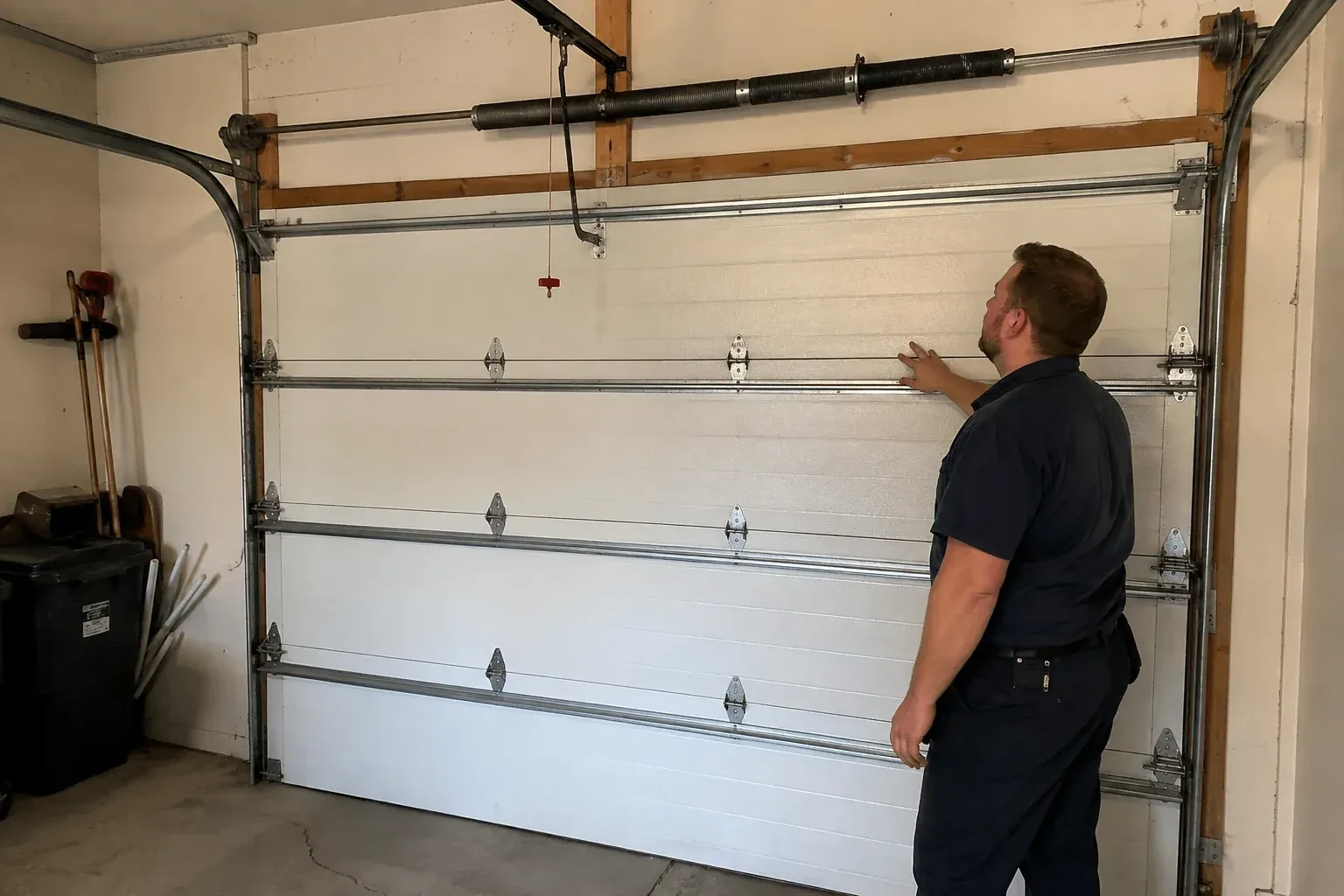
Balance changes for ordinary reasons. Springs are rated for a certain number of cycles and lose a little tension as they age. A new bottom seal, insulated panels, a window section or a decorative overlay adds weight the original springs were never sized for. Rollers stiffen, hinges wear, and in a cold snap the whole system feels heavier for a few weeks. Any of these tips the door from weightless to a chore. A balance adjustment starts by identifying which of them is at work, then resets the springs to suit the door as it is today, and corrects the friction so the adjustment holds.
How the visit goesSince the new insulated panels went in, the door feels like a different animal. It closes with a thud, the opener labours where it used to hum, and lifting it by hand takes a proper heave rather than a fingertip.
Garage Door Balance Adjustment
How the visit goes
Friction along the path
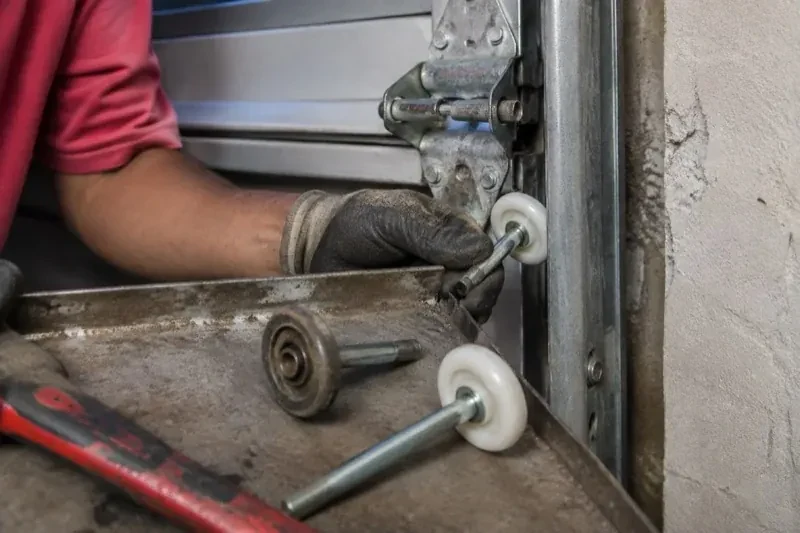
Some doors that feel heavy are not short of spring tension at all; they are dragging. The technician runs a hand and an eye along the vertical and horizontal tracks for dents, misaligned joints and brackets that have pulled away from the jamb, spins each roller to find seized bearings or cracked wheels, and flexes each hinge for play or splits. Dry, worn rollers alone can add real effort to every lift. Binding at one point in the travel, rather than heaviness everywhere, is the signature of a friction problem, and correcting it first means the springs are then adjusted to the door's true weight rather than to the drag.
Proving the result with the safety tests
The visit is finished only when the standard tests pass. The technician places a piece of two-by-four flat on the floor in the door's path and closes it with the wall button; the door must strike the wood and return to fully open. Then, with the door closing again, an object is passed through the photo-eye beam, and the door must reverse. Finally the door is released once more and the hand test repeated so you can see it hold at knee height, at waist height and fully open. These are the same checks the door industry's own maintenance checklist uses, and you are welcome to watch each one.
The seasonal hand test you can do yourself
You can repeat the balance test any time without touching a spring. With the door closed, pull the manual release cord so the trolley disconnects, lift the door by a handle or a safe gripping point to about a metre, and let go gently. A balanced door stays roughly where you leave it; one that creeps up or sinks has drifted and is worth a call before it becomes heavy work for the opener. Reconnect the opener as its manual describes, usually by running it once. Doing this at the start of each season, when the temperature changes, is the simplest way to catch a change early.
Garage Door Balance Adjustment
In the van
Door scale
Winding bars
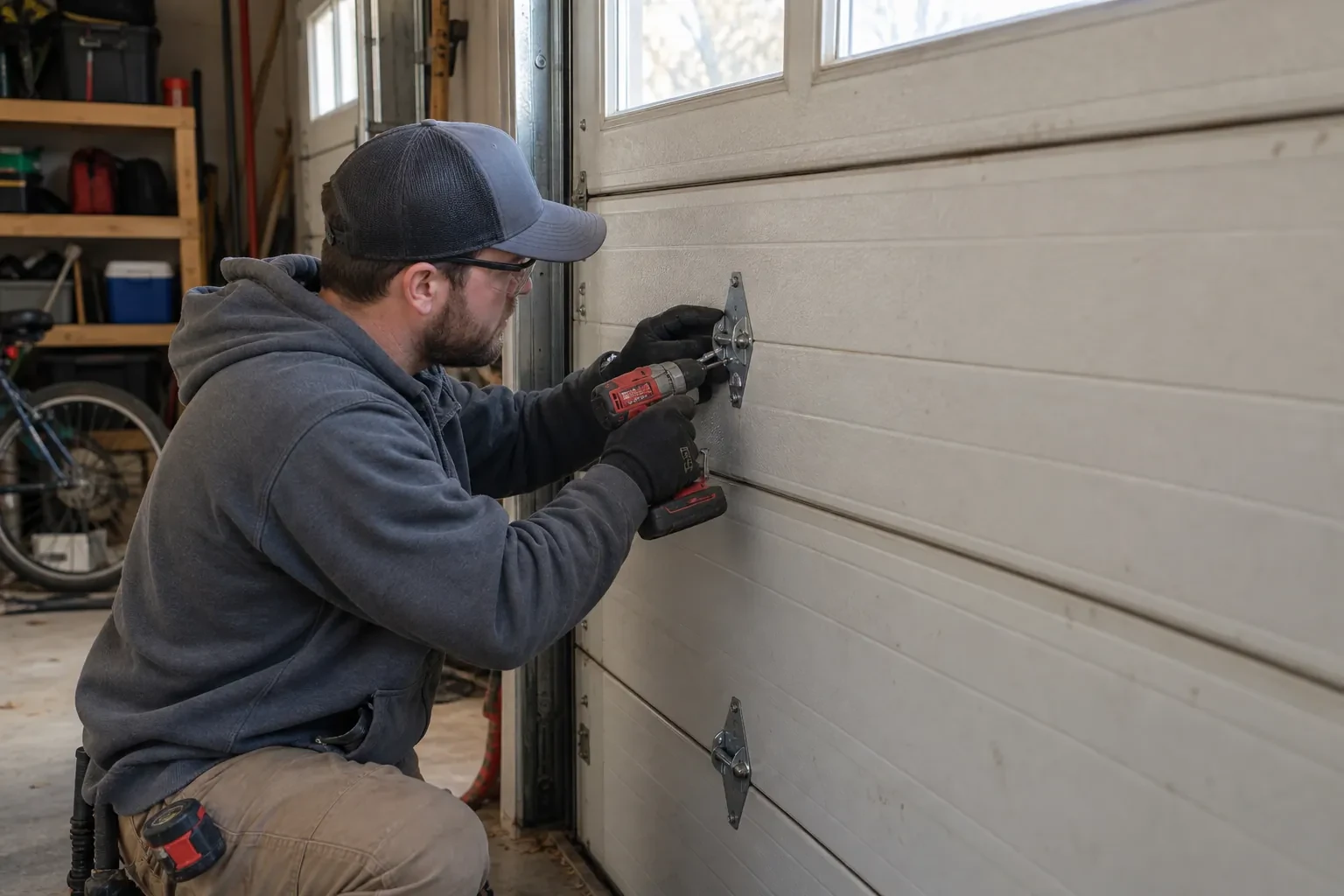
Replacement hinges
Cable drums
Torsion springs, matched pair
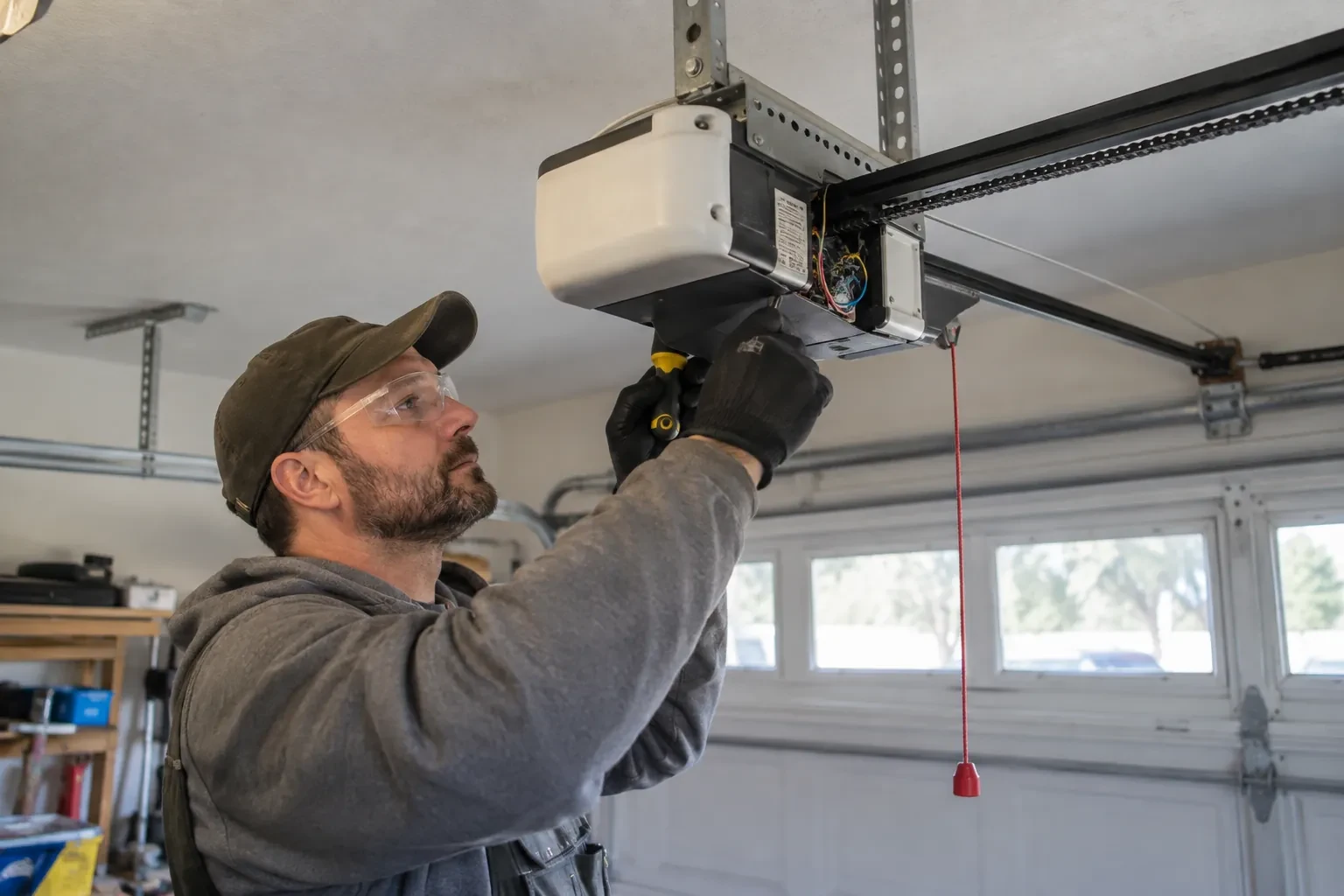
Garage Door Balance Adjustment
What affects the quote
Single or double door
A double door commonly carries more spring than a single, but the exact count follows the manufacturer's engineered hardware package for that door's weight rather than width alone: one, two or more torsion springs, or one or two extension springs per side. More springs means more adjustment and testing.
Whether a second person is needed to support the door
A heavier double door or one already sitting unevenly is sometimes safer to adjust with a second person steadying it while the springs are reset. That extra pair of hands is called in once the technician sees how the door is behaving on site.
Condition of cables and drums
Cables that are fraying or drums with worn grooves found during the check are recommended for replacement while the system is being set, and quoted as their own items.
What to have ready
- When were the springs last replaced or adjusted, if you know?
- Does the door sit level when closed, or is one corner higher?
- Is it a single or a double door, and roughly how tall?
Garage Door Balance Adjustment: questions
QuestionsWhat does it mean for a garage door to be balanced?
It means the springs carry nearly all of the door's weight, so the door itself feels close to weightless. Balanced, it will stay put at any partly open position when moved by hand, stay fully open on its own, and close without slamming. The opener then only has to guide the door rather than lift it, which is how it was designed to work.
How long does a balance adjustment take?
A straightforward tension adjustment on a sound door is generally about an hour, including the inspection, the hand tests and the opener checks at the end. Resetting cables to level the door, replacing rollers to remove friction, or moving to a spring replacement adds time. The technician will tell you what the inspection found and how the visit is shaping up before the work continues.
Can a door with a broken spring be balanced?
A broken spring is replaced rather than adjusted; there is nothing left to wind. On a two-spring door the technician normally replaces both, since the survivor has the same age and cycle count, and then balances the door on the new pair. Until the visit, leave the door closed and avoid running the opener, which is not designed to lift the door's full weight on its own.
Related services
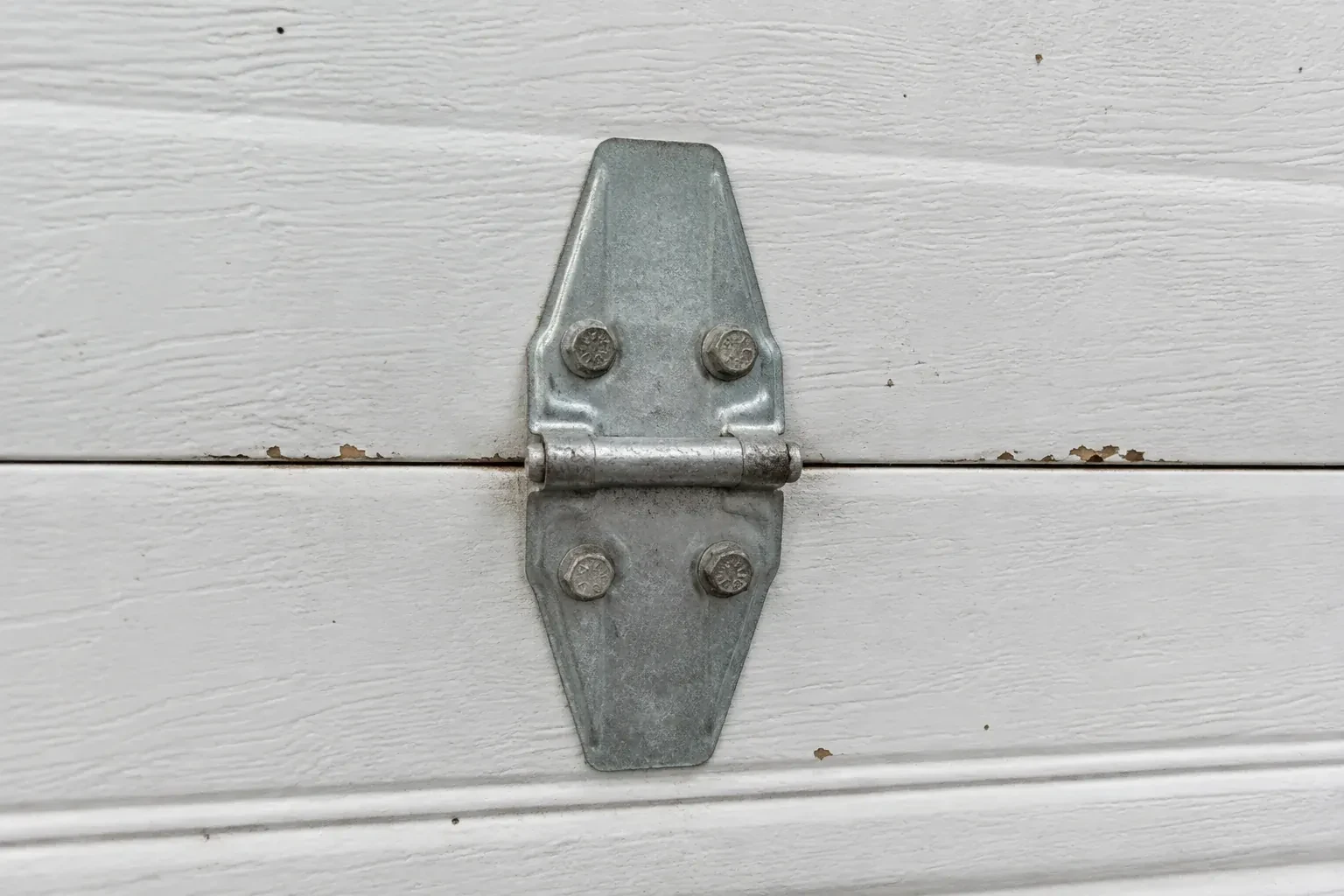
- Garage Door Hinge ReplacementEvery time the door goes up there is a sharp pop from the same spot, about a metre off the floor, and the whole door gives a little shudder.
- Garage Door Track Repair or ReplacementYou bought the house with a door that sticks near the top of its travel.
- Garage Door Cable ReplacementYour older door has springs along the tracks, and one cable has slipped off its pulley and dangles slack.