Repairs · Echo Place
Garage Door Panel Replacement in Echo Place
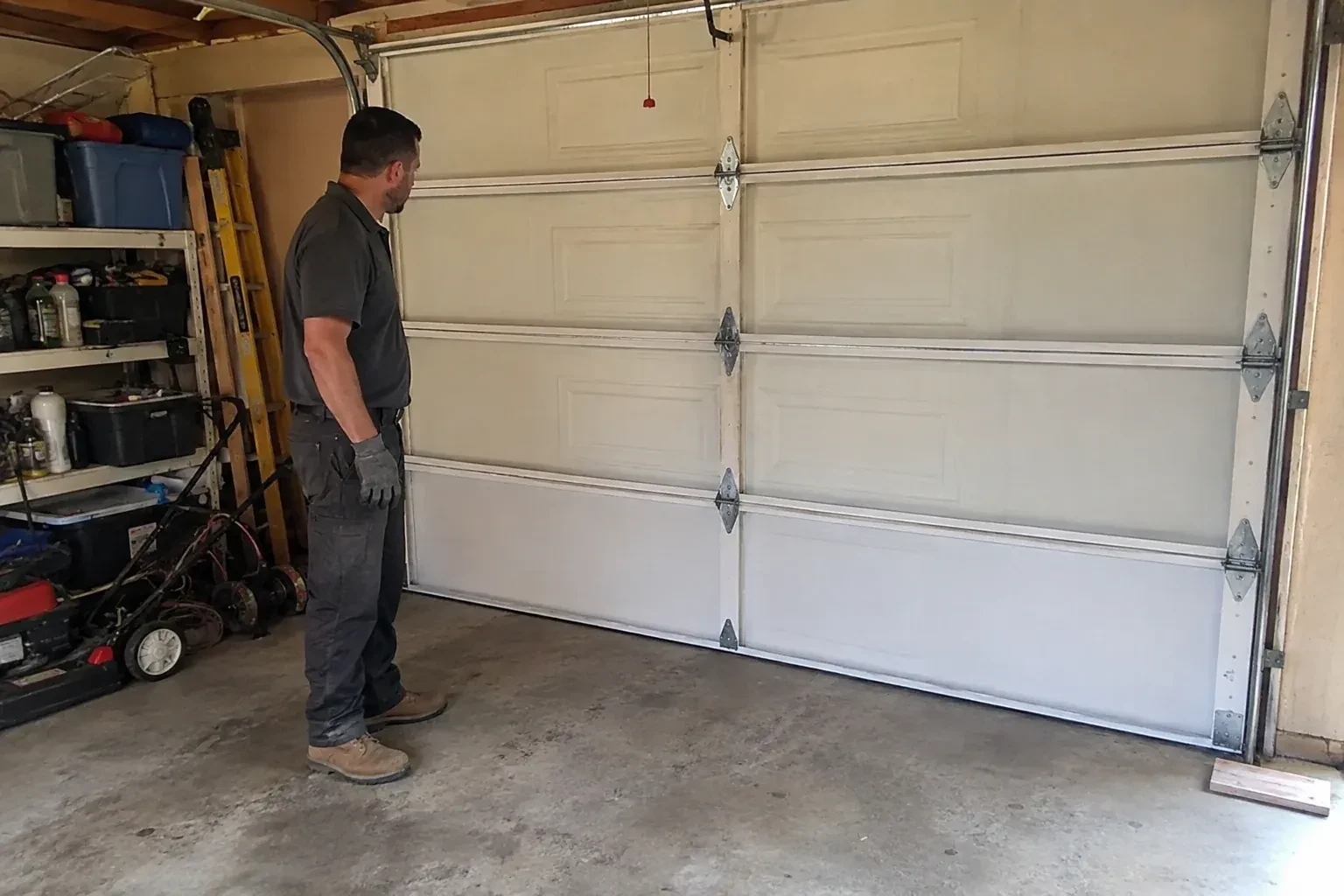
Years of slap shots have peppered the lower two sections with dents.
In plain words
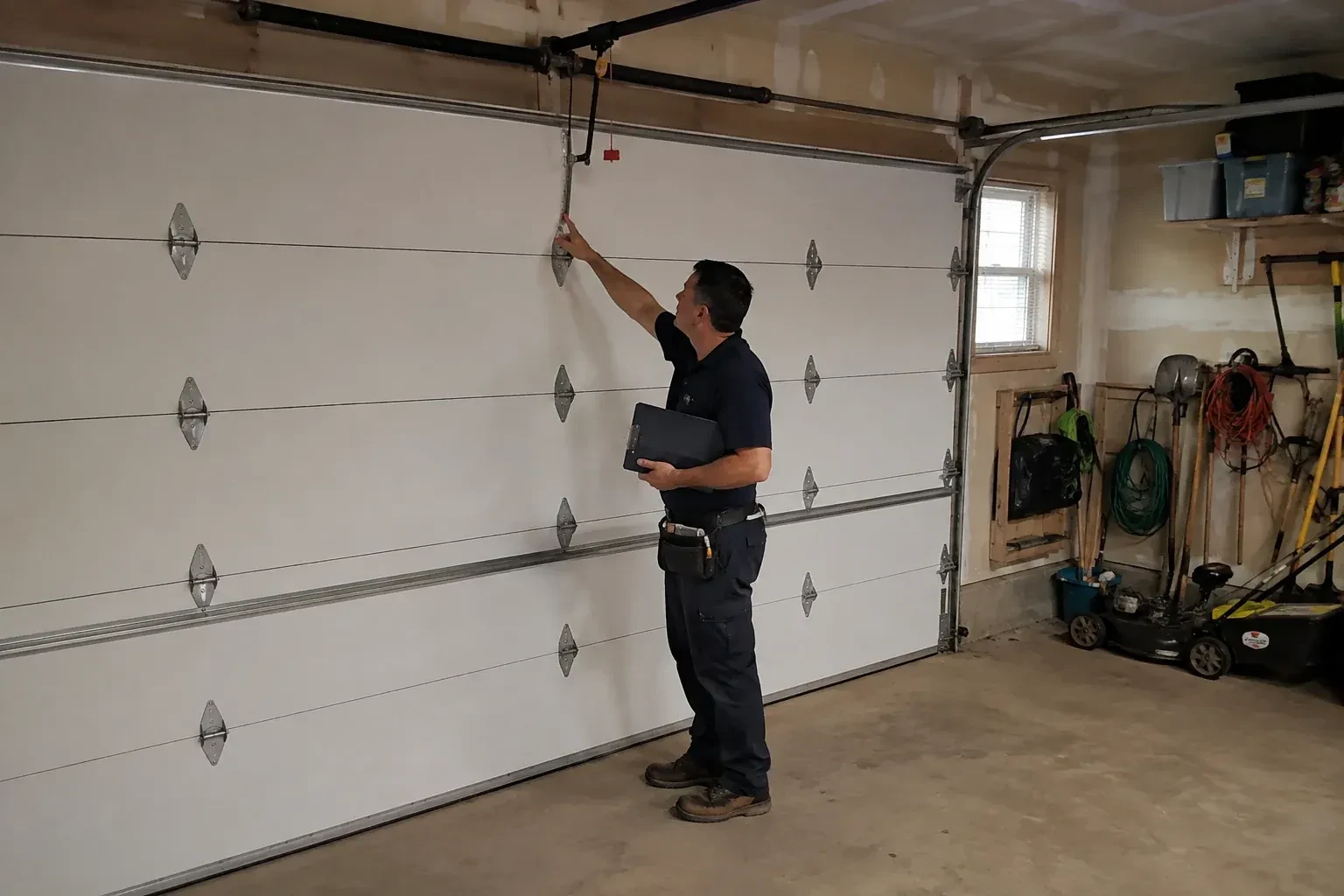
The first real decision is whether a section is the right scale of repair. A shallow dent in the middle of a steel skin can often be worked out or filled and painted. A crease that reaches a joint, an end stile or a hinge point changes how the section carries load and is usually a section replacement. Damage spread over several sections, widespread rust, or a door whose design is no longer made pushes the conversation toward a new door. Panel replacement sits in the middle of that range, and a good assessment places your door on it honestly before anything is ordered.
How the visit goesRust has crept along the bottom edge of the lowest section. What began as bubbling paint is now a soft, flaking strip, the seal retainer is working loose, and a screwdriver pressed against the worst spot goes through the steel.
Garage Door Panel Replacement
How the visit goes
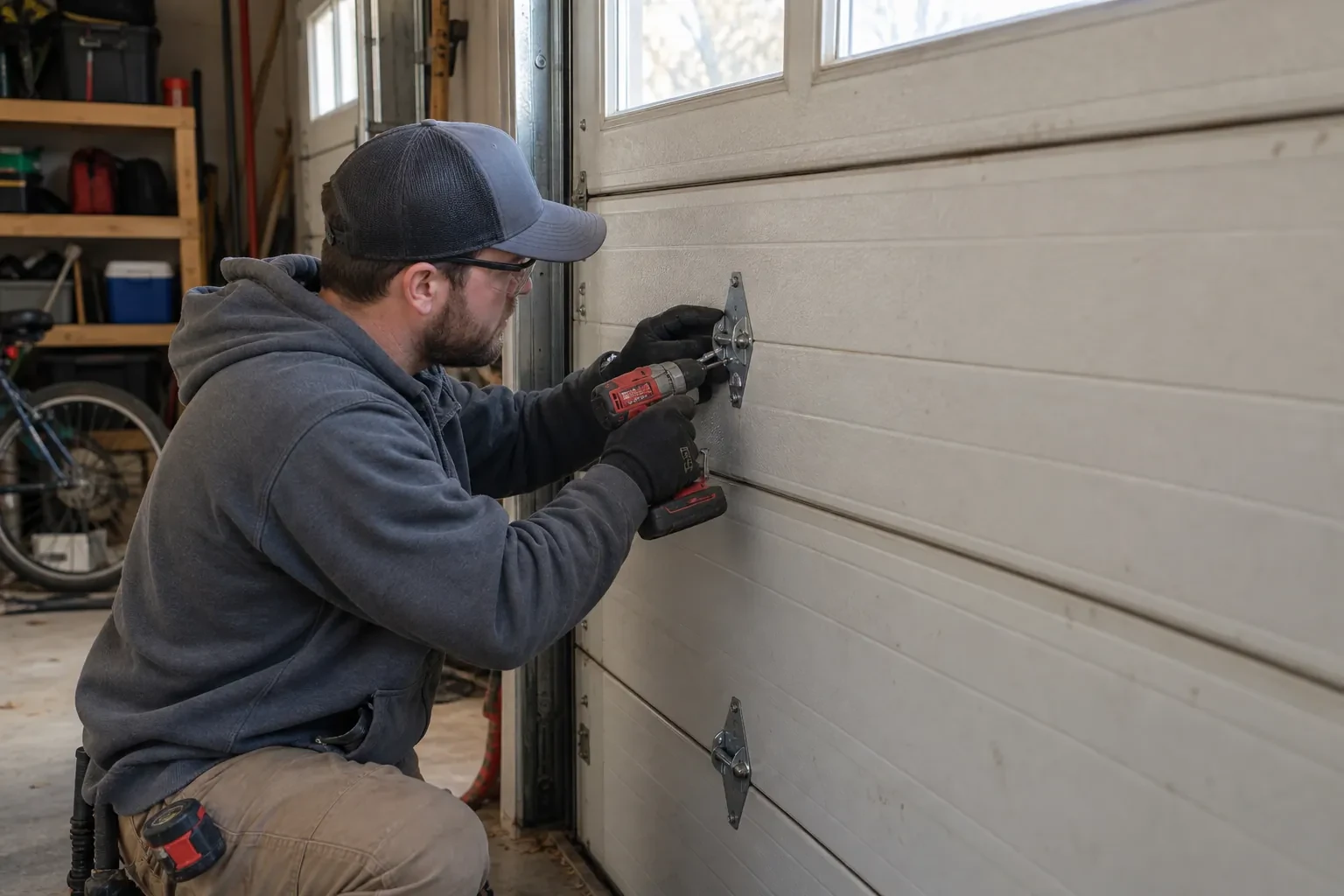
Which position took the hit
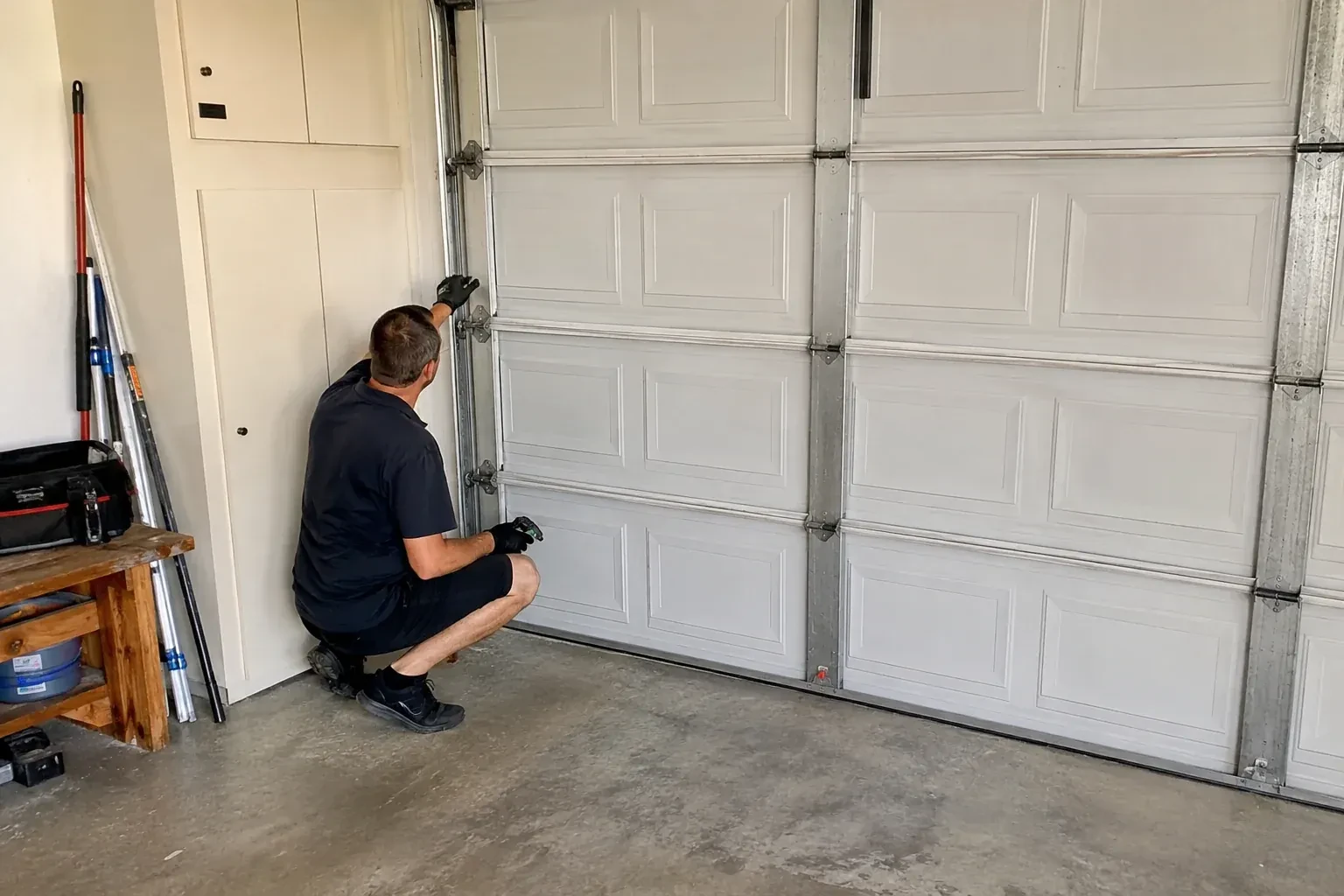
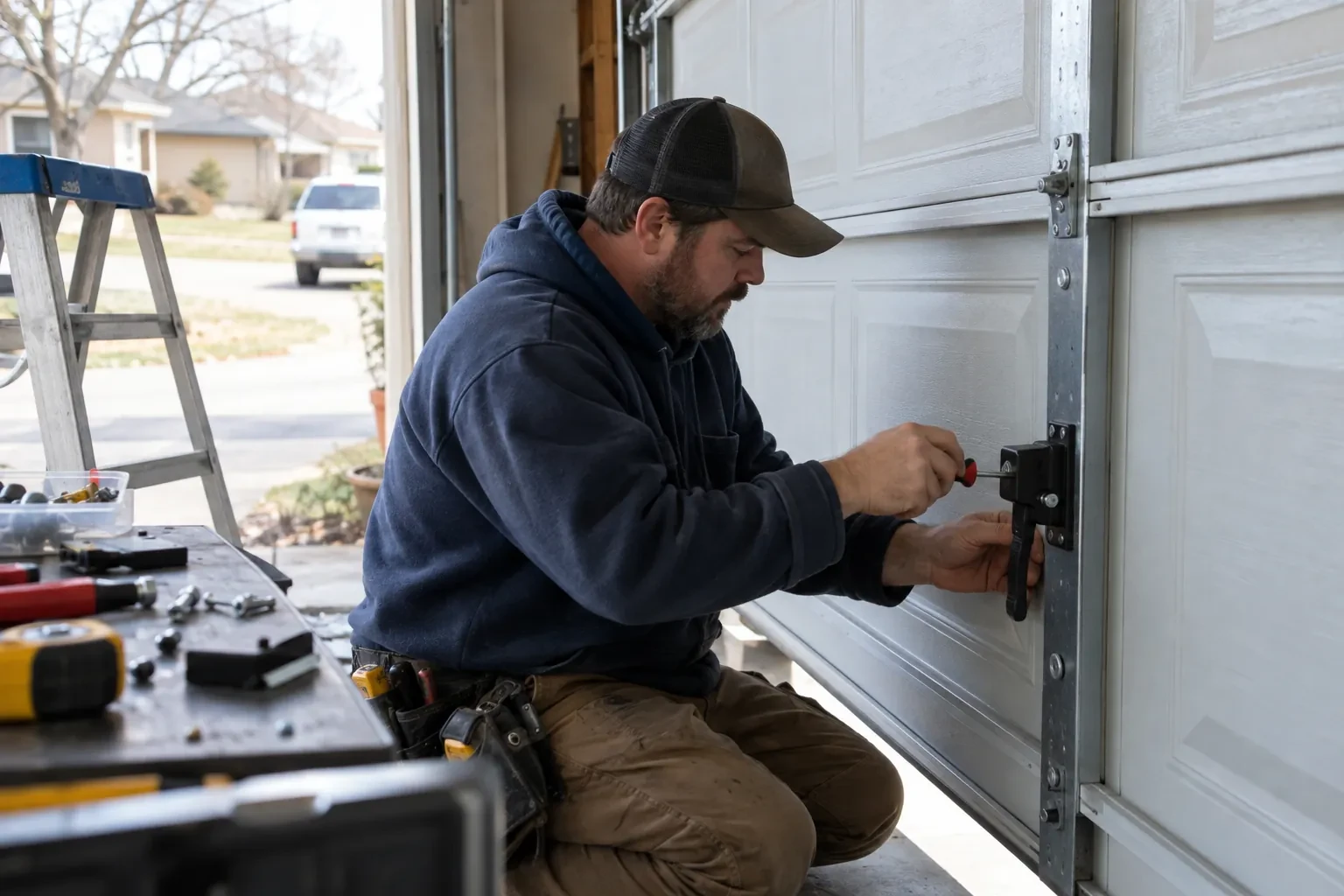
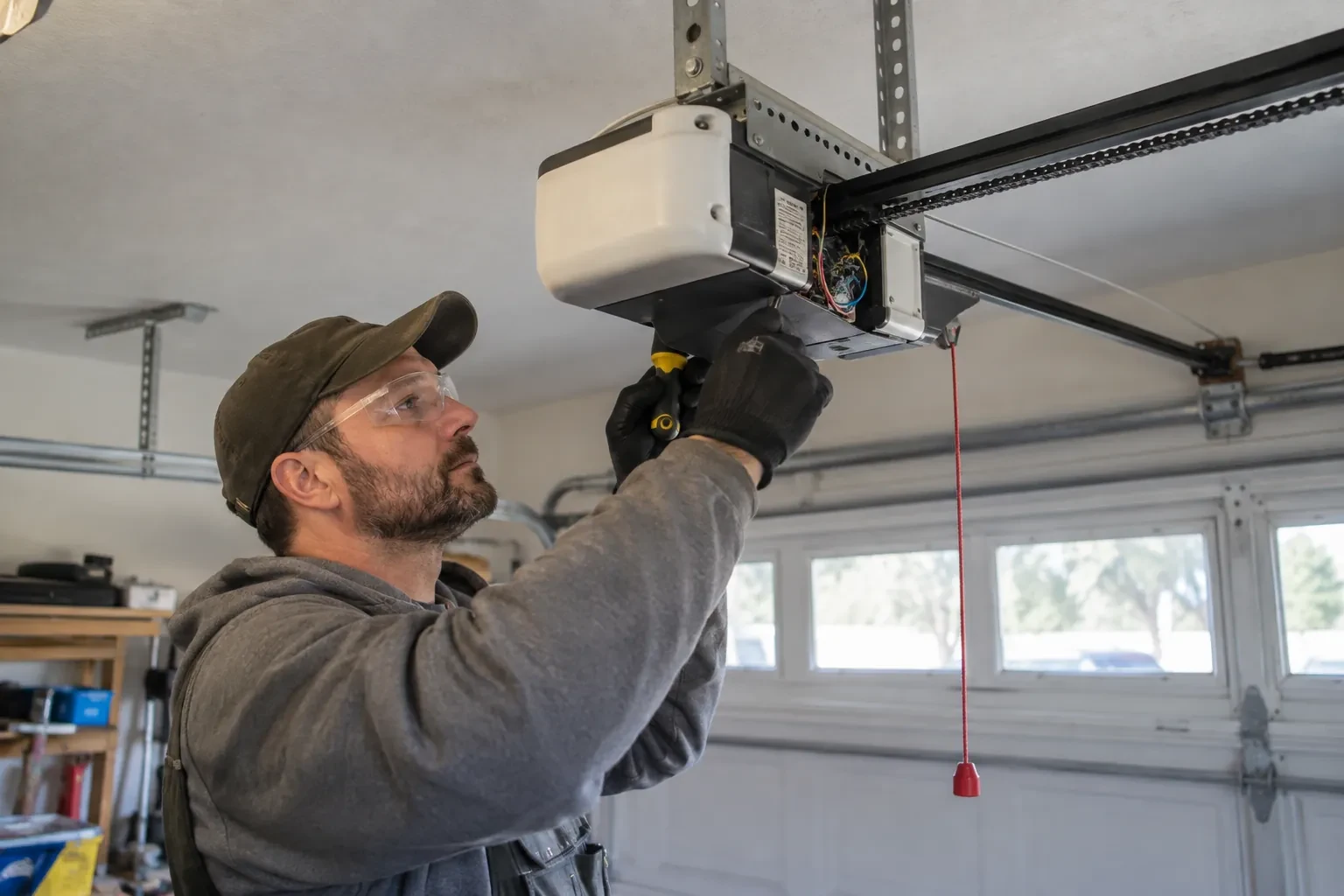
Bottom, middle and top sections are different parts with different jobs, and the position sets the shape of the repair. A bottom section carries the lift cables through its bottom brackets, so replacing it means unloading the springs first. A top section carries the opener arm bracket and the top roller fixtures, so its replacement includes resetting how the opener pulls. An intermediate section carries only hinges and rollers and is the simplest exchange. The technician also checks whether the damaged section is a special one, such as a glazed section or one with a factory strut, because it is ordered as that exact position and type.
Bottom section: brackets, seal and cables
A new bottom section arrives bare, so its working parts are fitted on site. Bottom brackets are bolted to each end, with the cable attached and the safety tab in place, and a roller set in each bracket. The seal retainer is fixed along the bottom edge and a new astragal is slid into it so the door meets the floor evenly. The lift cables are laid over the drums, the springs are wound back to the correct number of turns for the door's height, and the set screws are tightened. The door is then eased off the floor by hand to confirm the cables are seated and even on both sides.
Checking balance and reversal yourself
Two simple checks tell you the door is still healthy after the repair. With the door closed, pull the release cord and lift it by hand; it should rise smoothly and stay put around waist height. A little slow drift is normal, but a door that rises or sinks on its own, or feels heavy, is asking for a spring adjustment before anything wears. Reconnect the opener, then lay a piece of wood flat on the floor under the door and close it; the opener should touch the wood and reverse. Pass a carton through the photo-eye beam while standing clear of the door as it closes, and watch it stop and return. Trade associations recommend running these checks monthly.
Garage Door Panel Replacement
In the van
Nylon or steel rollers
Matching replacement section
Window frame insert and glazing
Garage-door lubricant
Horizontal reinforcement strut
Garage Door Panel Replacement
What affects the quote
Whether the exact section is still made
A current model is a straightforward order. A discontinued design may mean a section from a related series, a custom-made section, or a discussion about the whole door, each of which lands differently on the quote.
Which position the section sits in
A bottom section includes releasing and resetting spring tension and fitting brackets and seal; a top section involves the opener bracket and top fixtures; a middle section is the plainest exchange. The position shapes the labour.
A make-safe visit while the section is on order
When the door has to be braced, disconnected or secured closed until the section arrives, that first visit is quoted as its own item, with the installation visit following once the part is in.
What to have ready
- Roughly how wide and how tall is the door?
- What caused the damage, and when did it happen?
- What colour and panel design is the door?
Garage Door Panel Replacement: questions
QuestionsWhy is the bottom section handled differently from the others?
The bottom section is where the lift cables attach, through the bottom brackets at each end, and those cables are under the full pull of the springs. Before the brackets come off, the springs have to be unwound or unhooked so the cables go slack. The bottom section also carries the seal retainer and astragal that meet the floor. After the new section is in, the springs are re-tensioned and the balance reset.
How should I look after the door after the section is replaced?
A little routine goes a long way. Each month, look along the hinges for loose screws, spin the rollers, and check the door's balance by lifting it by hand with the opener disconnected. Twice a year, apply a light garage-door lubricant to hinge pivots, roller stems and springs, and keep the tracks clean and dry. Rinse salt off the lower sections in spring, touch up chips, and keep the bottom seal clear of ice in winter.
How do you work out which make and model my door is?
The manufacturer's label is the starting point. It is often a sticker on the end of a section, on the inside of the top section or on the vertical track, and it usually gives the model or series, a date and sometimes a colour code. Failing that, the panel design, section heights, thickness, joint profile and hinge spacing narrow it down, and the distributor can usually confirm the model from photographs and measurements.