Repairs · Brantford
Garage Door Tune-Up in Brantford
Halfway up, the door shudders.
In plain words
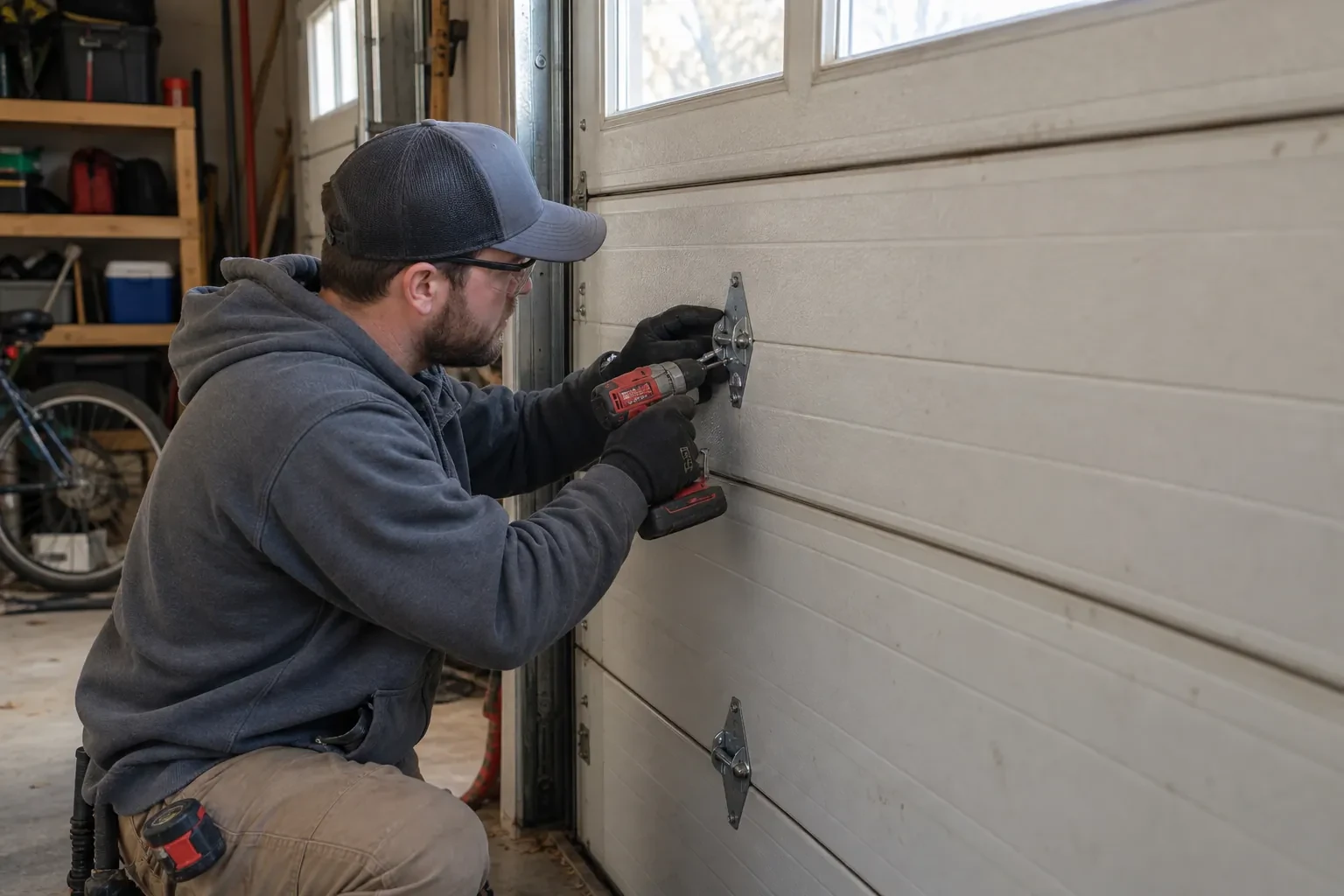
Most of a tune-up's noise reduction comes from lubrication, and its value comes from putting the lubricant where it belongs. Hinge pins, steel roller bearings, spring coils, the bearing plates at the torsion shaft ends and the lock all get a silicone- or lithium-based garage door lubricant. The tracks do not; a coated track collects grit and makes rollers slide rather than roll. Nylon tires stay dry too, though an exposed nylon-roller bearing gets a touch where its maker calls for it. Rubber seals get a silicone spray and never a petroleum product. Done this way, the door runs quieter and the parts last longer.
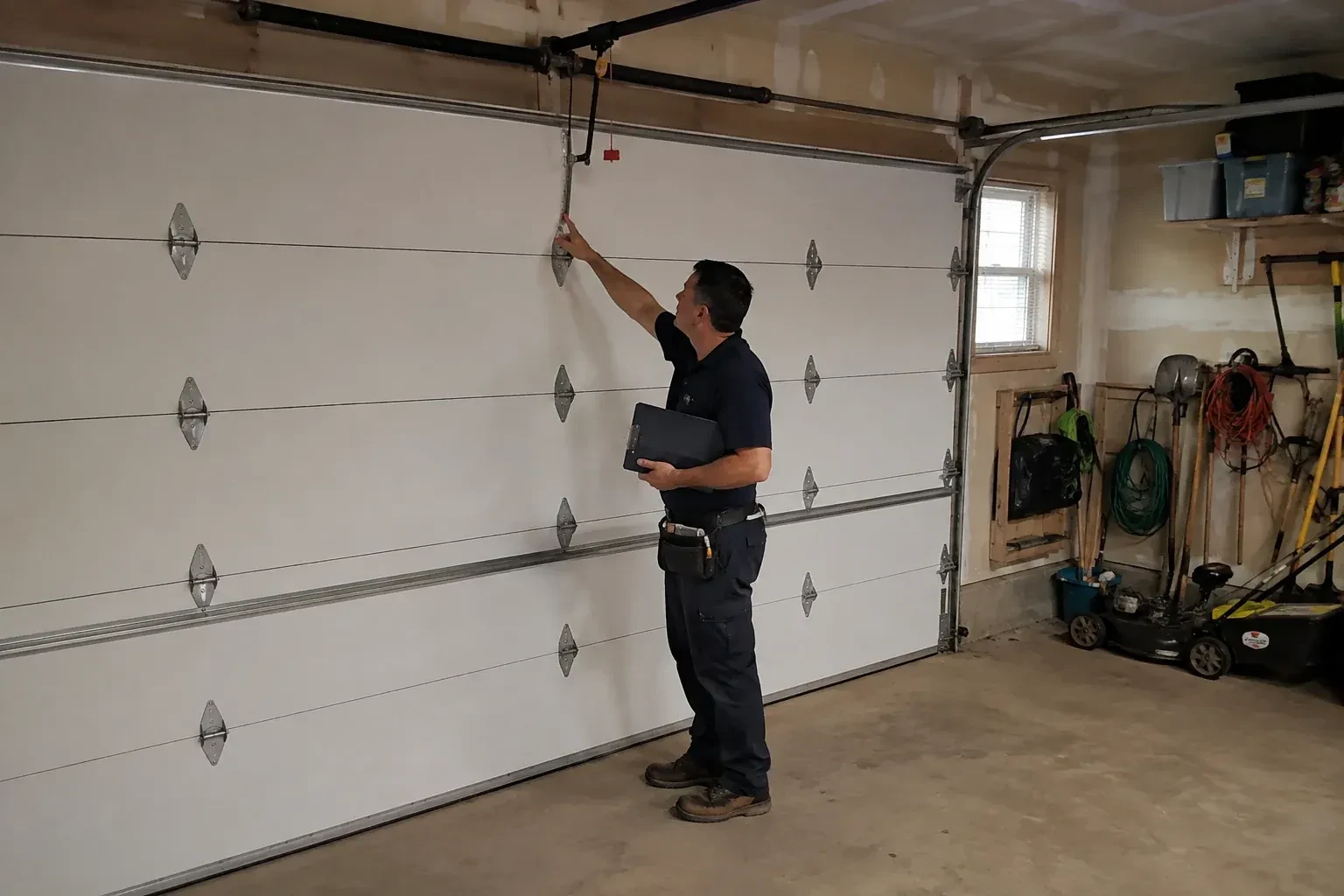
How the visit goesEvery morning the door announces itself to the whole street: a long metallic squeal as it climbs, a rattle at the top, and a groan on the way back down. It still opens and closes, but it never used to sound like this.
Garage Door Tune-Up
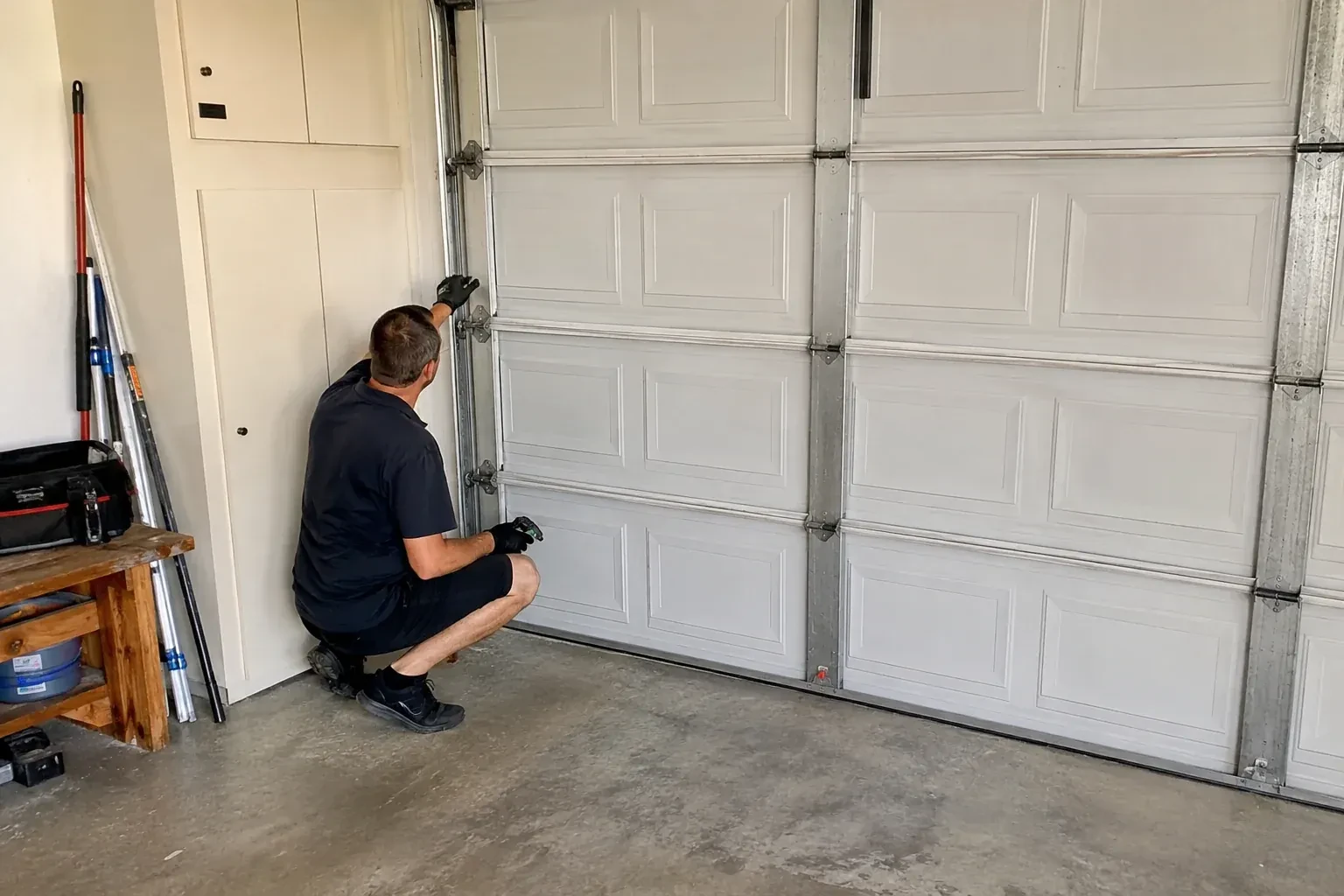
How the visit goes
Your history of the door
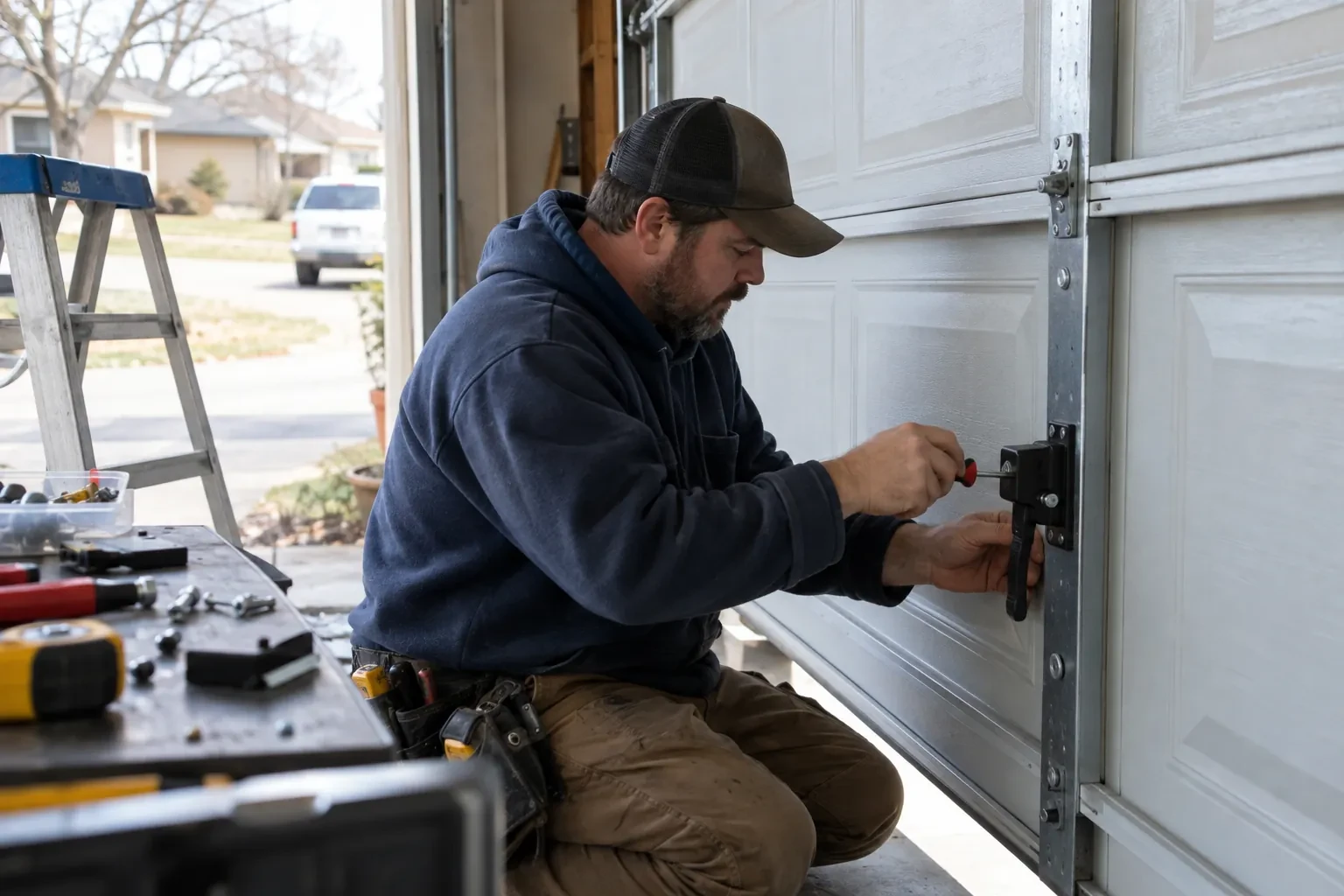
The technician also asks you a few plain questions, because you have been living with this door every day. When did the noise start? Does the door behave differently in cold weather? Has anything struck it, or has a storm bent anything? Does it ever reverse on its own? Has anyone worked on it before, and is there paperwork or a model label? Are the remotes and wall button doing what you expect? None of this replaces the physical inspection, but it points attention to the right place and often explains a finding, such as a track that was knocked by a bumper months ago. Your answers go into the written record too.
Chain, belt, rail and trolley
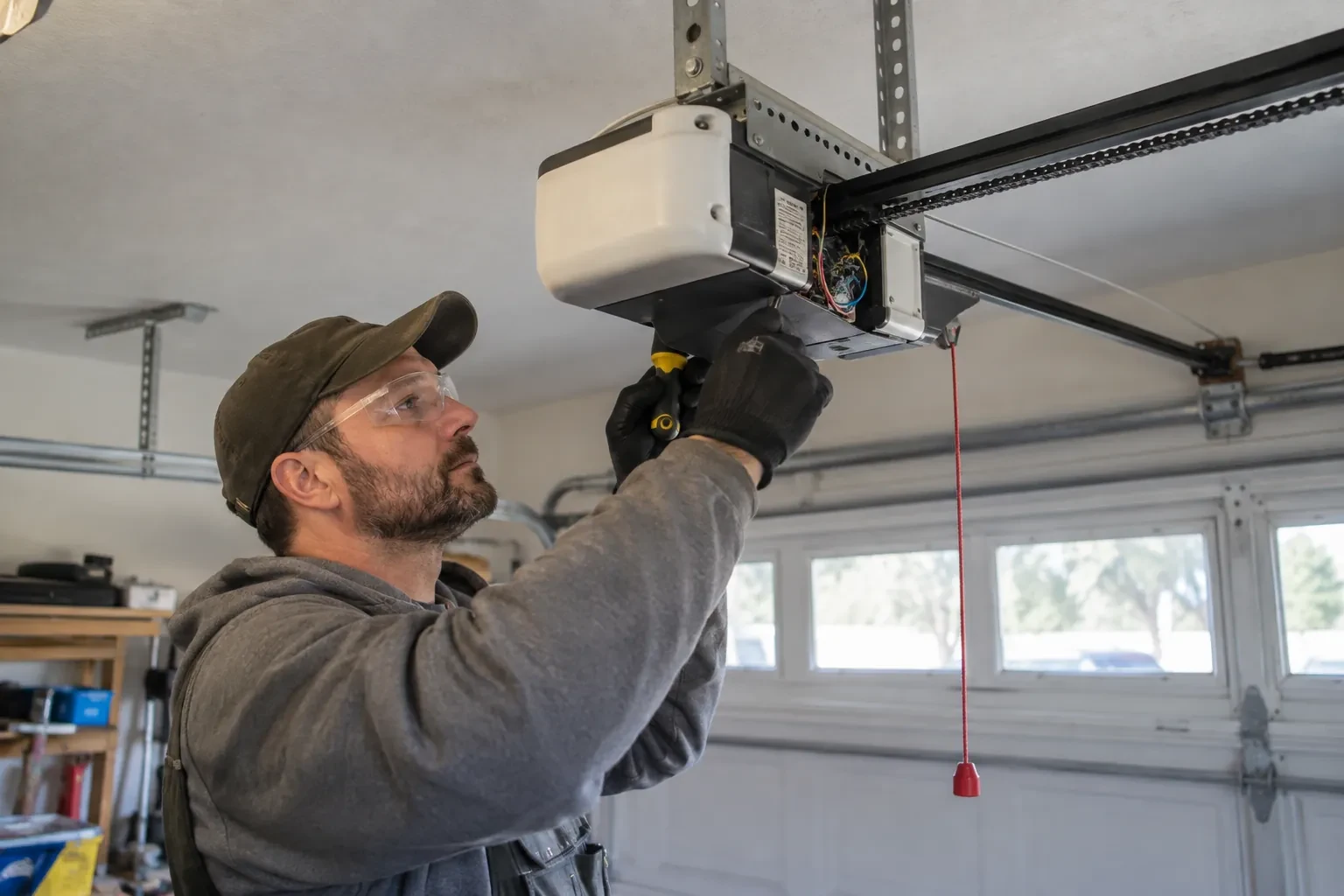
On a chain-drive opener the technician sets the chain so it neither sags onto the rail nor pulls taut, following the maker's measurement at the midpoint, and lubricates the chain and rail only where that maker calls for it. A belt drive is checked for tension, cracking and fraying. The trolley is inspected for wear where it rides the rail, the release lever is worked to confirm it disengages and re-engages cleanly, and the door arm is checked for straightness and secure pins at both ends. Rail hangers are tightened so the whole assembly stops shaking when the door starts and stops. This quiets the ceiling and takes strain off the motor's drive gear.
A door you hear less and trust more
The most noticeable change is the sound. With the hinge pins and roller bearings lubricated and the loose hardware tightened, the squeal and the rattle that woke the household are gone or reduced to a low hum of rollers in a clean track. The door starts without the shudder and lands on the floor with a soft contact instead of a slam. Because the technician ran the same cycle before and after the work, you can hear the difference for yourself before they leave, and the sounds that remain, if any, are explained: what they are, which part they come from and whether that part is worth replacing now or watching for a season.
Garage Door Tune-Up
In the van
Hinge screws and track bolts
Replacement hinges
2x4 test block and tape measure
Locking pliers or C-clamps
Silicone or lithium garage door lubricant
Garage Door Tune-Up
What affects the quote
Season and weather
A winter visit can include freeing a seal frozen to the slab and working with thickened lubricant before the tune-up proper can begin, which adds time to the visit.
Balance findings
If the balance test shows the springs have lost tension, spring adjustment or replacement is a separate job with its own quote rather than part of the maintenance visit.
Height and access
A tall door with the opener and springs high on the header, or a garage packed with storage along the tracks, adds ladder work and time compared with a clear standard-height bay.
What to have ready
- What brand is the opener, and is it a chain, belt, screw or wall-mounted unit?
- Are the remotes, wall button and keypad all working as expected?
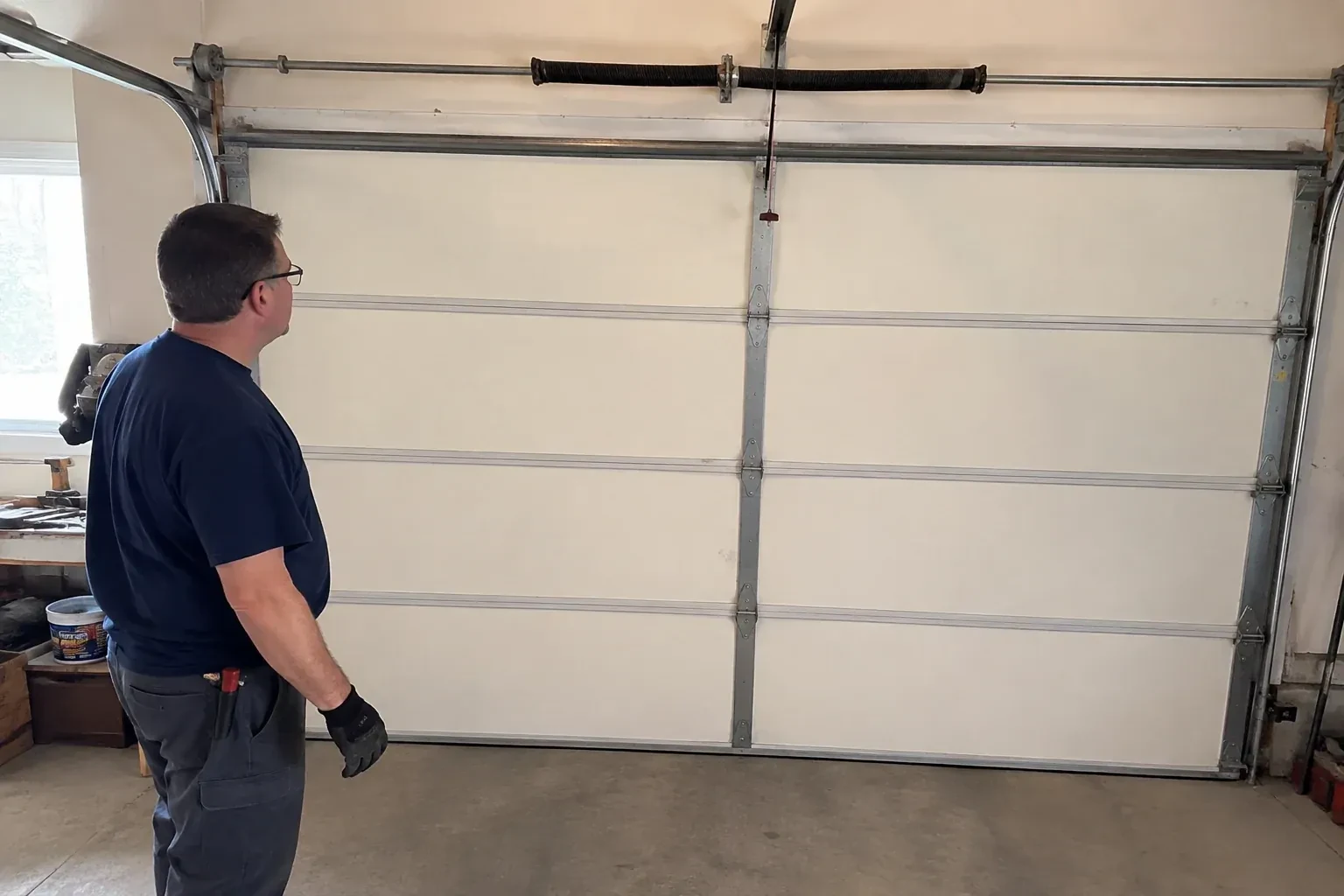
- Are the springs mounted above the door or along the sides beside the tracks?
Garage Door Tune-Up: questions
QuestionsIs a tune-up worthwhile on a door that seems to work fine?
Yes, because a garage door wears quietly. Hinge pins run dry long before they squeal, screws back out a turn at a time, springs lose tension by degrees and sensors drift. A yearly tune-up keeps the door in the condition its maker intended, catches a fraying cable or a cracked hinge while it is a small job, and confirms the safety reversal is doing its work. It is the same logic as an oil change on a car that is still running.
Do I need to be home for the tune-up?
It helps to be there, at least at the start and the end. At the start you can describe what you have noticed and where, and open the garage. At the end the technician walks you through the record, shows you the balance test and the reversal tests, and points out anything to watch. If you cannot stay, arrange access and a way to reach you by phone so any part replacement can be approved before it is done.
The sensor light is blinking. What does that mean?
On most openers a steady light on each photo-eye means the pair are aligned and seeing each other, and a blinking light means the beam is interrupted or the sensors are out of line. Common causes are a bracket nudged by a bin or a tire, dust or salt film on a lens, low sun at a certain hour, or a chafed wire. During a tune-up the lenses are cleaned, the brackets straightened, the pair realigned and the wiring checked back to the opener.
Related services
- Off-Track Garage Door ResetThe rollers on the door have been squealing for months.
- Garage Door Panel ReplacementYears of slap shots have peppered the lower two sections with dents.
- Garage Door Bottom Seal ReplacementOne end of the bottom seal has slipped out of its channel and hangs down like a loose shoelace.